A team of researchers from Massachusetts General Hospital (MGH) has used brain imaging, genetics and experimental psychology techniques to identify a connection between brain reward circuitry, a behavioral measurement of preference and a gene variant that appears to influence both.

The report in the August 4 issue of Archives of General Psychiatry describes how variations in a gene involved with the brain's reward function are associated with the activity of a key brain structure and, in parallel, with the effort study participants 'invest' in viewing emotion-laden facial images. The findings have implications for how genes may influence healthy or dysfunctional behavior involving choices in many different areas.

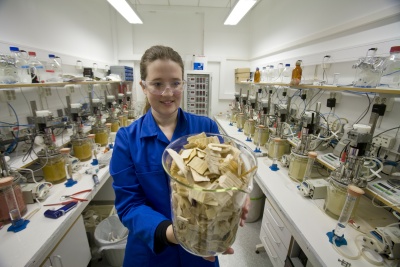
Scientists at the University of Sheffield writing in the journal Bioinformatics,say they have shown how bacteria could be used as a future fuel, a milestone in producing truly sustainable fuels in the future.

Like all living creatures, bacteria sustain themselves through their metabolism, a huge sequence of chemical reactions that transform nutrients into energy and waste. With mathematical computer models the Sheffield team have mapped the metabolism of a type of bacteria called Nostoc. Nostoc fixes nitrogen and, in doing so, releases hydrogen that can then potentially be used as fuel. Fixing nitrogen is an energy intensive process and it wasn't entirely clear exactly how the bacterium produces the energy it needs in order to perform. Now the new computer system has been used to map out how this happens.

Overall alcohol use—particularly consumption of beer—is declining in the US, according to a new study published in the August 2008 issue of The American Journal of Medicine. Researchers examined 50 years of data and found several changes in alcohol intake but no change in alcohol use disorders.

Americans are drinking significantly less beer and more wine, while hard liquor use has remained fairly constant. More people now report that they are non-drinkers. People born later in the 20th century drink more moderately than older people. As we age, our individual alcohol consumption goes down.

Did you know that Norwegian trees require only a few minutes to replace the timber used to produce the first edition of Aftenposten - equivalent to the time we spend making our morning coffee.

Norway is full of forests and the trees are growing. With just one-third of the growth logged, there is plenty of growth each year. In fact, since sheep and other domestic animals no longer graze the scrub, the landscape is actually starting to be overgrown.

Meanwhile, paper production is less and less profitable, hurting the forestry industry. But that won't last, say a group of experts. In fact, the value of Norwegian wood is going to go up.

The reason, they say, is second generation biodiesel and bioethanol. First generation production of fuel from rapeseed(Brassica napus) and maize has faced strong criticism. Producing fuel on valuable topsoil in the face of greater worldwide food demand is unpopular.

But as much criticism as biofuels have taken, there is no question the world has huge areas that can be better utilized, and timber from agriculture and forestry can produce more useful growth.

Mimmi Throne-Holst, research scientist at SINTEF in Norway, is one of those who believe that Norwegian forests can provide the fuels of the future and that Norway should prioritize this because of considerable experience with bio refinery (Borregaard, Norske Skog) and large-scale production.
A 'cloud computing', applications and services provided seamlessly on the Internet, approach to malicious software detection developed at the University of Michigan could make old antivirus software techniques a relic of the past.

Traditional antivirus software is installed on millions of individual computers around the world but according to researchers, antivirus software from popular vendors is increasingly ineffective.

Adults tend to think about the future to the point of insanity. Children on the other hand can exist in the moment, according to studies published in the August issue of Current Directions in Psychological Science.

Studies conducted by psychologists Cristina Atance from the University of Ottawa and colleague Andrew Meltzoff from the University of Washington demonstrated that children may be too preoccupied with the present to have much capability to comprehend the future.

In one study, the scientists divided preschoolers into four groups. Two groups were fed pretzels to the point of thirst. The other groups were not given any.

INTRODUCTION The vegetative neural system adjusts the life functions of all organs. Among other, developmentally old, has narrow terms with the mental sphere of the affective and instinctive. 1913 years LERICHE recommend periarterijsku simpatektomiju at peripheral statics of profusions. JONNESCO 1916 carries out with success sympatektomy of the cervical trunk of n. sympathicus at the angina pectoris. HUNTER and ROYLE 1924, years cut the rame communicantes, revealing one of the most important indications of the sympathicus surgery – the removal of spasm of arteries. WHITE 1936 introduced preganglionar cutting, whose advantages still 1929 noticed FOERSTER (Bratislava). For the further development of the sympathicus surgery were responsible PEET and SMITHWICK. Anatomical base

You are a coach, trying to juggle practice plans, meetings, game prep and player issues while trying to stay focused on the season's goals.  At the end of another long day, you see this in your inbox:

MEMO
To:         All Head Coaches
From:     Athletic Director
Subject:  Monthly Reading List to Keep Up with Current Sport Science Research 
-  Neuromuscular Activation of Triceps Surae Using Muscle Functional MRI and EMG
-  Positive effects of intermittent hypoxia (live high:train low) on exercise performance are not mediated primarily by augmented red cell volume
-  Physiologic Left Ventricular Cavity Dilatation in Elite Athletes
-  The Relationships of Perceived Motivational Climate to Cohesion and Collective Efficacy in Elite Female Teams

Just some light reading before bedtime...  This is an obvious exaggeration of the gap between sport science researchers and practitioners.  While those are actual research paper titles from the last few years under the heading of "sport science", the intended audience was most likely not coaches or athletes, but rather fellow academic peers.  The real question is whether the important conclusions and knowledge captured in all of this research is ever actually used to improve athletic performance?  How can a coach or athlete understand, combine and transfer this information into their game?

Today epigenetics is all the rage, but it has its roots in a pair of papers that appeared nearly simultaneously in 1952-1953.

Luria SE and Human ML. 1952. A nonhereditary, host-induced variation of bacterial viruses. J. Bact. 64: 557-569 and also Bertani G and Weigle JJ. 1953. Host controlled variation in bacterial viruses. J. Bact. 65: 113-121. 

Luria & Human and Bertani & Weigle independently discovered that bacterial hosts can affect the growth and phenotypic properties of their bacteriophages.

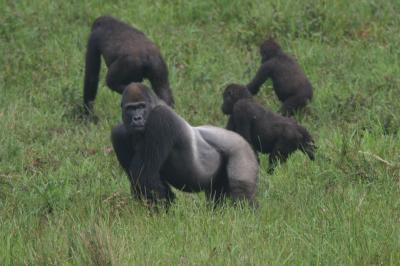
Yesterday, newspapers were telling us half of apes and monkeys face extinction and today we find out we could be overwhelmed by them.

The Wildlife Conservation Society released a census showing massive numbers of these great apes alive and well in the Republic of Congo.

Western lowland gorillas are one of four recognized gorilla sub-species, which also include mountain gorillas, eastern lowland gorillas, and Cross River gorillas. All are classified as "critically endangered" by the IUCN, except eastern lowland gorillas, which are endangered.