





Maybe I’ve had elevators on my mind because the one in our building has gone through endless repairs of late, none of which apparently improved its speed or reliability. Or perhaps you simply cannot live in New York City without taking into account elevators as a major component of your life. But then my wife pointed out to me this snippet from an article published recently in The New Yorker (every self-respecting newyorker reads The New Yorker while in the subway):

Evolutionary trees, or "phylogenies", are a major part of modern evolutionary science. They depict hypotheses regarding the relationships among taxa, and are therefore important in reconstructions of the historical path of evolution (Gregory 2008a,b).

Various approaches can be taken to formulating phylogenetic hypotheses, including analyses based on morphological, fossil, and/or molecular data. These methods often agree well, but sometimes one or another can throw up some surprises and challenge previous hypotheses about the relationships among groups of organisms.

Reconstructing the tree of life is a difficult and complicated process, and one should expect there to be significant refinements and revisions along the way. This is especially true of the deepest branches of the tree, which are often the most difficult to resolve.

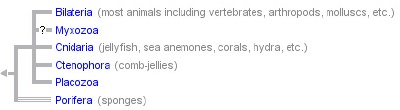
Case in point, the Tree of Life Web Project gives the following summary of deep branches among major animal lineages:

An international team of scientists has detected that some of the glow of Earth’s aurora is polarized, an unexpected state for such emissions. Measurements of this newfound polarization in the Northern Lights may provide scientists with fresh insights into the composition of Earth’s upper atmosphere, the configuration of its magnetic field, and the energies of particles from the Sun, the researchers say.

If observed on other planets, the phenomenon might also give clues to the shape of the Sun’s magnetic field as it curls around other bodies in the solar system.

When a beam of light is polarized, its electromagnetic waves share a common orientation, say, aligned vertically, or at some other angle. Until now, scientists thought that light from energized atoms and molecules in planetary upper atmospheres could not be polarized. The reason is simple: in spite of the low number of particles at the altitudes concerned (above 100 kilometers (60 miles)), there are still numerous collisions between molecules and gas atoms. Those collisions depolarize the emitted light.

MILAN, April 26 /PRNewswire/ --

At today's sessions of the 43rd Annual Meeting of the European Association for the Study of the Liver (EASL), experts reported advances in basic research that have important implications for the eventual treatment of people with chronic liver diseases.

We go back a long way with herpesviruses. Our evolutionary line has been living with these genomic parasites for more than 100 million years, and today herpesviruses infect nearly all humans, as well as all other mammals, birds and reptiles that scientists have checked. We aren't born with these viruses, but most of us acquire multiple infections of various types of herpesviruses during childhood.

Unlike our relationship with many other, more notorious viruses, we've learned to peacefully coexist with herpesviruses for the most part. They set up shop in our cells, they use our molecular machinery to replicate themselves, and they take advantage of the influx of energy we provide from our diet. Sometimes the relationship goes sour, with the unfortunate results ranging from chickenpox to mononucleosis, genital herpes, and Burkitt's lymphoma, but by and large, most humans, and mammals in general, are never seriously harmed by these house guests. But do we get anything out of this relationship? Remarkably, recent research suggests that this 100 million-year coexistence may have been good for us too, helping our immune system to ward off even more serious pathogens.


Photo Credit: US Centers for Disease Control, courtesy of the Wikipedia Commons

It's been just over three years since I got married, and I remember thinking (amid the nearly debilitating fear that we would run out of alcohol at our mountain cabin wedding and thus trap our families in a scene from The Shining) that it would be wonderful to finally be free forever from the intrigue and confusion of dating.

You can't fault the optimism.

Now, through the lens of hindsight, I realize that I should have known that dating and even cohabitating were only warm-ups for the big dance.

Advance directives, or living wills, may not effectively honor end-of-life wishes because life-sustaining treatment preferences often change without people being aware of the changes, according to a new study co-authored by UC Irvine researchers Peter Ditto and Elizabeth Loftus.

False memories can play a significant role in the discrepancy between an individual's true preferences for end-of-life treatment and what is instructed in their living will. Life-sustaining treatment preferences often change as people age or experience new health problems, and advance directive forms typically remind people of their right to update their directives if their wishes change.

Researchers have mapped out a region on human chromosome 1 that contributes to genetically elevated blood triglyceride levels, a major risk factor for heart disease.

Triglycerides (TG), the main form of dietary fat, continuously circulate in the blood, but if their concentration elevates the risk of atherosclerosis and subsequently heart disease increases. Circulating TG levels depend on many factors including diet, exercise, and smoking, but around 40% of the variation in the population is due to genetics.

To locate the genes contributing to increased TG levels, Qing Wang and colleagues scanned 714 Caucasians from 388 families with premature heart disease. They identified a novel region on chromosome 1, 1p31-32.

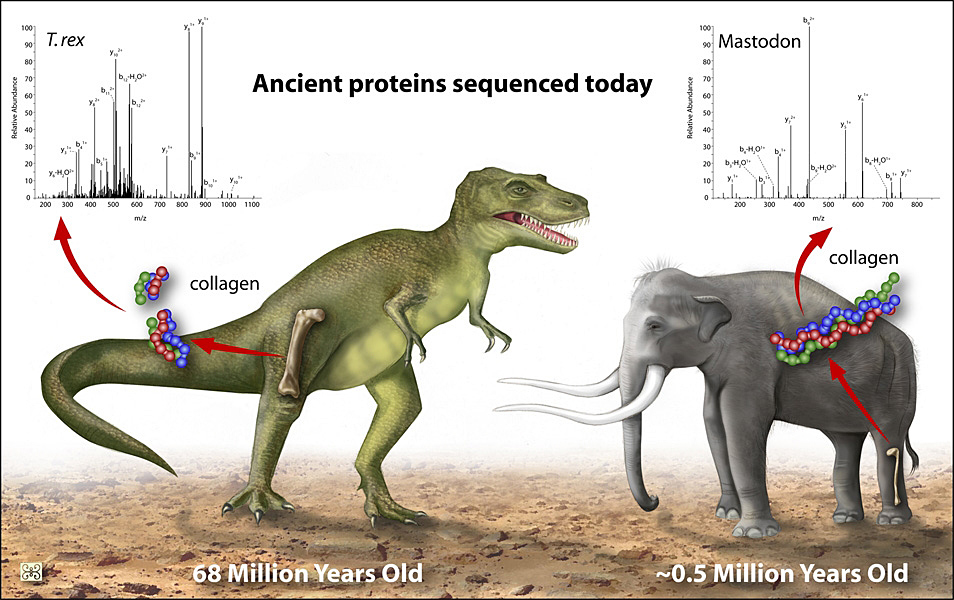
Tests of the peptide sequences in T. rex bone fossils have put more meat on the theory that dinosaurs' closest living relatives are modern-day birds.

Molecular analysis, or genetic sequencing, of a 68-million-year-old Tyrannosaurus rex protein from the dinosaur's femur discovered in 2003 by paleontologist John Horner of the Museum of the Rockies confirms that T. rex shares a common ancestry with chickens, ostriches, and to a lesser extent, alligators.

The new research results represent the first use of molecular data to place a non-avian dinosaur in a phylogenetic tree, a "tree of life," that traces the evolution of species.

The earthquake on April 18, 2008, about 120 miles east of St. Louis, registered 5.2 on the Richter scale and hit at 4:40 a.m. with a strong aftershock occurring at approximately 10:15 a.m. that morning, followed by lesser ones in subsequent days. The initial earthquake was felt in parts of 16 states.

To the surprise of many, originated in the Wabash Valley Fault, not the better-known and more-dreaded New Madrid Fault in Missouri’s boot heel.

The concern of Douglas Wiens, Ph.D., and Michael Wysession, Ph.D., seismologists at Washington University in St. Louis, is that the New Madrid Fault may have seen its day and the Wabash Fault is the new kid on the block.

