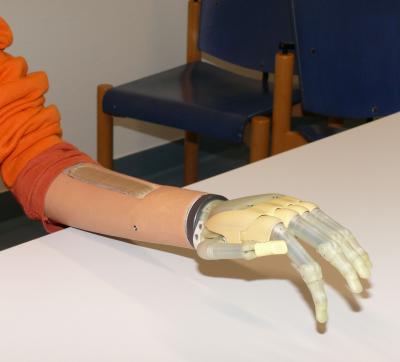






Eighteen-year-old Sören Wolf was born with only one hand but when it comes to a prosthetic second one, he's enthusiastic about both the “i-LIMB” and the ”Fluidhand.”

The new “i-LIMB” prosthetic hand developed and distributed by Scottish company “Touch Bionics” has distinct advantages over similar competitive models. Complex electronics and five motors contained in the fingers enable every digit of the i-LIMB to be powered individually. A passive positioning of the thumb enables various grip configurations to be activated. The myoelectric signals from the stump control the prosthetic hand; muscle signals are picked up by electrodes on the skin and transferred to the control electronics in the prosthetic hand.

Dutch researchers at University Medical Center Utrecht and the Hubrecht Institute have succeeded in growing large numbers of stem cells from adult human hearts into new heart muscle cells.

Prior to this, it was necessary to use embryonic stem cells. Their findings are published in the latest issue of the journal Stem Cell Research.

The stem cells are derived from material left over from open-heart operations. Researchers at UMC Utrecht used a simple method to isolate the stem cells from this material and reproduce them in the laboratory, which they then allowed to develop. The cells grew into fully developed heart muscle cells that contract rhythmically, respond to electrical activity, and react to adrenaline.

Andalucia has one of the highest rates of childhood obesity in Spain according to the Action Plan to address childhood obesityPlan Integral de Obesidad Infantil de Andalucia 2007-2012.

Only children from The Canary Islands, Cantabria and Murcia are fatter.

Other data show that in Andalucia the prevalence of overweight and obesity combined is 32% in boys and 31% in girls: however it is much higher among younger children than older children and reaches 40% and 45% respectively in boys and girls aged 6-9 years. This suggests there will be an even greater problem in the future.

New research by the Universities of Exeter and Oxford states that a child’s sex is associated with the mother’s diet. Their evidence shows a link between higher energy intake around the time of conception and the birth of sons. The findings may help explain the falling birth-rate of boys in industrialized countries, including the UK and US.

The study focused on 740 first-time pregnant mothers in the UK, who did not know the sex of their fetus. They were asked to provide records of their eating habits before and during the early stages of pregnancy. They were then split into three groups according to the number of calories consumed per day around the time they conceived. 56% of the women in the group with the highest energy intake at conception had sons, compared with 45% in the lowest group.

As well as consuming more calories, women who had sons were more likely to have eaten a higher quantity and wider range of nutrients, including potassium, calcium and vitamins C, E and B12. There was also a strong correlation between women eating breakfast cereals and producing sons.

Researchers seeking new and more abundant sources of stem cells for use in regenerative medicine have identified a potentially unlimited, noncontroversial, easily collectable, and inexpensive source – menstrual blood.

Stromal stem cells - cells that are present in connective tissues - have recently been identified in endometrial tissues of the uterus. When the fresh growth of tissue and blood vessels is shed during each menstrual cycle, some cells with regenerative capabilities are present and collectable. While collecting menstrual blood stromal cells (MenSCs) directly from tissue would be invasive, retrieving them during the menstrual cycle would not be.

“Stromal stem cells derived from menstrual blood exhibit stem cell properties, such as the capacity for self-renewal and multipotency,” said Amit N. Patel, MD, MS, Director of Cardiac Cell Therapy at the University of Pittsburgh’s McGowan Institute of Regenerative Medicine. “Uterine stromal cells have similar multipotent markers found in bone marrow stem cells and originate in part from bone marrow.”

Eczema is a distressing condition for both parents and babies – the raw, red skin is painful to see and it is difficult to stop small children from scratching it. At worst, it can mean having to wet wrap wriggly toddlers each day with bandages soaked in moisturisers. It usually starts in the first year of life and affects about 10% of infants. Although most children eventually grow out of it, about half will go on to develop another allergic condition, such as asthma or hayfever.

Recent progress in understanding the role of gut bacteria in the development of the infant’s immune system has led to the hope that some of this suffering can be prevented in the future.

Remarkable new research into the way environmental factors affect the development of the brain has opened up the possibility that an infant’s future mental abilities and susceptibility to mental illness can be permanently altered by dietary changes in early life.

Evidence that changes in early diet can have long term effects on brain structure, verbal IQ, eyesight, appetite regulation and possibly on neurodevelopmental outcome will be presented at the international symposium on Early Nutrition Programming in Granada, Spain (23 April).

This is an area of research in which the EC is investing heavily as it offers huge potential in terms of improving the health and reducing health care costs of future generations. Neuropsychiatric disorders, such as depression, are the second most important cause of ill health in the EU after cardiovascular disease(1). The EC has already invested over €13 million in the Early Nutrition Programming Project (EARNEST) and has now committed another €6 million into the NUTRIMENTHE project (launched 22April 2008).

Not that these women sweat anyway. "Horses Sweat, Men Perspire And Ladies Glow," my mother always told me.

But you get the idea. A group of fashion conscious women is making a difference this Earth Day - by looking fabulous!

Okay, as a man in his 40s with more children than I can count, I had a hard time even writing the word 'fabulous' without laughing.

But there is something serious happening. Chantecaille, a cosmetics company, has said it will donate five percent of the proceeds of its new “Protected Paradise” face and eyes compacts to the Pew Institute’s Pew Fellowship in Marine Conservation program, which provides a $150,000 award to each of five ocean experts around the world annually to develop solutions to critical ocean challenges.

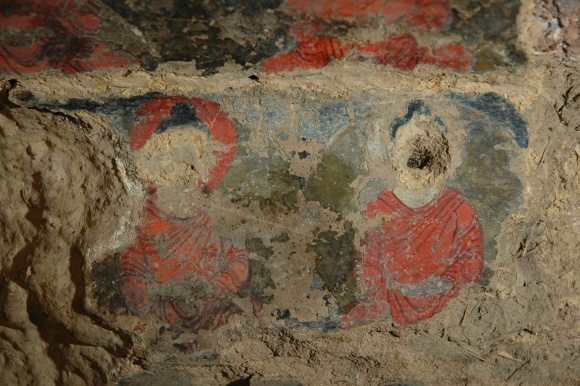
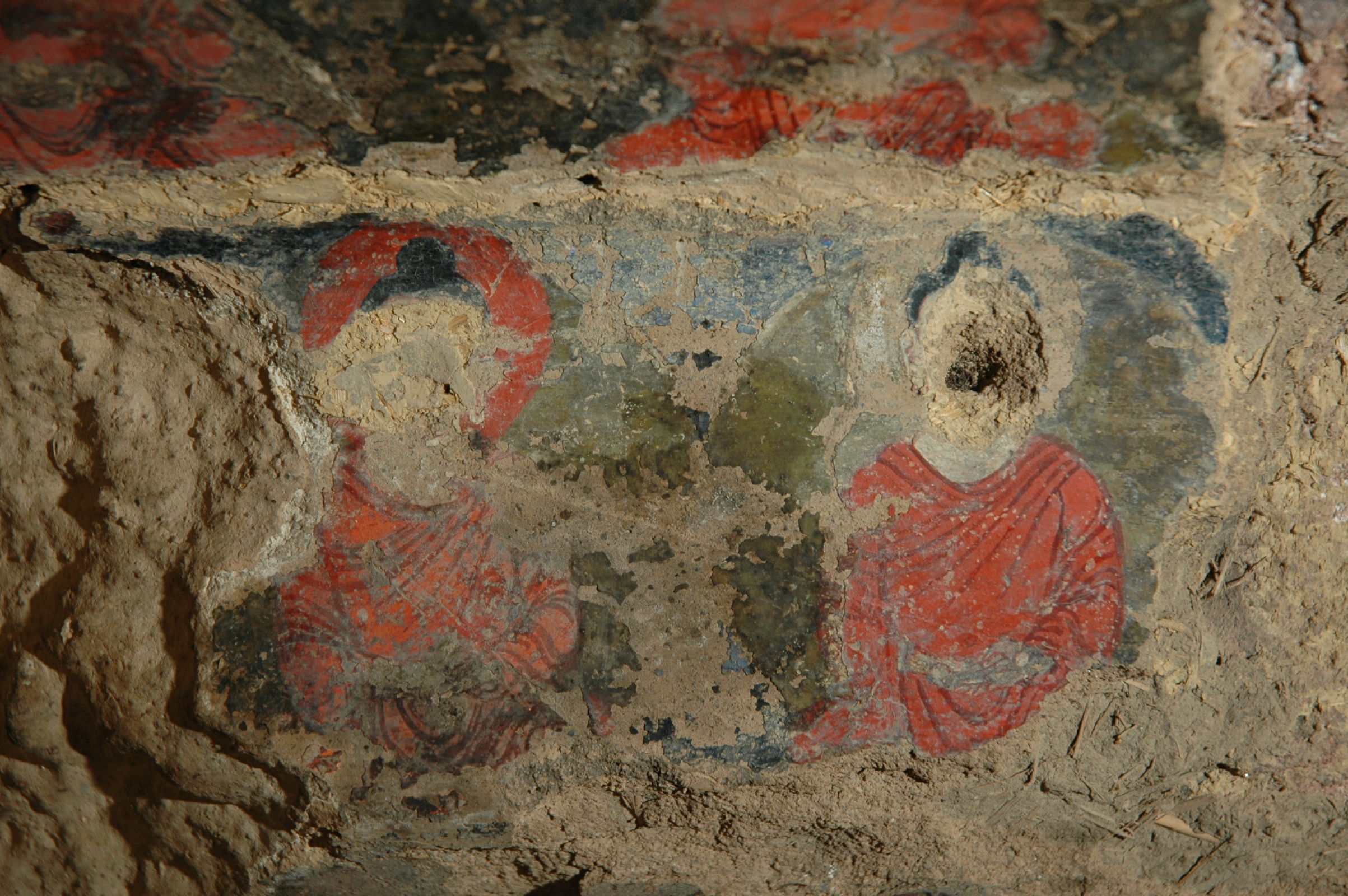
In 2001, religious fundamentalists destroyed two colossal, ancient Buddha statues in the Afghan region of Bamiyan. Behind those statues, there are caves decorated with artwork dating from the 5th to 9th centuries A.D and those also suffered from the destruction of the Taliban along with their natural environment, but recently they became the source of a major discovery.

Scientists at the European Synchrotron Radiation Facility (ESRF) have shown that the paintings were made of oil, hundreds of years before the technique was “invented” in Europe. The results were presented at a scientific conference in Japan last January and are just now published in the Journal of Analytical Atomic Spectrometry.

Red colobus monkeys in a park in western Uganda have been exposed to an unknown orthopoxvirus, a pathogen related to the viruses that cause smallpox, monkeypox and cowpox. Most of the monkeys screened harbor antibodies to a virus that is similar – but not identical – to known orthopoxviruses.

The study was begun in 2006 when Colin Chapman, a researcher at McGill University, invited Goldberg to collaborate on a health assessment of two groups of red colobus monkeys in Kibale National Park, in western Uganda.

Chapman, also an associate scientist with the Wildlife Conservation Society, had spent two decades studying the behavior and ecology of the monkeys. He wanted to broaden the study to include an analysis of the pathogens they carried. Wildlife veterinarians from the Wildlife Conservation Society helped collect the samples, and a team from Oregon Health and Science University, led by Mark Slifka, conducted immunological analyses to characterize the virus.

