A frequency-agile metamaterial that for the first time can be tuned over a range of frequencies in the so-called “terahertz gap” has been engineered by a team of researchers from Boston College, Los Alamos National Laboratory and Boston University.

The team incorporated semiconducting materials in critical regions of tiny elements – in this case metallic split-ring resonators – that interact with light in order to tune metamaterials beyond their fixed point on the electromagnetic spectrum, an advance that opens these novel devices to a broader array of uses, according to findings published in the online version of the journal Nature Photonics.

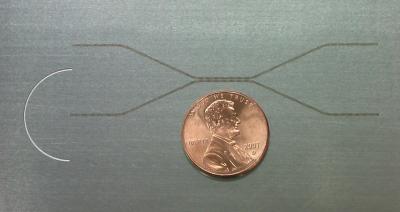
University of Utah engineers took an early step toward building superfast computers that run on far-infrared light instead of electricity: They made waveguides -- the equivalent of wires -- that carried and bent this form of light, also known as terahertz radiation, which is the last unexploited portion of the electromagnetic spectrum.

Electricity is carried through metal wires. Light used for communication is transmitted through fiberoptic cables and split into different colors or “channels” of information using devices called waveguides. In a study published in Optics Express, Ajay Nahata, study leader and associate professor of electrical and computer engineering at the University of Utah, and colleagues report they designed stainless steel foil sheets with patterns of perforations that successfully served as wire-like waveguides to transmit, bend, split or combine terahertz radiation.

"The placenta is this amazing, complex structure and it's unique to mammals, but we've had no idea what its evolutionary origins are," says Julie Baker, PhD, assistant professor of genetics at Stanford Univeristy and senior author of a study in Genome Research which discusses its evolution.

The placenta is the mother's intricate lifeline to her unborn baby, delivering oxygen and nutrients critical to the baby's health. New evidence suggests the placenta of humans and other mammals evolved from the much simpler tissue that attached to the inside of eggshells and enabled the embryos of our distant ancestors, the birds and reptiles, to get oxygen.

Succession is one of the first things that students learn about in ecology. Each intervening stage modifies the environment in such a way that lays the groundwork for the next stage, while making the environment less hospitable to its own offspring. Only the final stage is self-perpetuating and stable.

Frederic Clements, one of the pioneers of community ecology, saw ecological succession as an ontogenic process in which the community - a superorganism - developed into its final, mature form. The orderly progression from bare ground to mature forest is orderly, progressive…and very Victorian.

Each copy of the human genome consists of about 3,200,000,000 base pairs, and includes about 500,000 repeats of the LINE-1 transposable element (a LINE) and twice as many copies of Alu (a SINE), as compared to around 20,000 protein-coding genes.

Whereas protein-coding regions represent about 1.5% of the genome, about half is made up LINE-1, Alu, and other transposable element sequences. These begin as parasites, and some continue to behave as detrimental mutagens implicated in disease. However, most of those in the human genome are no longer mobile, and it is possible that many of these persist as commensal freeloaders.

Finally, it has long been expected that a significant subset of non-coding elements would be co-opted by the host and take on functional roles at the organism level, and there is increasing evidence to support this. A notable fraction of the non-genic portion of human DNA is undoubtedly involved in regulation, chromosomal function, and other important processes, but based on what we know about non-coding DNA sequences, it remains a reasonable default assumption -- though one that should continue to be tested empirically -- that much or perhaps most of it is not functional at the organism level.

This does not mean that a search for the functional segments is futile or irrelevant -- far from it, as many non-genic regions are critical for normal genomic operation and some have played an important role in many evolutionary transitions. It simply means that one must not extrapolate without warrant from discoveries involving a small fraction of sequences to the genome as a whole.

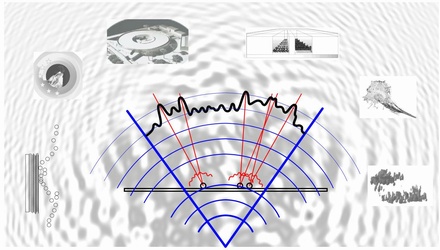
The Interuniversity Microelectronics Centre(IMEC), an independent research center focusing on next generations chips and systems and enabling technologies for ambient intelligence, has developed a battery-free, wireless, 2-channel electroencephalography(EEG) system.

The interesting hook is that its hybrid power supply uses body heat and ambient light. It combines a thermoelectric generator that uses the heat dissipated from a person’s temples and silicon photovoltaic cells.

The entire system is wearable and integrated into a device resembling headphones. The system can provide more than 1mW on average indoors, which is more than enough for this application.

There is no question that Al Gore’s 2006 documentary "An Inconvenient Truth" is a powerful example of how scientific knowledge can be communicated to a lay audience.

What continues to be debated is whether it accurately presents the scientific argument that global warming is caused by human activities. Climate change experts express their opinions on the scientific validity of the film’s claims in the newest GeoJournal.

"An Inconvenient Truth" is about Al Gore’s campaign to educate citizens about global warming and inspire them to take action. The papers in GeoJournal agree that it does an excellent job of raising public awareness of man-made global warming and explains why increased atmospheric concentrations of greenhouse gases lead to warming. They also agree that its main weakness is that it tries to use individual extreme events, such as Hurricane Katrina, to prove the existence of global warming.

A new study by researchers at the University of Cambridge says that traders with high morning testosterone levels make more than average profits for the rest of that day. This influence of steroids naturally produced in the body (specifically testosterone and cortisol) may also provide insight into why people caught up in bubbles and crashes often find it difficult to make rational choices, unintentionally exacerbating financial crises.

Testosterone is a steroid hormone which controls competitive encounters as well as sexual behavior. Testosterone in male athletes, for example, will rise prior to a competition and rise even further in a winning athlete (but decrease in a losing one). This increase of testosterone in the winner can increase confidence and risk taking and improve chances of winning yet again, leading to a positive-feedback loop termed the ‘winner effect’. However, too much testosterone can have a detrimental affect on the ability to assess risk rationally.

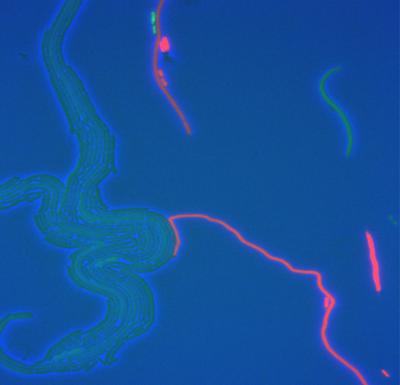
Researchers at Duke, Caltech, Stanford and the Howard Hughes Medical Institute have developed a living system using genetically altered bacteria that they believe can provide new insights into how the population levels of prey influence the levels of predators, and vice-versa.

The Duke experiment is an example of a synthetic gene circuit, where researchers load new "programming" into bacteria to make them perform new functions. Such re-programmed bacteria could see a wide variety of applications in medicine, environmental cleanup and biocomputing. In this particular Duke study, researchers rewrote the software of the common bacteria Escherichia coli (E. coli.) to form a mutually dependent living circuit of predator and prey.

The bacterial predators don't actually eat the prey, however. The two populations control each others' suicide rates.

You already knew that eastern and western cultures regard many aspects of every day life differently but researchers from Canada, Japan and Amsterdam say that eastern and western cultures even assess situations differently based on the perception of emotions they see.

Across two studies, participants viewed images consisting of one center model and four background models. The researchers manipulated the facial emotion (happy, angry, sad) in the center or the background models and asked the participants to determine the dominant emotion of the center figure.

The majority of Japanese participants (72%) reported that their judgments of the center person’s emotions were influenced by the emotions of the background figures, while most North Americans (also 72%) reported no influence by the background figures at all.