




An analysis of autism research covering genetics, brain imaging, and cognition seeks to modernize our understanding of why autism potentially occurs, develops and results in a diversity of symptoms.

The team calls it the “Trigger-Threshold-Target’’ model. Brain plasticity refers to the brain’s ability to respond and remodel itself, and this model is based on the idea that autism is a genetically induced plastic reaction. The trigger is multiple brain plasticity-enhancing genetic mutations that may or may not combine with a lowered genetic threshold for brain plasticity to produce either intellectual disability alone, autism, or autism without intellectual disability.
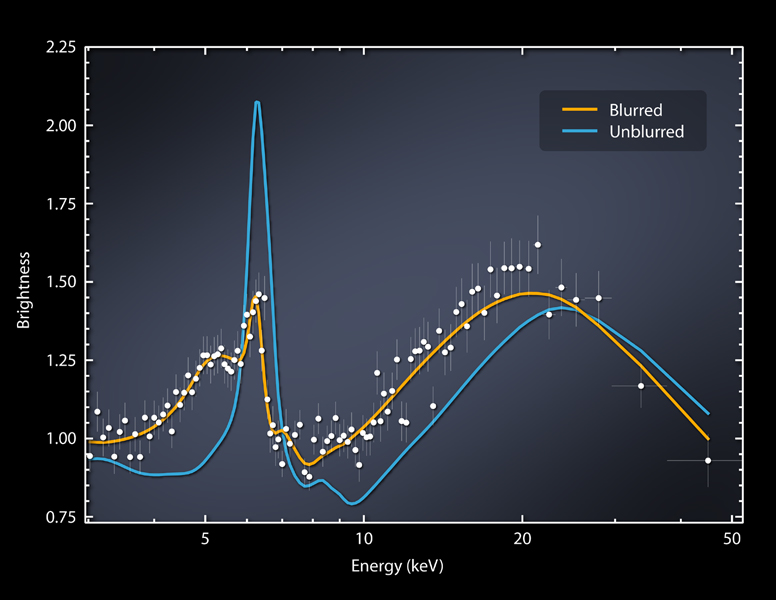
NASA's Nuclear Spectroscopic Telescope Array (NuSTAR) has captured an extreme and rare event in the regions immediately surrounding the supermassive black hole Markarian 335: a compact source of X-rays that sits near the black hole - the corona - has moved closer to the black hole over a period of just days. 

Treatments that involve neck manipulation may be associated with strokes, according to an American Heart Association Scientific Statement written by lead author Dr. Jose Biller, chair of the Department of Neurology at Loyola University and other stroke experts.

Writing in Stroke, they note a small tear in a neck artery, called a cervical dissection, is among the most common causes of strokes in young and middle-aged adults. A dissection can lead to a blood clot that travels to the brain and triggers a stroke. Although techniques for cervical manipulative therapy vary, some maneuvers used by health practitioners also extend and rotate the neck, and sometimes involve a forceful thrust.

Depending on the analysis strategy used, estimating treatment outcomes in meta-­analyses may differ and may result in major alterations in the conclusions derived from the analysis, according to a study in JAMA which could easily apply to all fields. 

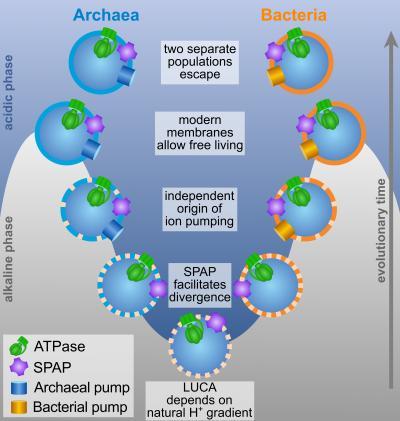
Descent with modification means that all life on Earth probably came from one common ancestor – a single-celled organism – We just have to speculate and create models for what it may have looked like, how it lived and how it evolved into today's modern cell.

So model we do and a recent paper uses mathematical modeling to speculate that life's Last Universal Common Ancestor (LUCA) had a 'leaky' membrane, which, if would, would help scientists answer two of biology's biggest questions:

1. Why all cells use the same bizarre, complex mechanism to harvest energy

2. Why two types of single-celled organism that form the deepest branch on the tree of life – bacteria and archaea – have completely different cell membranes

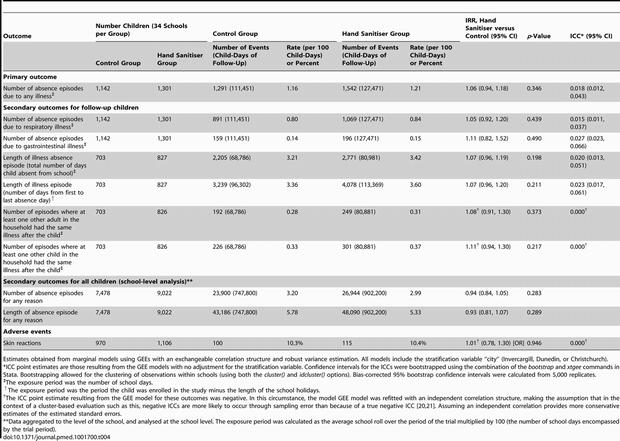
Installing hand sanitizers in  classrooms has not led to reductions in the rate of school absences in children, according to results of a cluster randomized trial that that randomly assigned 68 city primary schools in New Zealand to the intervention or control group and measured the rate of school absence in children attending the participating schools.

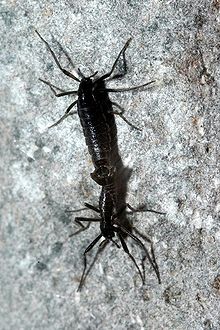
Scientists have sequenced the genome of Belgica antarctica, the Antarctic midge – the smallest in insects described to-date –  and believe it can explained by the midge's adaptation to its deep-freeze extreme living environment.

The midge is a small, wingless fly that spends most of its two-year larval stage frozen in the Antarctic ice. Upon adulthood, the insects spend seven to 10 days mating and laying eggs, and then they die. Its genome contains only 99 million base pairs of nucleotides, making it smaller than other tiny reported genomes for the body louse (105 million base pairs) and the winged parasite Strepsiptera (108 million base pairs), as well as the genomes of three other members of the midge family. 


Cancer is the blanket term for over a hundred diseases where abnormal cells divide and invade tissues through blood and lymph systems. The extra cells are often detected in the form of a tumor that people notice as their first symptom, and those can be benign or malignant.

Drier conditions at the edges of forest patches slow down the decay of dead wood and significantly alter the cycling of carbon and nutrients in woodland ecosystems, according to a new study.

Forests around the world have become increasingly fragmented, and in the UK three quarters of woodland area lie within 100 meters of the forest edge. It has long been known that so-called 'edge effects' influence temperature and moisture (the 'microclimate') in woodlands, but the influence on the carbon cycle is largely unknown. 

With carbon dioxide from the American energy sector plummeting back to early 1990s levels and coal, the dirtiest energy source, back at early 1980s levels, environmentalists have tried to turn on natural gas and its primary component, methane.

Don't be fooled. Other sources, like solar, are not ready yet, wind never will be and nuclear science is reviled by Democrats so methane is the best bridge to the future (which will eventually be solar).  A new technique transforms the delightful stinky, air-polluting landfill gas into a hydrogen fuel cell, according to a presentation at National Meeting of the American Chemical Society.

