

Maybe some day, depression and anxiety could benefit from good vibrations.

University of Arizona researchers have found in a recent study that ultrasound waves applied to specific areas of the brain appear able to alter patients' moods. The discovery has led the scientists to conduct further investigations with the hope that this technique could one day be used to treat conditions such as depression and anxiety.

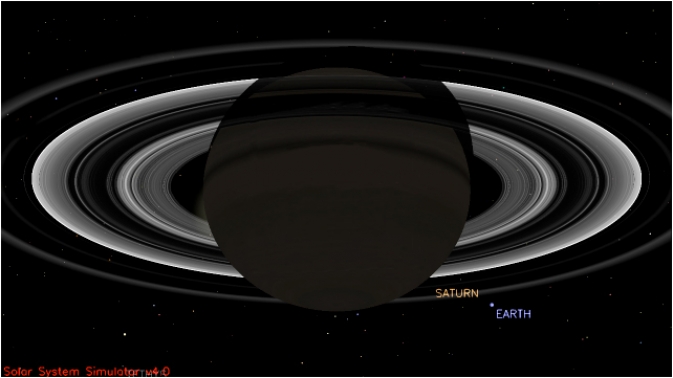
Tomorrow, we are being photographed from space.

No, it is not another NSA spying operation, it is NASA's Cassini and MESSENGER spacecraft, taking pictures of Earth from Saturn and Mercury.

The image taken from the Saturn system by Cassini will occur between 2:27 and 2:42 PDT (that's 5:27 and 5:42 p.m. EDT and 21:27 and 21:42 UTC) tomorrow, July 19th. Since Cassini is 898 million miles away from us, nearly 10 times the distance from the sun to Earth, it may not see you specifically but NASA is encouraging the public to get participatory and wave at Saturn at the time of the portrait and then pictures via social media.

Women are waiting longer before getting married - if they get married at all, according to a new analysis.

The U.S. marriage rate is now at 31.1 - which in statistical terms means roughly a rate of 31 marriages per 1,000 married women, not 31 percent. That rate is 60 percent lower than 1970. In 1920 the marriage rate was 92.3. The wave of gay marriage legislation across the US will likely cause a temporary blip in that, at least until expensive gay divorces kick in, but the overall trend will remain downward.

An “intelligent knife”, dubbed the iKnife (naturally) can tell surgeons whether the tissue they are cutting is cancerous or not.

In operating room situations, the iKnife diagnosed tissue samples from 91 patients with 100 percent accuracy, saving about 30 minutes of time that would usually be needed for laboratory tests.

A research project at Kansas State University has potential to treat human deafness and loss of balance.

More than 28 million people in the United States suffer some form of hearing loss and mutation of the SLC26A4 gene, normally found in the cochlea and vestibular organs of the inner ear as well as in the endolymphatic sac, a non-sensory part of the inner ear, is implicated as one of the most common forms of hereditary hearing loss in children worldwide.

When the mutant mice lack SLC26A4 expression, their inner ears swell during embryonic development. This leads to failure of the cochlea and the vestibular organs, resulting in deafness and loss of balance.

Fish is good for you so health advocates would prefer that people eat more of it. Environmentalists don't want fish to be depleted while natural food advocates don't want food that isn't free-range.

It's a tough culture for fisheries but biologists see a silver lining: Evolutionary changes induced by fisheries may benefit the fishers - and that means everyone else too. They just have to be well-managed. If they are well-managed, everyone wins. If not, there are economic losses as stocks decline from overfishing and further suffer from evolution. 

A new biomaterial that facilitates generating bone tissue - artificial bones, in their words - from umbilical cord stem cells has gotten a patent for researchers in Granada, Spain.

The material is an activated carbon cloth support for cells that differentiate, giving rise to a product that can promote bone growth. They received a patent though the method has not yet been applied using in vivo models but it could help manufacture medicines for the repair of bone or osteochondrial, tumour or traumatic lesions and to replace lost cartilage in limbs.

Now that they have obtained artificial bones in the laboratory, they are going to implant this biomaterial in experimental animal models to see if it can regenerate bone in them.

Oxytocin, a hormone with powerful effects on brain activity that is linked to the formation of social bonds, could have benefits for children with the autism disorder - but it is unlikely, according to the results of a new study.

Autism is a complex condition of unknown cause in which children exhibit reduced interest in other people, impaired social communication skills and repetitive behaviors.
Research in people who are healthy shows oxytocin can increase levels of trust and eye-gazing and improve their identification of emotions in others.
Previous research suggested that oxytocin would be helpful in children with autism as well and so
oxytocin
nasal sprays have grown in popularity.

Our digestive system is home to trillions of bacteria which battle for our health. Sometimes they help us digest food and something they battle harmful microbes.

When we take antibiotics to combat bacterial infections, beneficial bacteria can also be killed off, leaving us at risk of infection by harmful bacteria. Clostridium difficile is one of those harmful bacteria and is the leading cause of hospital infections in England and Wales and in hospitals all over the developed world.

As C. difficile becomes more resistant to antibiotics, it becomes harder to treat, so new ways of controlling C. difficile infections are needed.

Bring on the bacteriophages.

Were dinosaurs warm-blooded like birds and mammals and not cold-blooded like reptiles as commonly believed?

Professor Roger Seymour of the University of Adelaide argues that cold-blooded dinosaurs would not have had the required muscular power to prey on other animals and dominate over mammals as they did throughout the Mesozoic period.


