Scientists are deploying an advanced research aircraft to study a region of the atmosphere that influences climate change by affecting the amount of solar heat that reaches Earth's surface.

Findings from the project, based at the National Center for Atmospheric Research (NCAR), will be used by researchers worldwide to improve computer models of global climate in preparation for the next report by the Intergovernmental Panel on Climate Change (IPCC).

The project, running from April to June, is known as START 08 (Stratosphere-Troposphere Analyses of Regional Transport). It focuses on a remote boundary zone of the atmosphere called the tropopause, which sits at the bottom of the stratosphere. Scientists are increasingly interested in the tropopause, because of both its importance in the global climate system and because the buildup of greenhouse gases has altered this atmospheric region in ways that are not yet fully understood.

A story in the Minneapolis Star-Tribune caught my attention today, not only because it was an interesting article but because it may indicate a shift in our country’s approach to health care. As we all know, the number of people with diseases and conditions that are preventable is growing in America (and globally).

 One way to deal with this is on an individual level, treating the symptoms or curing the disease after the fact. In this model, the focus is on individual treatment, or downstream of the event. Another way to deal with this problem is at the community level, working to prevent the disease or condition from ever occurring. In this model, the focus is on prevention, or upstream of the event. (I’ve greatly oversimplified the issues – there are accidents, genetic predispositions, etc that we can’t prevent – but you get the general idea.)

Health care costs are skyrocketing, competing with gas, food and mortgages. Perhaps at an individual, day-to-day level, we can’t control gas, food or the housing crisis. But we can do something about our health. If we take steps to prevent something from occurring, we can dramatically increase the health of our nation (and ourselves) while reducing the money spent on treating health issues.

Critics may say the US is losing its competitive edge but nonetheless she remains dominant in science and technology worldwide by a large margin, according to a RAND Corporation study issued today.

The United States accounts for 40 percent of the total world's spending on scientific research and development, employs 70 percent of the world's Nobel Prize winners and is home to three-quarters of the world's top 40 universities.

An inflow of foreign students in the sciences -- as well as scientists and engineers from overseas -- has helped the United States build and maintain its worldwide lead, even as many other nations increase their spending on research and development. Continuing this flow of foreign-born talent is critical to helping the United States maintain its lead, according to the study.

Long-tailed macaques eat mostly fruit — but when resources are scarce, they’ve been known to get creative with their cuisine. When living near humans, they raid gardens and learn to beg for food. Sometimes they even steal food from inside houses.

Now, for the first time, scientists have observed long-tailed macaques fishing with their bare hands.

Nature Conservancy scientist Erik Meijaard and other researchers are the first to scientifically document this rare conduct. In a recent article published in the International Journal of Primatology, Meijaard and his coauthors say that, while conducting field studies in Indonesia, they have repeatedly observed long-tailed macaques catching fish from fast-flowing rivers.

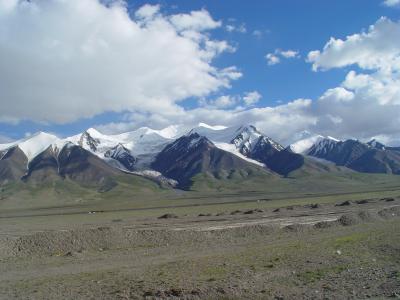
New fossil evidence from the rock desert and cold, treeless steppes of Tibet's desolate Himalayan-Tibetan Plateau that now comprise Earth's highest land mass suggests a literally groundbreaking possibility:

Major tectonic changes on the Tibetan Plateau may have caused it to attain its towering present-day elevations -- rendering it inhospitable to the plants and animals that once thrived there -- as recently as 2-3 million years ago, not millions of years earlier than that, as geologists have generally believed. The new evidence calls into question the validity of methods commonly used by scientists to reconstruct the past elevations of the region.

Benfotiamine, a popular vitamin supplement is being advertised with claims that are demonstrably untrue, as revealed by research published in the open access journal BMC Pharmacology.

Benfotiamine is a synthetic derivative of thiamine (vitamin B1). It is marketed heavily as a dietary supplement using a selection of unsubstantiated, 'not-quite-medical' claims that tend to characterize this field. A large part of this campaign has been built around the belief that benfotiamine is lipid-soluble and, therefore, more physiologically active.

Scientific research led by Dr Lucien Bettendorff of the Center for Cellular and Molecular Neurobiology at the University of Liège, Belgium, has entirely disproved these claims.

The proteins upon which life depends share an attribute with paper airplanes: Unless folded properly, they just won't fly.

But researchers have been puzzled by how the long, linear proteins cranked out by the ribosome factories in a cell are folded into the shapes they must assume to perform their function. They only have known that for many of the most complex and essential proteins, the folding takes place out of sight, hidden in the inner cavity of a type of molecule called a chaperonin.

Now Stanford researchers have begun prying open the lid, literally, on the inner workings of chaperonin molecules by deducing the mechanism by which the lid operates on a barrel-shaped chaperonin called TRiC.

Marine bacteria have the capacity to take up and capture carbon dioxide with the help of sunlight, say researchers at Kalmar University in Sweden in collaboration with colleagues in Spain, Australia, and Russia.

This can be compared to a simple form of photosynthesis, where marine bacteria use energy from sunlight to absorb carbon dioxide. It was previously known that bacteria in oxygen-starved lakes can have this capacity, but it's new knowledge that bacteria in the open seas can do so as well. This challenges earlier knowledge that algae are the only organisms that capture carbon dioxide in the surface water exposed to sunlight. It remains unknown just how much carbon dioxide is captured by these bacteria.

Organic, natural food is all the rage but in some instances it reaffirms why people only lived to be 35 years old.

A comparison of swine raised in antibiotic-free and conventional pork production settings revealed that pigs raised outdoors without antibiotics had higher rates of three food-borne pathogens than did pigs on conventional farms, which remain indoors and receive preventive doses of antimicrobial drugs.

The study was funded by a grant from the National Pork Board so if funding sources lead you to believe that results are biased, stop reading now.

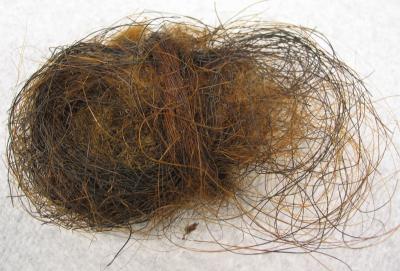
The woolly mammoth was not one large homogenous group, as scientists previously had assumed, and it did not have much genetic diversity, according to a new genetic study.

Woolly mammoths, descended from ancestors in Africa, were widespread in northern Europe, Asia, and North America during the last Ice Age. However, by 11,000 years ago, they all had died out, except for tiny isolated populations that held out for another few thousand years.

The research marks the first time scientists have dissected the structure of an entire population of extinct mammal by using the complete mitochondrial genome -- all the DNA that makes up all the genes found in the mitochondria structures within cells. Data from this study will enable testing of the new hypothesis presented by the team, that there were two groups of woolly mammoth -- a concept that previously had not been recognized from studies of the fossil record.

"The population was split into two groups, then one of the groups died out 45,000 years ago, long before the first humans began to appear in the region," said Stephan C. Schuster, associate professor of biochemistry and molecular biology at Penn State University and a leader of the research team. "This discovery is particularly interesting because it rules out human hunting as a contributing factor, leaving climate change and disease as the most probable causes of extinction."