



A combination of negative mother-daughter relationships and low blood levels of serotonin, an important brain chemical for mood stability, may be lethal for adolescent girls, leaving them vulnerable to engage in self-harming behaviors such as cutting themselves.

New University of Washington research indicates that these two factors in combination account for 64 percent of the difference among adolescents, primarily girls, who engage in self-harming behaviors and those who do not.

“Girls who engage in self harm are at high risk for attempting suicide, and some of them are dying,” said Theodore Beauchaine, a UW associate professor of psychology and co-author of a new study. “There is no better predictor of suicide than previous suicide attempts.”

Solving a long-standing biological mystery, UCLA stem cell researchers have discovered that blood stem cells, the cells that later differentiate into all the cells in the blood supply, originate and are nurtured in the placenta.

The discovery may allow researchers to mimic the specific embryonic microenvironment necessary for development of blood stem cells in cell culture and grow them for use in treating diseases like leukemia and aplastic anemia, said Dr. Hanna Mikkola, a researcher in the Eli and Edythe Broad Center of Regenerative Medicine and Stem Cell Research and senior author of the study.

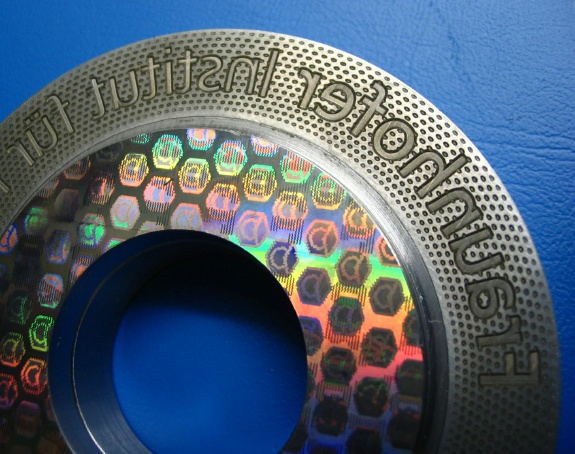
People who handle explosives usually have heavy-duty tasks to perform – dislodging rocks, demolishing old buildings, or triggering an avalanche. Now explosives can be used for delicate tasks, too, like making it possible to place holograms in steel.

Nearly everybody carries holograms around on light things, like money or tickets for a concert, because they protect against forgery. They take a great deal of effort to produce, and are almost impossible to copy, because the image is created not only by the interaction of different colors and contrasts, but also by the surface structure. Different pictures can be seen, depending on the direction from which the light is shining.

What do oil exploration and steroid testing have in common? Quite a bit, say researchers at The University of Nottingham.

Their new process — which uses high pressure environments to investigate the chemical structure and make-up of a sample — has been refined and developed at the University to develop highly accurate tests for detecting levels of illicit steroids in urine. The test procedure is already in the process of being commercialised and is expected to be ready for use in the 2012 Olympics.

A new modeling approach using sea ice motion data to follow parcels of ice backward in time at monthly intervals for up to 3 years while accumulating a history of the solar radiation and air temperature to which the ice was exposed offers new hope for increased accuracy in climate change models, say scientists with the U.S. Geological Survey and the Russian Academy of Sciences, Moscow. This is the only model based entirely on historical observations.

Using this new technique, the thickness of Arctic sea ice was estimated from 1982 to 2003. Results showed that average ice thickness and total ice volume fluctuated together during the early study period, peaking in the late 1980s and then declining until the mid-1990s. Thereafter, ice thickness slightly increased but the total volume of sea ice did not increase.

A 10-cent pill doesn't kill pain as well as a $2.50 pill, even when they are identical placebos, according to a provocative study by Dan Ariely, a behavioral economist at Duke University.

"Physicians want to think it's the medicine and not their enthusiasm about a particular drug that makes a drug more therapeutically effective, but now we really have to worry about the nuances of interaction between patients and physicians," said Ariely, whose findings appear as a letter in the Journal of the American Medical Association.

Objectives.

Sepsis is a syndrome that results from a dysregulated host response to infection which can rapidly lead to organ dysfunction and death.
The aim of this study was the microbiological and clinical assessment of a new real-time PCR test (SeptiFast: SF, Roche Diagnostics) for the diagnosis of blood stream infections (BSI) in a population of neutropenic patients.
The results of SF were compared with blood cultures (BC) obtained on the same specimens and the clinical significance of the two methods was assessed.

Methods.

A national database containing images of ballistic markings from all new and imported guns sold in the U.S. should not be created at this time, says a new report from the National Research Council. Such a database has been proposed to help investigators link ballistics evidence -- cartridge cases or bullets found at crime scenes -- to a firearm and the location where it was originally sold.

But given the practical limitations of current technology for generating and comparing images of ballistic markings, searches of such an extensive database would likely produce too many candidate "matches" to be helpful, the report says.

Hardware piracy - making knock-off microchips based on stolen blueprints - has long been a chronic problem in the electronics industry. Computer engineers at the University of Michigan and Rice University have devised a comprehensive way to head off this costly infringement: Each chip would have its own unique lock and key. The patent holder would hold the keys. The chip would securely communicate with the patent-holder to unlock itself, and it could operate only after being unlocked.

The technique is called EPIC, short for Ending Piracy of Integrated Circuits. It relies on established cryptography methods and introduces subtle changes into the chip design process. But it does not affect the chips' performance or power consumption.

According to quantum mechanics, small magnetic objects called nanomagnets can exist in two distinct states (i.e. north pole up and north pole down). They can switch their state through a phenomenon called quantum tunneling.

When the nanomagnet switches its poles, the abrupt change in its magnetization can be observed with low-temperature magnetometry techniques used in del Barco’s lab. The switch is called quantum tunneling because it looks like a funnel cloud tunneling from one pole to another.

A new paper in Nature shows that two almost independent halves of a new magnetic molecule can tunnel, or switch poles, at once under certain conditions. In the process, they appear to cancel out quantum tunneling.

