

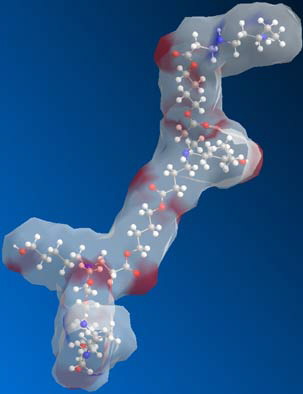





Studies with rats have revealed the potential in an entirely new class of antidepressants that take effect after only days of treatment versus the weeks required for current drugs.

The researchers, Guillaume Lucas and colleagues, said that they hope their findings will spur development of such new antidepressant drugs so that clinical testing can begin quickly.

Depression can be treated by enhancing the action of the neurotransmitter serotonin in the brain. Such neurotransmitters are the chemical signals that one neuron launches at another to trigger a nerve impulse in the target neuron.

Airline passengers and crews who gripe about poor cabin air quality could have a new culprit to blame: the oils on their skin, hair and clothing. A new study suggests interactions between body oils and ozone found in airplane cabins could lead to the formation of chemical byproducts that might worsen nasal irritation, headaches, dry eyes and lips, and other common air traveler complaints.

In simulated flights lasting four hours, American and Danish researchers placed two groups of 16 volunteers in a mockup of an airline cabin and then exposed them to varying levels of ozone and air flow, including levels typically experienced in real flights.

In experiments with mice, Lennart Mucke and colleagues have discovered a mechanism by which the toxic brain protein produced in Alzheimer’s disease (AD) could contribute to the cognitive deficits that are its hallmark. They found evidence that the toxic protein, called Aβ peptide, triggers overexcitation of neurons in the brain’s learning centers, inducing compensatory rewiring of brain circuitry in the centers—all of which could cause deterioration of neural function.

The researcher wrote that their results showed the need for studies to explore whether blocking that overexcitation might prevent such neurological deficits in AD.

Scientists at MIT’s Department of Civil and Environmental Engineering and the Technion Israel Institute of Technology have for the first time recorded the entire genomic expression of both a host bacterium and an infecting virus over the eight-hour course of infection.

In work that could lead to safe and effective techniques for gene therapy, MIT researchers have found a way to fine-tune the ability of biodegradable polymers to deliver genes.

Gene therapy, which involves inserting new genes into patients' cells to fight diseases like cancer, holds great promise but has yet to realize its full potential, in part because of safety concerns over using viruses to carry the genes.

The new MIT work, published this week in Advanced Materials, focuses on creating gene carriers from synthetic, non-viral materials.

Prions – an abbreviation for proteinaceous infectious particles – work as a trigger to a set of diseases of the brain and nervous system, the so-called spongiform encephalopathies. These include BSE in cattle, scrapie in sheep and Creutzfeldt Jakob’s Disease in humans. Prions are structural variants of a normal protein found in healthy tissues – especially in the brain.

The devastating effect of infectious prions is that, once they have entered the organism, they can modify the normal "healthy" prion proteins to create more infectious prions, and thus cause the illness to progress.

Gene therapy, a field of intense research for nearly 20 years, involves inserting new genes into patients' cells to fight diseases like cancer. It holds great promise but has yet to realize its full potential, in part because of safety concerns over the conventional technique of using viruses to carry the genes - more than 1,000 gene-therapy clinical trials have been conducted and most trials use viruses as carriers, or vectors, to deliver genes.

However, there are risks associated with using viruses. To date there are no FDA-approved gene therapies. As a result, many researchers have been working on developing non-viral methods to deliver therapeutic genes.

The standard approach in biology is to focus on identifying individual genes and proteins and pinpointing their role in the cell or the human body. But molecules almost never act alone. According to Lilia Alberghina from the University of Milano-Bicocca, Italy: “There is a growing awareness in medical science that biological entities are ‘systems’ – collections of interacting parts.”

A new report by the European Science Foundation (ESF) on systems biology is an attempt to identify how research in this area could be accelerated and developed further in Europe. The report concludes with a set of specific recommendations that aims at consolidating Systems Biology efforts in Europe.

Systems biology is data driven. Will it work without the same time spent on experimental data?

Weather forecasting and climate modelling for the notoriously unpredictable Sahel region of Africa could be made easier in the future, thanks to new research results coming from the African Monsoon Multidisciplinary Analysis study (AMMA).

A paper published in Geophysical Research Letters describes how the AMMA scientists gathered new atmospheric data by using satellite imagery to plot flight paths over areas where storms had produced very wet soils. Dropsondes (weather reconnaissance devices) were launched from a research aircraft above these wet areas to record data such as humidity, wind strength and temperature. The findings allowed the scientists to compare the atmospheric conditions above wet soils with those above adjacent dry soils.

Virological evidence cannot prove transmission in HIV criminal cases, warn experts in this week’s BMJ.

Viral phylogenetics provides a way of assessing the relations between viruses from different people. It allows us to estimate the probability that viruses from two particular people have a recent common origin. But there are serious limitations on what can and cannot be inferred using this technique.

The recent flurry of criminal cases brought against people in the United Kingdom accused of infecting their sexual partner(s) with HIV has resulted in several convictions, write Professor Deenan Pillay and colleagues in an editorial.

