




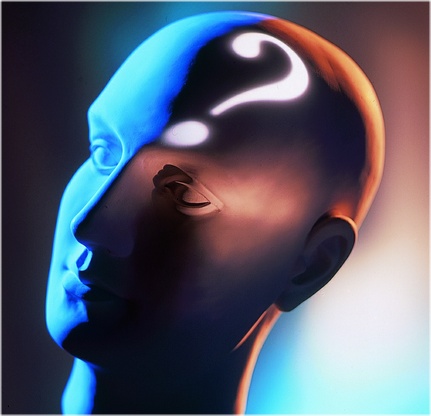

How the brain keeps tabs on what happened and when is still a matter of speculation but a computational model developed by scientists at the Salk Institute for Biological Studies now suggests that newborn brain cells—generated by the thousands each day—add a time-related code, which is unique to memories formed around the same time. 

They didn't set out to explain how the brain stores temporal information but were interested in why adult brains continually spawn new brain cells in the dentate gyrus, the entryway to the hippocampus. The hippocampus, a small seahorse-shaped area of the brain, distributes memory to appropriate storage sections in the brain after readying the information for efficient recall.
Is it possible to share a pain that you observe in another but have never actually experienced yourself?  A new study uses brain-imaging  to try and answer this question and the research,  published in Neuron, may provide insight into the brain mechanisms involved in empathy.

Brain-imaging studies have shown similar patterns of brain activity when subjects feel their own emotions or observe the same emotions in others. It has been suggested that a person who has never experienced a specific feeling would have a difficult time directly empathizing with a person through a "mirror matching" mechanism that requires previous experience and would instead have to rely on a higher inferential processes called "perspective taking." 
Show me the science: 30 days of evolution blogging, day 1

Birds are the modern day descendants of dinosaurs, or as paleontologist Kevin Padian likes to say, birds are dinosaurs. But how did birds evolve from grounded, naked reptiles into plumed aviators? Evolutionary biologists have been piecing together the details for nearly 40 years, and this month, a major prediction about feather evolution has been vindicated.

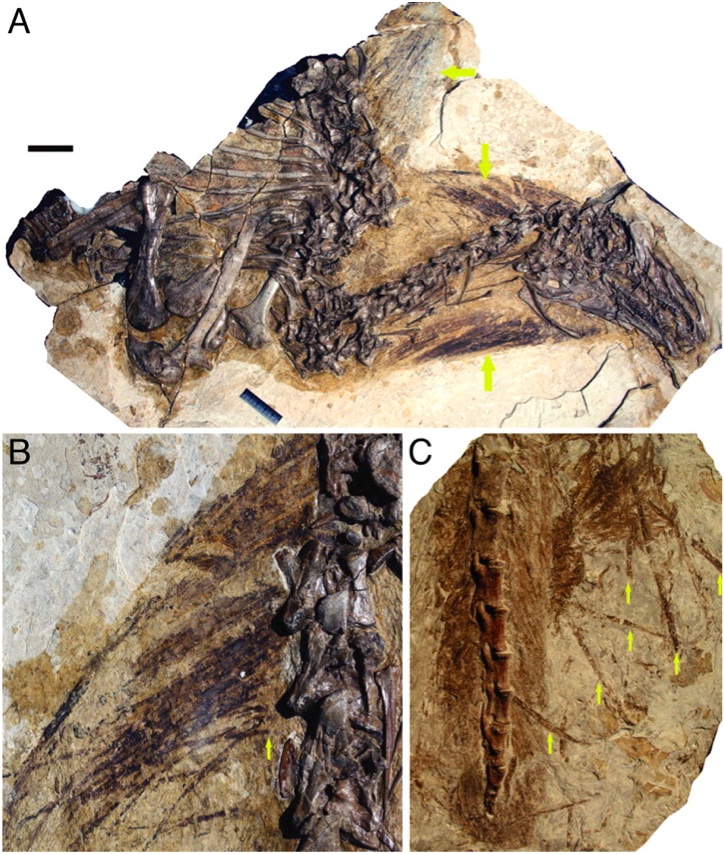
Xing Xu and colleagues at the Chinese Academy of Sciences report the discovery of 120 million-year-old primitive fossil feathers, whose structure matches a prediction about the evolution of feathers made 10 years ago. With this fossil discovery, all major stages of feather evolution predicted by evolutionary biologists have been found in the fossil record.

Xu, et al., Figure 1, copyright PNAS

Via Pharyngula, some non-scientist MD thinks that ~21,000 protein-coding genes aren't nearly enough to make a human (which of course then means that evolution is wrong):

4) The Human Genome Project showed that only 1-2% of Human DNA codes for proteins, or about 25,000 genes. These are not enough to account for the complexity of the organism. What is the other 98% of the genome's function? We don't know.


(BTW, the count of human genes has gone down since the genome sequence was first released; the latest number I hear from my gene-finding colleagues is about 21,000.)

PZ points out the absurdity of this claim that we're short on genes:
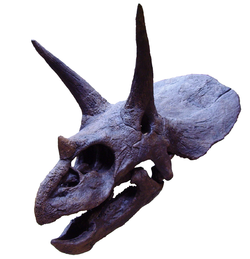
Triceratops had three horns but it was not just to impress the females, says a research study led by Andrew Farke, curator at the Raymond M. Alf Museum of Paleontology, located on the campus of The Webb Schools.    They used them to settle disputes as wel.   Battle scars on the skulls of Triceratops preserve rare evidence of Cretaceous-era combat, they say.
Do you know the name of the first computer game?   I confess I didn't and I learned programming on a Univac 1100/62 so I am a lot closer to the origination date of computer games than most people who will read this.

I assumed it was a kind of punchcard-loaded word game, like a 1960s Leather Goddesses of Phobos only without the divine genius of Dostoevsky that game possessed, but the history of video games is much more elaborate than that.
Yours truly has been watching telly again!  (I hope no-one will get the idea that the couch potato might be a significant source of starch.) 

This time, on our local BBC news service, we hear how researchers at the University of Portsmouth Institute of Biomedical and Biomolecular Science are cooperating with their Institute of Marine Sciences to harness the Gribble.  
In doing some research for my next book (on the differences between science and pseudoscience), I re-read this rather stunning piece of writing: “Scientists these days tend to keep up a polite fiction that all science is equal. Except for the work of the misguided opponent whose arguments we happen to be refuting at the time, we speak as though every scientist's field and methods of study are as good as every other scientist's, and perhaps a little better. This keeps us all cordial when it comes to recommending each other for government grants.”

The dying light of the George W. Bush presidency was marked by, among other things, a legislative move to derail recent gains in the federal government's opening of science. In particular, the innocuous sounding “Fair Copyright in Research Works Act” (HR 6845) introduced into the House by John Conyers, Jr. (DEM-MI), on 9 September 2008 [1] was poised to shut down the National Institutes of Health (NIH) Public Access Policy [2], as well as forestall the spread of this open-access spirit to other areas of federally sponsored research and scholarship. Hearings were held, but the bill did not make it through the House.

End of story? Not quite.

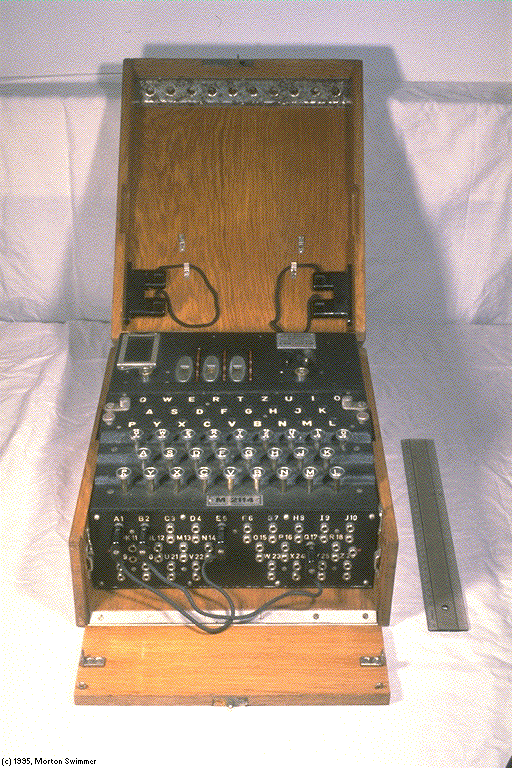
Cryptography isn't just for spies anymore - it's absolutely everywhere around us. Every time we use an ATM or buy something online we are sending data that we hope isn't intercepted on its way, because that would mean our finances were at risk. Additionally, corporations and the government have an interest in securing communications within their organizations and with other companies or governments so that information doesn't fall into the wrong hands.

How do these large organizations keep malicious people (commonly called "adversaries" in cryptology circles) from intercepting and reading their messages?

