


On Saturday, June 2nd, 2018, I gave the commencement speech for the North Penn-Liberty class of 2018, 35 years after I graduated. While much has changed, the basic challenges young people will face have not. A number of attendees asked me for a copy and I didn't have a clean one, mine was half-typed, half hand notes, so it is presented below. At least as it was written. I went off book in a few spots, including at the end. So even at my age I have new things to learn: Like always listen to the experienced speechwriters.

###

Home

Short summary: This is a first paper in what they hope to be a long term study. It’s an interesting project, but it should not be used to predict what will happen to Earth in the future. Instead we should rely on projections by the scientists who are studying the effects of climate change, our population growth, predicting food security and looking at the intricate details of how our world works. The UN population division says as its middle of range projection that we level off at 11 billion people by 2100 and experts say we can feed everyone too, if we continue on target with the things we are doing to make sure it happens.

Several contemporary events scheduled for the European Union are bringing increased focus to the topic of communicating risks about Endocrine Disrupting Chemicals (EDCs). The first took place on May 16 at the annual meeting of the European Chapter of the Society of Environmental Toxicology and Chemistry (SETAC) which was held in Rome.

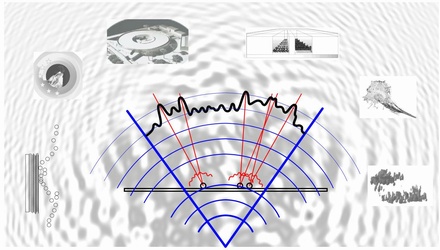
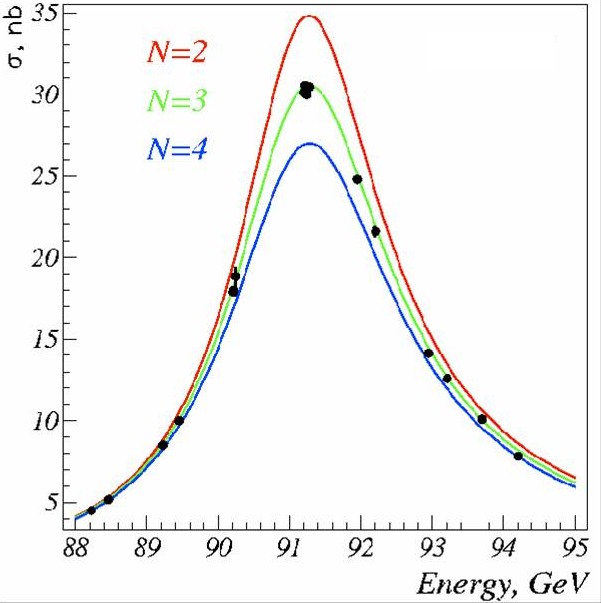
Neutrinos, the most mysterious and fascinating of all elementary particles, continue to puzzle physicists. 20 years after the experimental verification of a long-debated effect whereby the three neutrino species can "oscillate", changing their nature by turning one into the other as they propagate in vacuum and in matter, the jury is still out to decide what really is the matter with them. And a new result by the MiniBoone collaboration is stirring waters once more.

Two experts, Carlin, a former analyst for the CIA and the State Department widely regarded as one of the top experts on North Korea in the world, and Hecker, former director of the Los Alamos Laboratory for over a decade, have just released a suggestion for a deal for North Korea with a surprising element - a United Korea civilian space and nuclear program! It was covered by the Associated Press and their release was run in many news outlets including the NY Times. But their release only describes the first steps of their report and doesn't mention this which I think is one of the most interesting parts of their proposal. Other reports expand on that part of their proposal however, e.g.

The days when environmental litigation groups like Earthjustice and Farmworker Justice had friendly voices in EPA and the White House seem like two years in the past. Because they are two years in the past. Where once environmental groups could write entire documents for the White House to repost in the name of the U.S., now they cry foul if organizations like Heartland even have email exchanges with EPA.
Epilepsy is no laughing matter - except for one rare form, caused by hypothalamic hamartomas, benign masses in the brain that can cause epilepsy symptoms, unintentional giggling seizures and even early puberty.

This actual science appeared in the medical melodrama "Grey's Anatomy." The episode “Hold Back the River” featured the show’s doctors using focused sound waves to treat a hypothalamic hamartoma in a young boy, and it is being tested in a clinical trial at UVA.

It's not a tumor

Mars is extraordinarily cold and dry, like our most arid deserts. Harsh but possibly not totally lifeless. There is a chance of life there, hidden away perhaps in thin layers of brines just a couple of centimeters below the surface, or as spores within the dust. Our astronauts will be covered in microbes from Earth too and our habitats filled with life. What happens when life mixes together from these two biospheres?

If I had to pick one consistent complaint from the public about scientists it's that people feel like those who should know the most about a topic are often the least able to give people a straight answer. Instead of providing the answer they know to be true, they hedge and qualify. When scientists without media training show up to talk, its easy to feel like you will hear or read "on the other hand' so many times that researchers are an alien species full of tentacles.

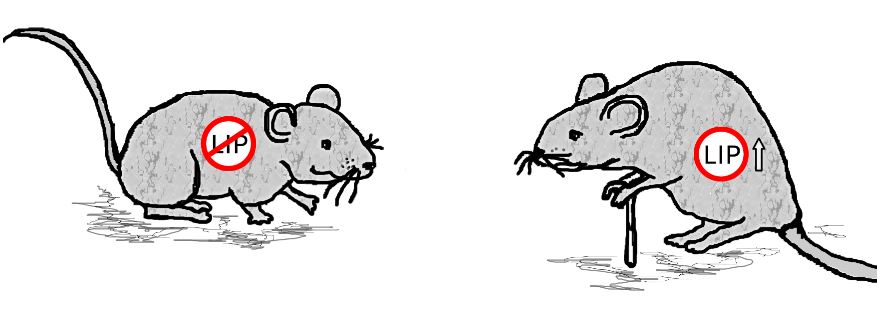
There are numerous proponents of caloric restriction as a way to achieve longevity, and the belief has a kernel of truth - you don't often find obese centenarians - but what they leave out of the narrative is that these are mice, and they were weaned on a starvation diet.

We're not going to wean human babies on a starvation diet and then expect them to do it for 110 years. They will discover In-N-Out Burgers somewhere along the way. 

But while aging is going to remain the biggest risk factor for diseases like cancer, cardiovascular diseases, type II diabetes and Alzheimer's disease, obesity will soon overtake smoking as the number two. What can bridge the gap between humans and the flies, worms, fish and mice that have benefited from a lifetime diet?

