Literacy has been getting declining support in recent years. The Obama administration only wants to spend $187 million for its Effective Teaching and Learning: Literacy initiative while the Bush administration had devoted $1 billion annually to the Reading First program. That means it is necessary to find out which programs work best.

A new study uses a scientific lens to look at the conversational art of instruction, a team of researchers identify specific ways teachers talk to students that measurably impact literacy skills.

Faster increases in life expectancy do not necessarily produce faster population aging, a counterintuitive finding that came as a result of applying new measures of aging developed at the International Institute for Applied Systems Analysis (IIASA) in order to project future populations for Europe out to the year 2050.

Traditional measures of age simply categorize people as "old" at a specific age, usually 65, but previous research by Scherbov, Sanderson, and colleagues has shown that the traditional definition puts many people in the category of "old" who have characteristics of much younger people. 

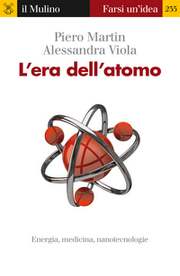
"The era of the atom" is a new book by Piero Martin and Alessandra Viola - for now the book is only printed in Italian (by Il Mulino), but I hope it will soon be translated in English.

Poor sanitation is linked to 280,000 deaths per year worldwide but it has lots of benefits besides just saving lives. That is why sanitation is a key policy goal in many developing countries.

Strange sociological voodoo like a "community motivation" model to improve hygiene has done nothing, according to a recent analysis of Bangladesh, but it would if there are subsidies for hygienic latrines targeted to the poor. 

Scientists at the Vetmeduni Vienna investigated whether stomach ulcers in cattle are related to the presence of certain bacteria. For their study, they analyzed bacteria present in healthy and ulcerated cattle stomachs and found very few differences in microbial diversity. Bacteria therefore appear to play a minor role in the development of ulcers.

The microbial diversity present in the stomachs of cattle has now been published.

A drug commonly taken to prevent seizures in epilepsy may surprisingly protect the eyesight of people with multiple sclerosis (MS), according to a study released today that will be presented at the American Academy of Neurology's 67th Annual Meeting in Washington, DC, April 18 to 25, 2015.

For the study, the researchers randomly selected 86 people with acute optic neuritis within two weeks of having symptoms to receive either the epilepsy drug phenytoin or a placebo for three months. The researchers then used medical imaging to measure the thickness of the retina, the light sensitive nerve layer at the back of the eye at the beginning of the study and then six months later. Each patient's eyesight (including sharpness and color perception) was also tested. 

Following my Ten Commandments for Tech Companies – which changed their behavior not one whit – I offer these shalt-nots for US airlines.

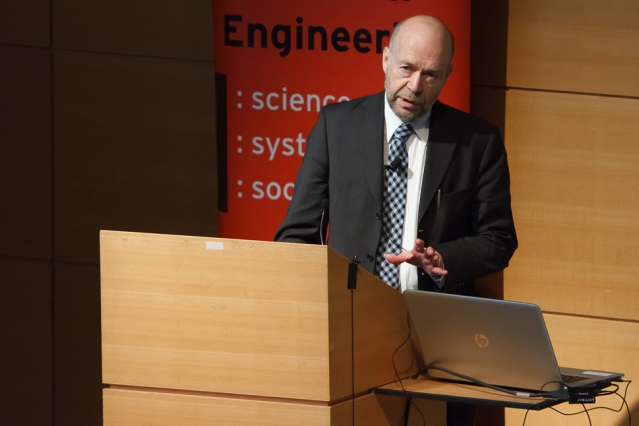
James Hansen, a former head of NASA’s Goddard Institute for Space Studies who was one of the first scientists to raise concerns about global climate change, spoke at MIT Tuesday in the biennial David J. Rose Lecture, sponsored by the Department of Nuclear Science and Engineering (NSE).

 Hansen came to prominence in the late 1980s, when he first testified before Congress about the perils of accumulating carbon dioxide in the atmosphere.

The two heaviest naturally occurring radioactive elements (by atomic weight) on the earth are Uranium and Thorium.  Uranium is used as a fuel in modern commercial nuclear power reactors for electricity generation.  A lesser known fact is that thorium could also be used as a nuclear fuel .  Naturally occurring thorium is not fissile and so not able to undergo nuclear fission (separation) and as such it takes an initial nuclear reaction to enable this process.

Surveying news headlines in recent years, it seems that cheating is rampant.

In the athletic arena, Lance Armstrong was stripped of his seven Tour de France titles for using performance-enhancing drugs.

In business, some of the world’s largest banks have paid nearly $200 billion – the equivalent of the GDP of New Zealand – in fines over the past six years for cheating.