

oday marked the publication of the first ever genome-wide association study of rosacea, a common and incurable skin disorder. Led by Dr. Anne Lynn S. Chang of Stanford University's School of Medicine, and co-authored by 23andMe, the study is the first to identify genetic factors for this condition.

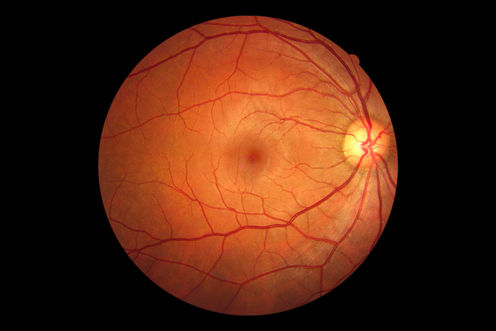
The human eye is optimized to have good color vision at day and high sensitivity at night. 

But until recently it seemed as if the cells in the retina were wired the wrong way round, with light traveling through a mass of neurons before it reaches the light-detecting rod and cone cells.

New research presented at a meeting of the American Physical Society has uncovered a remarkable vision-enhancing function for this puzzling structure.

I’ve probably lost count of the number of ‘WATER ON MARS’ and related headlines I’ve read over the years. It’s an interesting case study of how a scientific theory gains support as more evidence is collected, until it becomes something ‘that is known’.

But last week we heard evidence that Mars has lost some water – an entire oceans worth in fact.

Where is the line between advocating science and protecting corporate profits? It's usually only clear to people trying to show the other side is involved in wrongdoing. A paper in PLOS Medicine uses sugar industry documents to note how they influenced research priorities for the 1971 US National Caries Program (NCP).

When it comes to buying things, our brains can't see the big, black-and-white forest for all the tiny, colorful trees, according to marketing scholars at The Ohio State University, who say that people who were shown product images in color were more likely to focus on small product details--even superfluous ones--instead of practical concerns such as cost and functionality.

The findings in the Journal of Consumer Research mesh well with science, they believe, namely in how vision evolved in the brain, and suggest that viewing objects in black and white helps our brains focus on what's most important. The researchers recruited people through Amazon Mechanical Turk, a service that provides online study participants for fee, so caveat emptor on the results.

Studying the intricate fractal patterns on the surface of cells could give researchers a new insight into the physical nature of cancer, and provide new ways of preventing the disease from developing.

This is according to scientists in the US who have, for the first time, shown how physical fractal patterns emerge on the surface of human cancer cells at a specific point of progression towards cancer.

Publishing their results today, 11 March, in the Institute of Physics and Germany Physical Society's New Journal of Physics, they found that the distinctive repeating fractal patterns develop at the precise point in which precancerous cells transform into cancer cells, and that fractal patterns are not present either before or after this point.

New research has shown that patients having heart surgery do not benefit if doctors wait until a patient has become substantially anaemic before giving a transfusion.

In the UK, about half of all patients having cardiac surgery are given a red blood cell transfusion after the operation, using up to ten per cent of the nation's blood supply. The proportion of patients having a transfusion is high because blood loss and severe anaemia are common after cardiac surgery and transfusion is the preferred treatment. Blood loss causes anaemia which doctors detect by measuring the red cell count or haemoglobin level - a low level triggers transfusion.

Proteins from salt-loving, halophilic, microbes could be the key to cleaning up leaked radioactive strontium and caesium ions from the Fukushima Dai-ichi Nuclear Power Plant incident in Japan. The publication of the X-ray structure of a beta-lactamase enzyme from one such microbe, the halophile Chromohalobacter sp. 560, reveals it to have highly selective cesium binding sites.

Exposure to hormone-altering chemicals called phthalates - which are found in many plastics, foods and personal care products - early in pregnancy is associated with a disruption in an essential pregnancy hormone and adversely affects the masculinization of male genitals in the baby, according to research led by the University of Pittsburgh Graduate School of Public Health.

Prenatal exposure to low doses of the environmental contaminants polychlorinated biphenyls, or PCBs, change the developing brain in an area involved in metabolism, and some effects are apparent even two generations later, a new study finds. Performed in rats, the research will be presented Friday at the Endocrine Society's 97th annual meeting in San Diego.

Hereditary effects included increased body weight, but only in descendants of females--and not males--exposed to PCBs in the womb, said study co-author Andrea Gore, PhD, professor at the University of Texas at Austin.

"These endocrine-disrupting chemicals affect the developing brain differently in males and females," Gore said.


