




A new test that uses combinations of cells from a single donor’s blood can predict whether a new drug will cause a severe immune reaction in humans.
Drug discovery is an expensive, bureaucracy-laced process. Due to more restrictions requiring a lot more trials, drug discovery is an average 14 year process costing $2 billion and only 1 out of 5,000 drugs will get approved and out to the market. It's easy to imagine why once a company knows the product is not viable or safe, it is abandoned.


Hot off the presses: The FDA just approved the first biosimilar drug in the United States. Sandoz's Zarxio is used to boost the production of certain white blood cells in patients who are undergoing cancer chemotherapy, and are immunocompromised. Sarxio will compete with Amgen's Neupogen, which has been used for this purpose since its approval in 1991. 

A Swiss teenager, recently returned home from a discotheque, came to the emergency department with classic sudden symptoms of stroke, only to be diagnosed with Lyme disease. The highly unusual case presentation was published in "Acute Lyme Neuroborreliosis with Transient Hemiparesis and Aphasia", Annals of Emergency Medicine.

Lighting technology is in a state of change. Incandescent bulbs, which have been around forever, have been banned in the United States but the heavily-subsidized replacement, compact fluorescent bulbs, run the risk of mercury poisoning if they break and have a glow that many don't find appealing. Light emitting diodes (LEDs) are likely the technology of choice in the mid-term future but they are expensive.

It was good to be a rampaging Mongol warlord circa 1200 A.D. - at least when it came to having a lot of sex and killing off your genetic rivals.

But he was not the only one. A new study finds that millions of Asian men share a common ancestral heritage with 11 people dating back 4,000 years ago. The study examined the male-specific Y chromosome, which is passed from father to son, in more than 5,000 Asian men belonging to 127 populations. Though most Y-chromosome types are very rare, the team discovered 11 types that were relatively common across the sample and studied their distributions and histories.

New research shows that seven compounds of the countless found in spider venom block a key step in the body's ability to pass pain signals to the brain. The hunt for a medicine based on just one of these compounds, which would open up a new class of potent painkillers, is now a step closer according to new research published in the British Journal of Pharmacology.

Pain that cannot be controlled can ruin people's lives. One in five people worldwide currently suffer from chronic pain, and existing pain treatments often fail to provide relief. The economic burden is huge, with chronic pain in the USA alone estimated to cost around $600 billion a year, greater than the combined economic cost of cancer, diabetes and stroke.

The XVI edition of Neutrino Telescopes is over and it is the time for some summing up – which I feel completely unsuited to do, as I was just an observer there. As you know, my field is high-energy collider physics, and neutrino physics has become a very different thing since the discovery of neutral currents 42 years ago. Anyway, I decided I would collect here a few random thoughts on the status of the field, as seen from my very skewed viewpoint...


By Brian Owens, Inside Science

(Inside Science) -- Sampling the waste in a city's sewage system can be a good way to study the microbes that live in the population's guts – and could even offer a way to monitor public health issues such as obesity, according to new research.

Imagine a pair of twins that everyone believed to be estranged who end up closer to each other than anyone knew.

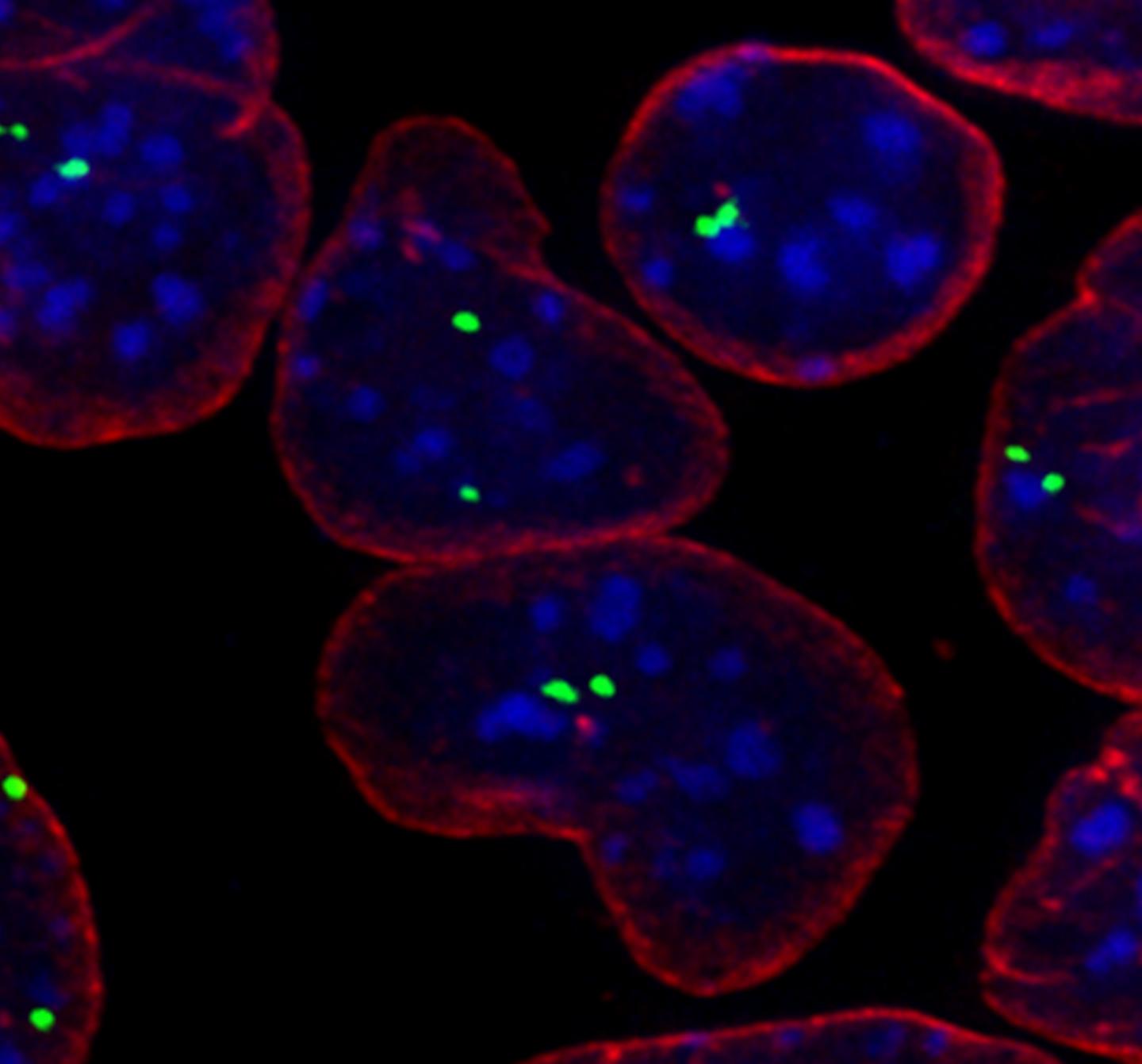
It may be just like that at the cellular level. We have two copies of each gene, one from each parent, and each copy, called an "allele," remains physically apart from the other in the cell nucleus.

Except a new study finds that is not always the case - at least in one set of alleles in mammalian cells. And the pairing has been observed to coincide with a critical time in the life of a stem cell: the moment when it commits to develop into a specific cell type, called differentiation.


