

Five genetic variants that influence the size of structures within the human brain have been discovered by an international team that included a Georgia State University researcher.

In the study led by Drs. Sarah Medland, Margie Wright, Nick Martin and Paul Thompson of the QIMR Berghofer Medical Research Institute in Australia, nearly 300 researchers analyzed genetic data and magnetic resonance imaging (MRI) scans from 30,717 individuals from around the world. They evaluated genetic data from seven subcortical brain regions (nucleus accumbens, caudate, putamen, pallidum, amygdala, hippocampus and thalamus) and intracranial volume from MRI scans.

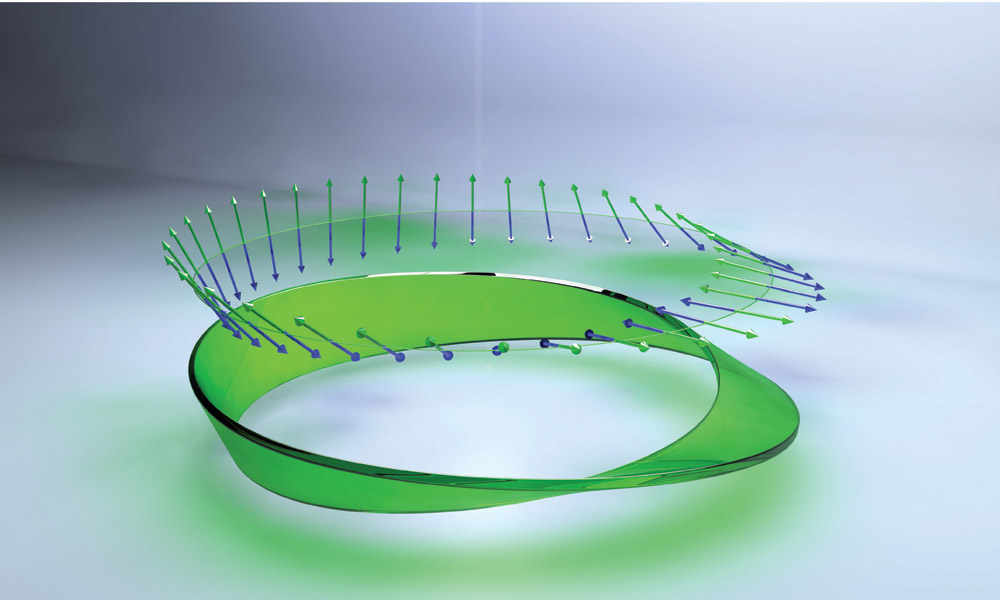
A collaboration of researchers have experimentally produced Möbius strips from the polarization of light, confirming a theoretical prediction that it is possible for light's electromagnetic field to assume this peculiar shape. 

Möbius strips are easy to create, of course. Millions of school children do it in classrooms every year by taking a strip of paper, twisting it once and joining up the ends. That's it, you have created a Möbius strip: a three dimensional structure that has only one side.

But finding Möbius strips occurring naturally is another issue.

Those video ads playing in the corner of your computer screen, in the midst of your multitasking, may have more impact than you realize. They may be as effective as the ads you're really watching, such as those during the Super Bowl, says a University of Illinois researcher.

It depends on how you perceive and process media content - whether your processing "style" is to focus more on one thing or to take it all in, according to Brittany Duff, a professor in Illinois' Charles H. Sandage Department of Advertising.

Will extending telomeres lead to longer, healthier lives? Researchers have taken a step toward answering this question by developing a new treatment used in the laboratory that extends telomeres.

One of the key aspects of aging is the shortening of telomeres over time. Telomeres, which serve as protective "end caps" for chromosomes, help keep DNA healthy and functioning as it replicates. Unfortunately, these protective end caps become shorter with each DNA replication, and eventually are no longer able to protect DNA from sustaining damage and mutations. In other words, we get older.

The betting line created for this weekend's Super Bowl is done by very smart people. They are not trying to fool anyone, they want the betting to be as even as possible and they make their money on a 'commission' - the vigorish or 'vig' - from the winners. It's not like selling football jerseys, where more volume helps, they need losers to fund the winners so making the odds as even as possible is important.

To do that, they try to take into account everything - which player has a cold, the type of field, the weather, the wind. According to a new study, they may take into account a biological clock.
In American scientization of politics culture, evolution acceptance is a big deal, as is climate change. Yet other science acceptance issues get much less attention.

Why? Evolution and climate change are not the most pressing short-term science issues we face, food, energy and medicine are. I am in awe of evolution but no one dies if some crank school district wants to put religion side-by-side with biology in a classroom, and American CO2 emissions from energy, obviously our biggest polluter, are back at early 1990s levels, thanks to science finding ways to make natural gas extraction better. 
In 2013, President Obama threatened to shut down the government if Congress did not do what he wanted. Congress replied in kind and so we got The Sequester, where government functions were halted unless they were specially exempted. NASA and the National Science Foundation were shuttered, the Smithsonian Panda Cam was turned off, science was doomed - but while scuttling science the president kept 436 personal White House staffers were kept on the payroll as "essential".
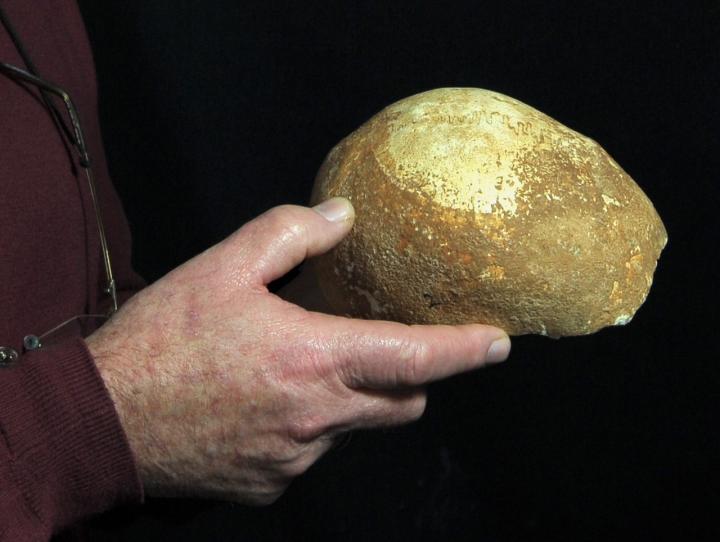
Modern humans date back only about 200,000 years. How did that turn into the population of the planet and the extinction of Neanderthals? We have to leave the world of science to speculate on that but physical evidence does provide some guideposts.

Fossil records show that some anatomically modern human groups reached the Levantine corridor - the modern Middle East - as early as 100,000 years ago but genetic testing indicates that human populations inhabiting the globe today descended from a single group that migrated from Africa only 70,000 years ago. 30,000 years is a gigantic gap and there has been little evidence to bridge the contradictory hypotheses. 
We are all familiar with the following scenarios: a woman and a man are having a conversation. She is warm and friendly and clearly interested in the conversation. He interprets her behavior as sexual interest. Or she is warm and friendly and clearly interested in the conversation and he thinks she is just being friendly and then she wonders if he's gay.

Same behavior, different interpretations. 

Men and women misunderstand each other a lot and psychologists in the Department of Psychology at the Norwegian University of Science and Technology (NTNU) believe that we are built that way by biology and time - we have evolved to get the wrong idea about sexual interest.

Antioxidants are natural food ingredients that protect cells from harmful influences. Their main task is to neutralize so-called "free radicals" which are produced in the process of oxidation and which are responsible for cell degeneration.

Scientists at the Max Planck Institute for Chemical Ecology in Jena, Germany, and the University of Lund, Sweden, now show that vinegar flies are able to detect these protective substances by using olfactory cues. Odors that are exclusively derived from antioxidants attract flies, increase feeding behavior and trigger oviposition in female flies.


