








Parkinson's disease sufferers have a different microbiota in their intestines than healthy counterparts, they have less Prevotellaceae bacteria, according to a study conducted at the University of Helsinki and the Helsinki University Central Hospital (HUCH).  

The drive for energy efficient homes is increasing asthma risk, finds a team at the University of Exeter Medical School. People are so concerned about energy savings they end up with homes that are not properly heated or ventilated, which could lead to more people developing asthma.

Working with a UK social housing provider, Coastline Housing, the research team assessed data from the residents of 700 properties in Cornwall. They found that people living in more energy efficient homes had a greater risk of asthma, and that the presence of mold doubled this risk.

If you are buying herbal dietary supplements like Ginkgo biloba (G. biloba)
to boost cognitive capacity, the first thing you should do is stop spending money on herbal dietary supplements like Ginkgo biloba and the next thing you should do is wonder how, in a completely unregulated market, you can even know if it is real.

It might not be. Even the olive oil industry thinks supplement makers need to be more honest. A new study in Genome used DNA barcoding to test the authenticity of Ginkgo biloba (G. biloba) found that almost 20 percent of samples didn't even have any. 

The European Food Safety Authority, most famous for declaring that water does not cure thirst, is now thinking about how to ban acrylamide, which is a chemical that can form in some foods during frying, roasting, or baking. No, it is not due to BPA, it has been present for as long as mankind has cooked food, but it was only discovered in 2002 and then in 2010 a paper was written showing it could be harmful to rats in extremely high doses.

When a broken bone protrudes through the skin, causing a puncture wound, it is called an open break. It is understandably traumatizing for kids and perhaps even more so for parents but there may be good news for those daunted by the prospect of surgery on top of all that - it may not be necessary.

Many children who sustain open bone fractures in the forearm or lower leg heal safely without surgery, according to the results of a small study in the Journal of Children's Orthopaedics, if the wound is small -- less than a half-inch in diameter -- and the surrounding tissue is free of visible contamination with dirt or debris. 


Not now! Roboscribe is busy creating a masterpiece (of heuristic analysis). gastev, CC BY

By Peter McOwan, Queen Mary University of London

The human race has long designed and used tools to help us solve problems, from flint axes to space shuttles. They affect our lives and shape society in expected and sometimes unexpected ways. We may understand how these tools work – after all, we built them – but sometimes it’s the use they’re put to that surprises.

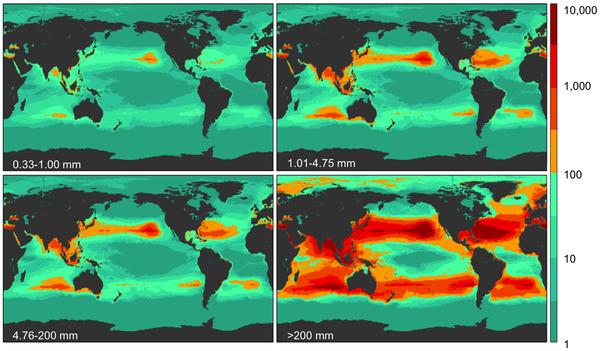
A new estimate says that microplastic and macroplastic pollution could consist of as much as 269,000 tons floating in the world's oceans.

Though there has been no sufficient data to truly estimate the amount of plastic in the oceans, there has been no limit to guessing and speculation so Marcus Eriksen, from Five Gyres Institute, and colleagues set out to build a better model.

For their paper in PLOS ONE, they gathered data from 24 expeditions collected over a six-year period (2007-2013) across all five sub-tropical gyres, coastal Australia, Bay of Bengal, and the Mediterranean Sea.

Two compounds appear to block the cardiac damage caused by the chemotherapy drug doxorubicin, according to a report in Science Translational Medicine which indicates that inhibiting the action of the enzyme MDH2, which is key to the generation of cellular energy in mitochondria, could prevent doxorubicin-induced damage to cardiac cells without reducing the drug's anti-tumor effects. 


Past your bedtime? Mikael Damkier/Shutterstock

By Elizabeth Englander, Bridgewater State University

Reductions in government healthcare spending in the European Union (EU) increase maternal mortality rates, suggests a new paper in BJOG: An International Journal of Obstetrics and Gynaecology (BJOG).

Maternal mortality is defined as the death of a woman during pregnancy, childbirth, or within 42 days of delivery from direct obstetric causes.  The new analysis looked at the association between reductions in government healthcare spending and maternal mortality across the European Union (EU) over a 30 year period, from 1981 to 2010, based on data from the World Health Organization (WHO) database. Data were available for 24 EU countries, a population of 419 million people (2010).


