













Not as simple as black and white. Fred Bchx, CC BY-NC-SA

By Ian Rickard, Durham University


Igor Stepovik Shutterstock

By Roxanne Connelly, University of Edinburgh

A growing number of scholars are using social media data to write articles about both online and offline human behavior - it's cheap, it's as accurate as surveys if properly controlled, and no one ever has to leave the office.

But surveys are not science for an obvious reason and yet, in recent years, studies have claimed the ability to predict everything from summer blockbusters to fluctuations in the stock market. They all get mainstream media attention despite obvious evidence of flaws in many of these studies.


Our culture tells women there's something wrong with them if they don't orgasm. Gustavo Gomes/Flickr, CC BY-NC

By Sally Hunter, University of New England

Yesterday I worked from scratch at a problem which certainly others have already solved in the past. I have mixed feelings with such situations: on one side I hate to reinvent the wheel, especially if there is an easy way to access a good solution; on the other I love to invent new ones...


Anyway this time I have decided I will ask you for some help, as collectively we may have a better idea of the optimal solution to the specific problem I am trying to address. But before I explain the problem, let me give you some background on the general context.

Searches for new physics at the LHC

Shifting descriptions of schizophrenia. Shutterstock

By Huw Green, City University of New York

In an attempt to move away from the traditional language used to describe psychosis and schizophrenia, the British Psychological Society (BPS) has launched an update to its thinking on this issue.

The foreword of the report it has published sets out the vision:


There is such a thing as 'too precise' when it comes to numbers. So what's appropriate? Erik Olsson, CC BY-NC-SA

By Jonathan Borwein (Jon), University of Newcastle and David H. Bailey, University of California, Davis

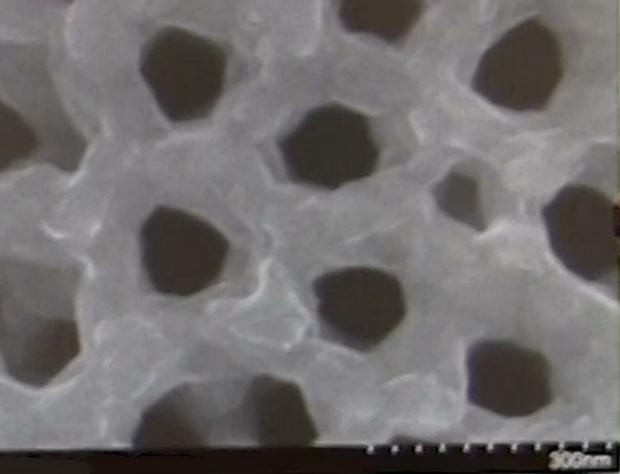
How is this for the ultimate miniaturization of energy storage: A new tiny nanopore includes all the components of a battery though it is just is a tiny hole in a ceramic sheet that holds an electrolyte to carry the electrical charge between nanotube electrodes at either end - and 1,000,000,000 can fit in the size of a postage stamp. 

The existing device is a test but the nano-sized battery performs well - and it can be fully charged in 12 minutes, thousands of times.  


This has as much in common with actual paleolithic culture as the paleolithic diet does. Flickr/George , CC BY-NC-SA

By Darren Curnoe


