






Scientists at the University of California, Santa Cruz, using a new wildlife tracking collar they developed, were able to continuously monitor the movements of mountain lions in the wild and determine how much energy the big cats use to stalk, pounce, and overpower their prey.

The research team's findings, published October 3 in Science, help explain why most cats use a "stalk and pounce" hunting strategy. The new "SMART" wildlife collar--equipped with GPS, accelerometers, and other high-tech features--tells researchers not just where an animal is but what it is doing and how much its activities "cost" in terms of energy expenditure.

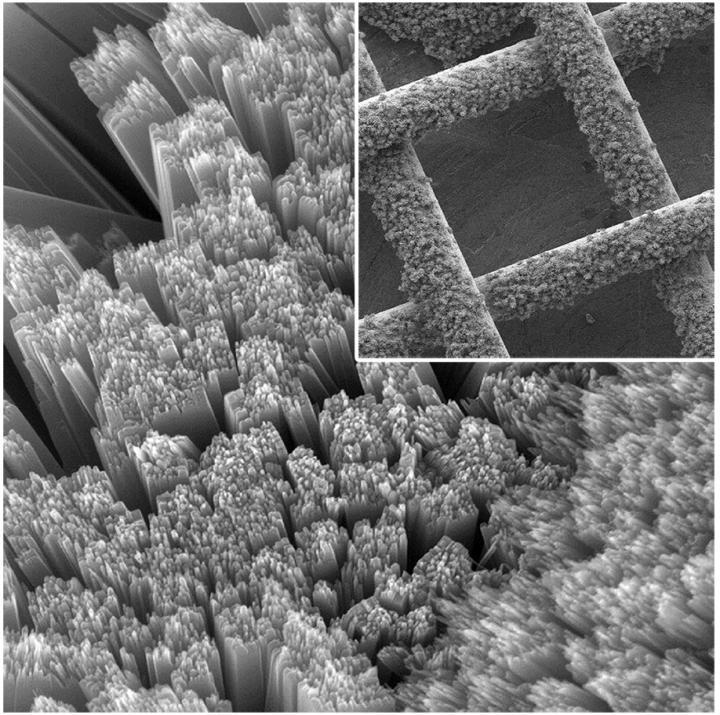
A new device invented at The Ohio State University is the world's first hybrid solar generator and battery - it solves the problem of finicky solar power generation by having the storage built in.

The key is a mesh solar panel, which allows air to enter the battery, and a special process for transferring electrons between the solar panel and the battery electrode. Inside the device, light and oxygen enable different parts of the chemical reactions that charge the battery.

As the Supreme Court of the United States begins its fall 2014 session this month, it faces decisions on several "blockbuster" cases, including freedom of speech, religious freedoms in prison, pregnancy discrimination and a possible decision on gay marriage.

Just don't expect any of these decisions until next June, just before the court's session ends.
New research from the Washington University in St. Louis School of Law finds big, or "blockbuster," cases are disproportionately decided at the end of June, just before the court's summer recess.

"We knew that more than 30 percent of the court's decisions are issued in June and more than half of those in the last week," said Lee Epstein, PhD, the Ethan A. H. Shepley Distinguished University Professor.

Zoonosis—transmission of infections from other vertebrates to humans—causes regular and sometimes serious disease outbreaks. Bats are a well-known vertebrate reservoir of viruses like rabies and Ebola. Recent discovery of sequences in bats that are resemble influenza virus genes raised the question of whether bat flu viruses exist and could pose a threat to humans. A study published on October 2nd in PLOS Pathogens addresses this question based on detailed molecular and virological characterization.

The yeast has not been gene modified by the researchers; rather, they have used adaptive laboratory evolution to produce it. The method allows new characteristics to be produced without knowing which mutations are required to achieve them.

Three yeast cultivations were subjected to a temperature of about 40 degrees. After just over three months, when over 300 generations had passed, the yeast suddenly started to grow effectively in all three cultivations. The researchers analysed the genetic structure and metabolism in three yeast strains from each cultivation. They concluded that while several different mutations had occurred in the strains, all the strains had the mutation that produced fecosterol.

In June of this year, Facebook provoked a widespread public outcry after it became known that it had tried to manipulate the emotions of nearly 700,000 of its users as part of a social “experiment.”


Coming to get you. Credit: D Simmonds, CC BY-SA

By Mark Blumberg, University of Iowa; Alexandre Tiriac, University of Iowa, and Carlos del Rio Bermudez, University of Iowa


Your gut bacteria won't change much. Credit: ponchicaBG

By Nicholas Ellaby, University of Liverpool

From eyes to the gap between the toes, we are covered in bacterial colonies.

Between 500 and 1000 unique species live in our gut alone. We provide an ideal environment for bacteria: warmth, moisture, nutrients and protection.

UCLA psychologists
using a scale of responses to scenarios are saying that white Americans may view diversity and multiculturalism negatively as the U.S. moves toward becoming a minority-majority nation.

The psychologists divided 98 white Americans from all regions of the country — half male, half female, with an average age of 37 — randomly into two groups. One group was told that whites will no longer be the majority in the U.S. by 2050; in fact, this is likely to be true as soon as 2043, according to some projections. The second group was told that whites would retain their majority status in the U.S. through at least 2050. All participants were then asked a series of questions about their views on diversity.

Almost 20 percent of the Earth's atmosphere is oxygen. Green plants produce it as a byproduct of photosynthesis and it, in turn, is used by most living things on the planet to keep our metabolisms running.

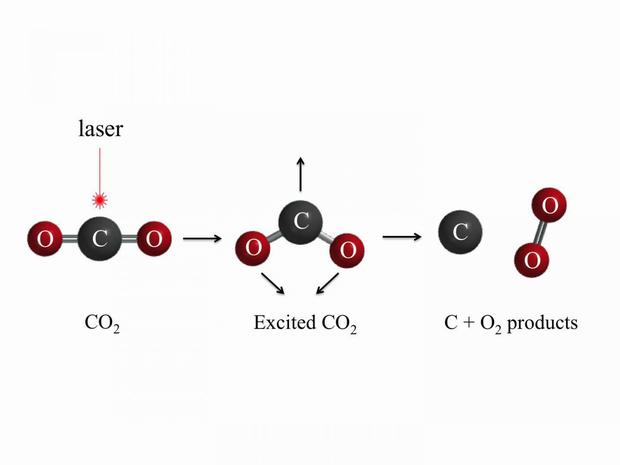
Yet before those photosynthesizing organisms appeared about 2.4 billion years ago, the atmosphere was mostly carbon dioxide, a lot like Mars and Venus.

The common hypothesis is that there must have been a small amount of oxygen in the early atmosphere. Where did this abiotic ("non-life") oxygen come from? Oxygen reacts quite aggressively with other compounds, so it would not persist for long without some continuous source.

