











Women ask why there aren't more women in lists of top scientists. Credit: Katrina Cole, CC BY-NC

By Victoria Metcalf, Lincoln University, New Zealand

A steady infiltration of scientists onto Twitter has accompanied the growing recognition that a social media presence is just as important as taking the podium at a conference.

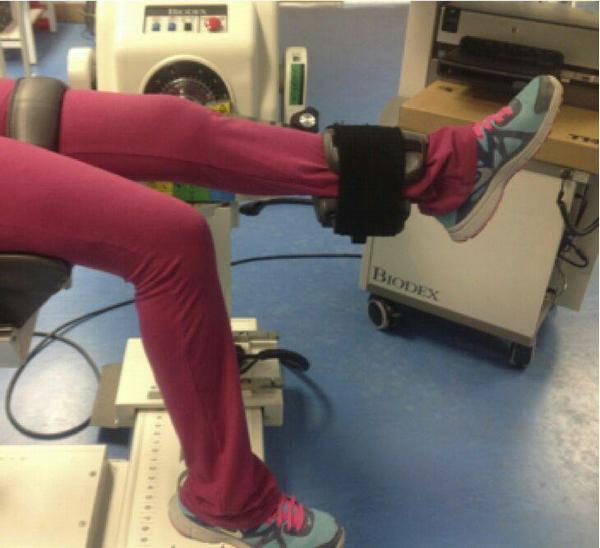
A new study has found that people with multiple sclerosis may reduce perceived fatigue and increase mobility through a series of combined strength training and fitness exercises. 

The research from the Miguel Hernández University of Elche, supervised by Professor Raúl Reina, aimed to analyze the effects of strength training on the fatigue that MS patients suffer. A total of 19 participants (5 men and 14 women) were split into two groups. Most took part in a 12-week training program, whilst others were included in a control group. The research was conducted in collaboration with the Neurology Department of Elche General Hospital.

When a dog is rabid, it's time to run. Credit: Mytoenailcameoff, CC BY-NC-SA

By Katie Hampson, University of Glasgow


Dave ‘Bear’ Duerson, 22, in action. Credit: PA

By Jordan Gaines Lewis, Penn State College of Medicine

Ah, football. The great American pastime.

The freshly cut grass and crisply-painted yard lines. The sound of helmets clashing in an epic stack of large men vying for a single ball. Stands packed high with thousands upon thousands of crazed, prideful, body-painted fanatics. Dementia, confusion, and depression.

Wait, what? That last bit may not be present on game day, but for many football players, it’s brewing all along – with every clash, tackle, and fall.

Farm runoff and urban pollution in the Hawaiian islands is causing sea turtle tumors, according to a study in PeerJ.

The paper by researchers at  Duke University, the University of Hawaii and the National Oceanic and Atmospheric Administration finds that nitrogen in the runoff ends up in algae that the turtles eat, promoting the formation of tumors on the animals' eyes, flippers and internal organs.

A new report shows early detection of cancer could one day be as easy as a simple blood test. This test, called the "lymphocyte genome sensitivity" (LGS) test, could not only detect some cancers earlier than ever before, but it may eliminate the need for some types of biopsies, as well as identify those more likely to develop cancer in the future.

 "The test could allow earlier cancer detection, so helping to save peoples' lives," said Diana Anderson, co-author at the University of Bradford in West Yorkshire, United Kingdom.  

Colonoscopies are a very valuable procedure by which to screen for the presence of colorectal cancer but healthy Americans who undergo the uncomfortable examination often have repeat screenings long before they actually should, finds Gina Kruse of Massachusetts General Hospital and colleagues in the Journal of General Internal Medicine

Bacteria that metabolize ammonia may improve skin health and could even be used for the treatment of skin disorders like acne, finds a new study conducted by AOBiome LLC. Ammonia is a major component of sweat. 

In a small study, human volunteers using the bacteria reported better skin condition and appearance compared with a placebo control group. 

Seedless watermelon, salmon, and strawberries all have one thing in common - unlike most eukaryotic multicellular organisms that have two sets of chromosomes, these organisms are all polyploid, meaning they have three or more sets of chromosomes. Seedless watermelon and salmon have 3 and 4 sets of chromosomes, respectively, while strawberries have 10.

Most plant species are polyploid. Polyploidy, or genome doubling, was first discovered over a century ago, but only recently, with the development of molecular tools, has it been revealed just how ubiquitous it is. Polyploidy is being increasingly recognized as an important evolutionary force that can facilitate positive adaptations, lead to instant speciation, and increase biodiversity. 

Consuming an alcoholic beverage may make men more responsive to the smiles of others in their social group,  but now women.

That suggests to psychologists behind a new paper in Clinical Psychological Science that since alcohol increases sensitivity to rewarding social behaviors like smiling, it may contribute to problem drinking among men.

