






Why do so many people in Ontario have inflammatory bowel disease? One in every 200 Ontarians has been diagnosed with IBD, an increase by 64 percent between 1999 and 2008, according to a study by researchers at the Institute for Clinical Evaluative Sciences (ICES), the Children's Hospital of Eastern Ontario (CHEO), and the Ottawa Hospital Research Institute.

That puts Ontario in the 90th percentile for IBD prevalence in the world.

The study in Inflammatory Bowel Diseases is the first and largest Canadian study of IBD – including Crohn's disease and ulcerative colitis ─ to demonstrate trends in incidence over time, and the first to review the rate of IBD in different age groups.

By Bryan Roche, National University of Ireland Maynooth

We’re getting more stupid. That’s one point made in a recent article in the New Scientist, reporting on a gradual decline in IQs in developed countries such as the UK, Australia and the Netherlands. Such research feeds into a long-held fascination with testing human intelligence. Yet such debates are too focused on IQ as a life-long trait that can’t be changed. Other research is beginning to show the opposite.

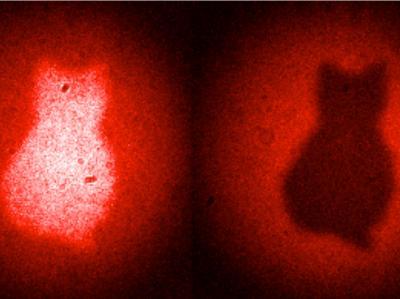
Here is something counter-intuitive: researchers have developed a new quantum imaging technique in which the image has been obtained without ever detecting the light that was used to illuminate the imaged object, while the light revealing the image never touches the imaged object. 

As everyone knows, outside the world of quantum mechanics, to obtain an image of an object one has to illuminate it with a light beam and use a camera to sense the light that is either scattered or transmitted through that object. The type of light used to shine onto the object depends on the properties that one would like to image. Unfortunately, in many practical situations the ideal type of light for the illumination of the object is one for which cameras do not exist. 

People aged 70 and over who identify themselves as 'old' feel worse about their own health in societies where they perceive they have lower value than younger age groups.

New research from psychologists at the University of Kent, titled 'Being old and ill' across different countries: social status, age identification and older people's subjective health, used data from the European Social Survey. Respondents, who were all aged 70 and over, were asked to self-rate their health.

Researchers at Rice University have synthesized a recently discovered natural fungus-derived  antibiotic, viridicatumtoxin B, which may shelp bolster the fight against bacteria that evolve resistance to treatments in hospitals and clinics around the world.  

The work reported this month in the Journal of the American Chemical Society (JACS) focused on a tetracycline discovered in 2008 by scientists who isolated small amounts from penicillium fungi. The yield wasn't nearly enough for extensive testing, but it provided a basis for the discoverers to analyze its structure through magnetic resonance imaging. 

In 1934, American archaeologist Nelson Glueck named one of the largest known copper production sites of the Levant, located deep in Israel's Arava Valley, "Slaves' Hill."

This hilltop station seemed to bear all the marks of an Iron Age slave camp – fiery furnaces, harsh desert conditions, and a massive barrier preventing escape, but new evidence uncovered by Tel Aviv University archaeologists overturns that narrative and says the people there were instead highly regarded craftsmen rather than slaves.

It has been almost 400 years since the publication of Exercitatio anatomica de motu cordis et sanguinis in animalibus ("On The Motion Of The Heart And Blood In Animals") by the British physician William Harvey, which accurately described the circulation of the blood around the body, and we are still discovering the secrets of the circulatory system and its contents. 

This is especially relevant when leveraging the circulatory system’s contents for clinical applications, such as prenatal testing.

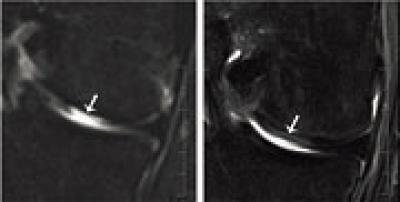
Human articular cartilage defects can be treated with nasal septum cells because they are able to adapt to the environment of the knee joint and can thus repair articular cartilage defects. 

The nasal cartilage cells' ability to self-renew and adapt to the joint environment is associated with the expression of so-called HOX genes. The scientific journal Science Translational Medicine has published the research results together with the report of the first treated patients.


There are some massive galaxies out there, and we now know a little about their early life.Credit: Lauro Roger McAllister/Flickr, CC BY

By Edward Taylor, University of Melbourne

A piece of the galaxy formation puzzle may have fallen into place, thanks to a team of European and American astronomers peering into the depths of our early universe.


A key part of civilization? Credit: E Photos, CC BY-SA

