

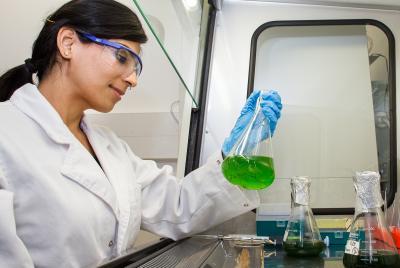
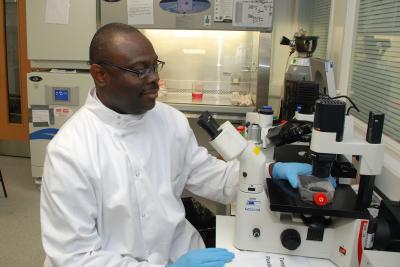
Nottingham Trent University, CC BY-NC-ND

By Alister Scott, Birmingham City University

By Peter Gwynne, Inside Science

Why don't we suffocate whenever we try to take a breath? An international team of scientists has used quantum mechanics – the science that usually deals with events at the level of the ultra-small – to solve this human-sized mystery.

Quantum mechanics has long proved its value in understanding such phenomena as the behavior of electrons and in classifying subatomic particles. But in recent years theorists have increasingly shown how it applies to all facets of life, large and small.


Shall I compare thee to a novel? No. Tim McFarlane/Flickr, CC BY-NC-SA

By David Sweeney, Glasgow School of Art

Next year, American consumers will finally be able to purchase fuel cell cars and they are zero-emissions vehicles but, like current electric cars, not really, since the cars will run on hydrogen made from natural gas.

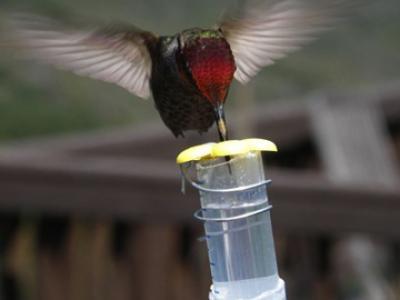
If you capture a hummingbird on high-speed video and slow it down, their wings thrum like helicopter blades as they hover near food. Their hearts beat 20 times a second and their tongues dart 17 times a second to slurp from a feeding station.

Researchers at
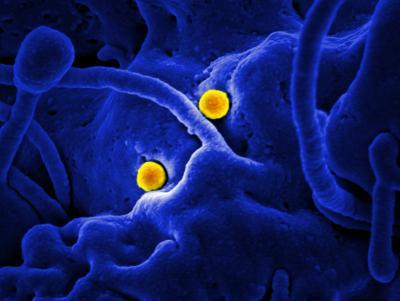
the NIH National Institute of Allergy and Infectious Diseases scientists have found that Middle East respiratory syndrome coronavirus (MERS-CoV) infection in marmosets closely mimics the severe pneumonia experienced by people infected with MERS-CoV, giving researchers the best animal model yet for testing potential treatments. 

They used marmosets after predicting in computer models that the animals could be infected with MERS-CoV based on the binding properties of the virus.

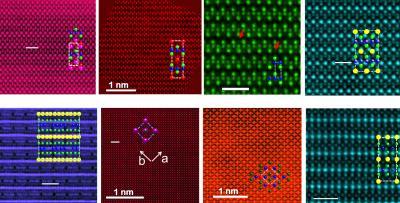
New measurements of atomic-scale magnetic behavior in iron-based superconductors are challenging conventional wisdom about superconductivity and magnetism. 


Emiliania huxleyi, up close and personal. Alison R. Taylor, CC BY

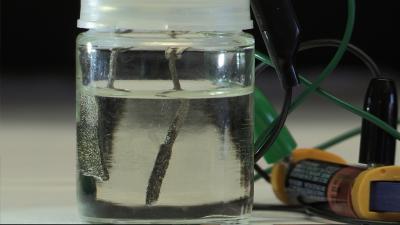
Water is abundant and so is sunlight, and using them to create hydrogen makes sense for a cleaner energy future, where biological systems powered by sunlight can manufacture hydrogen to use as fuel.

The way that plants produce hydrogen by splitting water has been poorly understood but answers are getting closer. A research team created a protein which, when exposed to light, displays the "electrical heartbeat" that is the key to photosynthesis. 

The system uses a naturally-occurring protein and does not need batteries or expensive metals, meaning it could be affordable in developing countries. 

Alzheimer's disease can be slowed and some of its symptoms curbed by punicalagin, a natural compound, found in pomegranate, according to a  study in Molecular Nutrition and Food Research.

Alzheimer's affects up to 44.4 million people globally. 

The two-year project headed by University of Huddersfield scientist Dr. Olumayokun Olajide also found that the painful inflammation that accompanies illnesses such as rheumatoid arthritis and Parkinson's disease could be reduced.


