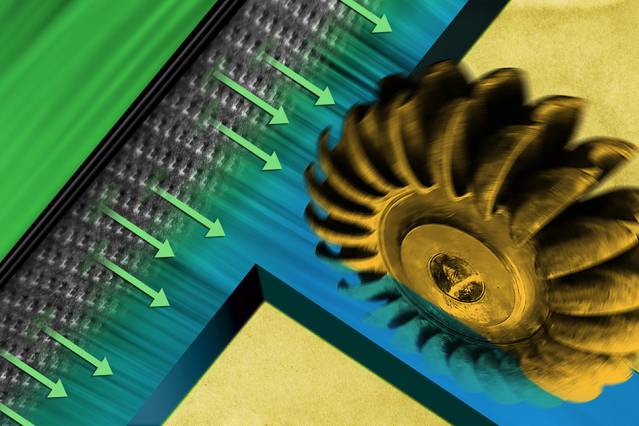
Where the river meets the sea, there is the potential to harness a significant amount of renewable energy, according to a team of mechanical engineers at MIT who evaluated the method of power generation called pressure retarded osmosis (PRO), in which two streams of different salinity are mixed to produce energy.
A pressure retarded osmosis system of this kind takes in river water and seawater on either side of a semi-permeable membrane. Through osmosis, water from the less-salty stream would cross the membrane to a pre-pressurized saltier side, creating a flow that can be sent through a turbine to recover power.
Changes in the Asian monsoon have affected emissions of methane from the Tibetan Plateau over the last 6,000 years, finds a new paper.
The concentration of methane in the atmosphere has more than doubled over the past century, though it is very short lived compared to carbon dioxide and hasn't been considered much of a factor in climate change. Factors in methane levels include leaks from gas wells, increased rice cultivation and ruminant animals in the dairy and meat industry. It could also be caused partly by climate change feedbacks on natural processes, but that remains the subject of intense investigation.
Researchers have developed a way to use windows for solar energy - without ruining your view.
The new technology is a solar concentrator, called a transparent luminescent solar concentrator, that is placed over the window and creates solar energy while still allowing people to see through it. The Michigan State University researchers say it can also be used on buildings, cell phones or any other device that has a flat, clear surface.
Attempts to create solar cells with luminescent plastic-like materials is not new but past efforts yielded poor results – the energy production was inefficient and the materials were highly colored.
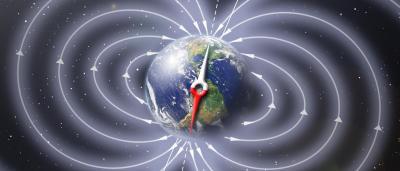
Earth's magnetic field, a familiar directional indicator over long distances, is routinely probed in applications ranging from geology to archeology, and now it has provided the basis for a technique which could characterize the chemical composition of fluid mixtures in their native environments.
Researchers from the Lawrence Berkeley National Laboratory conducted a proof-of-concept nuclear magnetic resonance experiment in which a mixture of hydrocarbons and water was analyzed using a high-sensitivity magnetometer and a magnetic field comparable to that of the Earth.
By
Oliver Griffith, University of SydneyHave you ever wondered why we give birth to live young rather than lay eggs? Scientists have pondered this for a long time and answers have come from an unlikely source: some of Australia’s lizards and snakes!
In research published this month in the American Naturalist, my colleagues and I at the University of Sydney studied reptile pregnancy to identify the factors necessary for a placenta to evolve.
Although most reptiles lay eggs, live birth has evolved many times in the group of reptiles that includes lizards and snakes.
Ruxolitinib (trade name: Jakavi) has been approved since August 2012 for the treatment of adults with myelofibrosis.
Myelofibrosis is a rare disease of the bone marrow, in which the bone marrow is replaced by connective tissue. As a consequence of this so-called fibrosis, the bone marrow is no longer able to produce enough blood cells. Sometimes the spleen or the liver takes over some of the blood production. Then these organs enlarge and can cause abdominal discomfort and pain. The typical symptoms also include feeling of fullness, night sweats and itching. Some patients with myelofibrosis develop leukemia.
Stem cell transplantation is currently the only option to cure myelofibrosis. The drug ruxolitinib aims to relieve the symptoms of myelofibrosis.
Researchers have created highly focused pathways that can channel electricity through the atmosphere.
It's not a new idea, Nikola Tesla worked on powering wireless lamps using electrostatic induction, but the new technique can potentially direct electricity up to 30 feet away, shattering previous distance records.
It may also finally put us on the path to channeling lightning with laser power.
Survey results of over 10,000 mothers have led sociologists to conclude that women who breastfed their babies are at significantly lower risk of postnatal depression than those who do not.
The paper in Maternal and Child Health notes that mothers who planned to breastfeed and who actually went on to breastfeed were around 50% less likely to become depressed than mothers who had not planned to, and who did not, breastfeed. Mothers who planned to breastfeed, but who did not go on to breastfeed, were over twice as likely to become depressed as mothers who had not planned to, and who did not, breastfeed.
A new captured by the Wide Field Imager at ESO’s La Silla Observatory in Chile shows two dramatic star formation regions in the southern Milky Way. On the left is the star cluster NGC 3603, located 20,000 light-years away in the Carina–Sagittarius spiral arm of the Milky Way galaxy. On the right, about half as far from Earth, is a collection of glowing gas clouds known as NGC 3576.
Both were discovered by English astronomer John Herschel in 1834, during his three-year expedition to systematically survey the southern skies from near Cape Town. He described NGC 3603 as a remarkable object and thought that it might be a globular star cluster. Future studies showed that it is not an old globular, but a young open cluster, one of the richest known.
My post of July 22 « BICEP2 Data, CMB B-modes, Inflation, Alternative Cosmologies... (II) » already discussed the situation after the publication (19 June 2014) of the Physical Review Letters 112, 241101 version of the BICEP2 article « Detection of B-Mode Polarization at Degree Angular Scales by BICEP2 ».