In a world that is constantly changing, are attempts to eradicate disease realistic?
Over 40 years ago, researchers were happy to have a War on Cancer. President Richard Nixon made it a national priority and it came with a lot of funding, so no one corrected what became an obvious point decades and billions of dollars later; you can't cure cancer.
Efforts at eradicating diseases may be doomed because of a mismatch between the ways humans structure the world and the ways pathogens move through the world, according to a paper in The Lancet Infectious Diseases. Polio is the poster child for diseases science has successfully conquered but the deadline for its eradication came and went in 2013 and is now 2018. What is going to change by then?
By
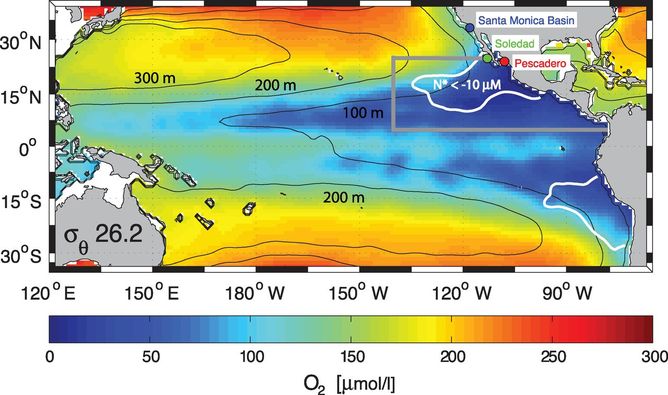
Raquel Vaquer-Sunyer, Lund UniversityThe world’s oceans are plagued with the problem of “dead zones”, areas of high nutrients (such as nitrogen and phosphorus) in which plankton blooms cause a major reduction of oxygen levels in the water. Sea creatures need oxygen to breathe just as we do, and if oxygen levels fall low enough marine animals can suffocate. This commonly happens around coastlines where fertilisers are washed from fields into rivers and the sea, but also mid-ocean, where currents trap waters in gyres (large systems of rotating ocean currents).
It’s banal to mention that technology
is a two-edged sword. That it solves practical problems and creates new ones.
That it makes our lives more comfortable and more complex, and stresses and at
the same time sustains our social relationships. Today we’ll go beyond these
commonplaces to explore two lesser-known aspects of tech’s dark side:
Inequality and unhappiness. Will the dark side prevail? Maybe, but we’ll see
glimmers of hope for the team of truth and goodness.
The growing gap
Soil moisture plays a major role in the environment/climate system because the transport of water within the land and at the land-atmosphere interface is strongly dependent on the state of soil water in a region.
Despite its importance, lack of soil moisture measurements at various spatial scales has limited our understanding of how individual physical factors control soil moisture dynamics.
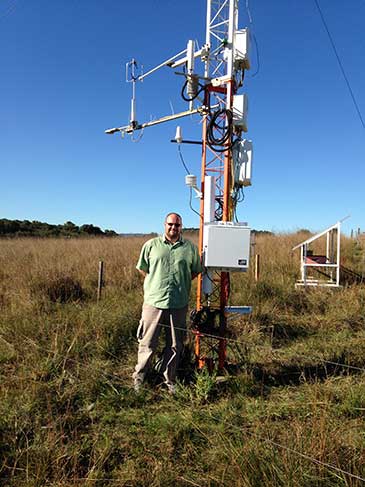
AMUSED (A MUlti-scale Soil moisture-Evapotranspiration Dynamics study) is a project that will monitor soil moisture using cosmic-rays sensors in combination with land surface modeling, satellite remote sensing, model diagnostics and data assimilation methods.
Nearly forgotten research from decades ago complicates the task of quantifying earthquake hazards in the Pacific Northwest, according to a new report.
The report focuses on the Cascadia subduction zone—a giant active fault that slants eastward beneath the Pacific coast of southern British Columbia, Washington, Oregon, and northern California.
Geologic studies in the past three decades have provided increasingly specific estimates of Cascadia earthquake sizes and repeat times. The estimates affect public safety through seismic provisions in building design and tsunami limits on evacuation maps.
Scientists have known for years that women are protected from cardiovascular disease before menopause, but their risk increases significantly after menopause.
Although estrogen is thought to be the protective factor, post-menopausal hormone replacement therapy remains controversial due to the side effects.
Researchers are searching for a sustainable, environmentally-friendlier source of soil conditioner and crop fertilizer that could reduce costs to farmers - all from renewable energy waste.
A collaborative project between Stopford Energy and Environment Limited, the James Hutton Institute, Aqua Enviro Limited and the University of Lancaster builds upon Stopford research looking at using a mixture of digestates, derived from anaerobic digestion, and ash, from burnt biomass, as an alternative to existing crop fertilizers.
"White flight" was the term created by sociologists for when people middle-class began moving from poor city neighborhoods to newly created sub-urban communities that were not city apartments and townhouses but not rural either - suburbs.
Chemicals known as hormone mimics may damage our ability to reproduce and pollute the natural environment. Now there may be a new way of capturing them.
In a laboratory in Trondheim, researchers have managed to create minute particles with some very desirable properties, such as the ability to capture and break down any hormone mimics that have ended up in our waste water. These unwanted chemicals come from the kind of consumer items that make our lives easier and more comfortable. But they have consequences.
A new study has found that carbon monoxide could be used to protect against life-threatening arrhythmias after a heart attack.
Restoring blood flow to the heart following a heart attack can leave patients with ventricular fibrillation, a dangerous heart rhythm which puts people at greater risk of sudden cardiac death. Previous research has shown carbon monoxide, which is produced naturally in heart cells, can guard against ventricular fibrillation, however the mechanism behind why this happens was unknown.
Scientists at Aston University in Birmingham (UK) and Peking University in China have found carbon monoxide works by blocking the channels that carry potassium into heart cells – an essential process required to reset the cells before their next heartbeat.