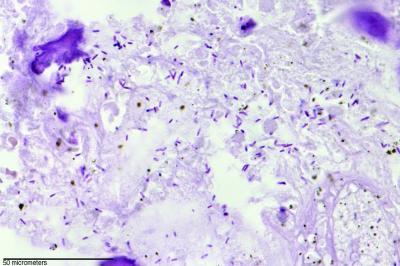


A modified version of the Clostridium novyi (C. noyvi-NT) bacterium can produce a strong and precisely targeted anti-tumor response in rats, dogs and now humans, according to a new report from Johns Hopkins Kimmel Cancer Center researchers.

In its natural form, C. novyi is found in the soil and, in certain cases, can cause tissue-damaging infection in cattle, sheep and humans. The microbe thrives only in oxygen-poor environments, which makes it a targeted means of destroying oxygen-starved cells in tumors that are difficult to treat with chemotherapy and radiation. The Johns Hopkins team removed one of the bacteria's toxin-producing genes to make it safer for therapeutic use.

Researchers have discovered new evidence to suggest that the origins of mummification started in ancient Egypt 1,500 years earlier than previously thought.

Traditional theories on ancient Egyptian mummification suggest that in prehistory -- the Late Neolithic and Predynastic periods between c. 4500 and 3100 B.C. -- bodies were desiccated naturally through the action of the hot, dry desert sand.

Scientific evidence for the early use of resins in artificial mummification has, until now, been limited to isolated occurrences during the late Old Kingdom (c. 2200 BC). Their use became more apparent during the Middle Kingdom (c. 2000-1600 BC).

In quantitative genetics,  genomic prediction is a statistical approach to predicting the value of an economically important trait in a plant, such as yield or disease resistance. The method works if the trait is heritable, as many traits tend to be, and can be performed early in the life cycle of the plant, helping reduce costs.

A research team led by plant geneticists at the University of California, Riverside and Huazhong Agricultural University, China, has used the method to predict the performance of hybrid rice (for example, the yield, growth-rate and disease resistance). The new technology could potentially revolutionize hybrid breeding in agriculture.

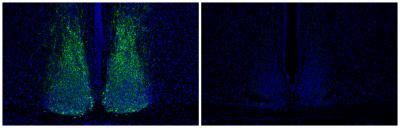
Scientists have identified a gene, Lhx1, that regulates sleep and wake rhythms.

The discovery of the role Lhx1 provides scientists with a potential therapeutic target to help night-shift workers or jet lagged travelers adjust to time differences more quickly. T

Every cell in the body has a "clock" – an abundance of proteins that dip or rise rhythmically over approximately 24 hours. The master clock responsible for establishing these cyclic circadian rhythms and keeping all the body's cells in sync is the suprachiasmatic nucleus (SCN), a small, densely packed region of about 20,000 neurons housed in the brain's hypothalamus.

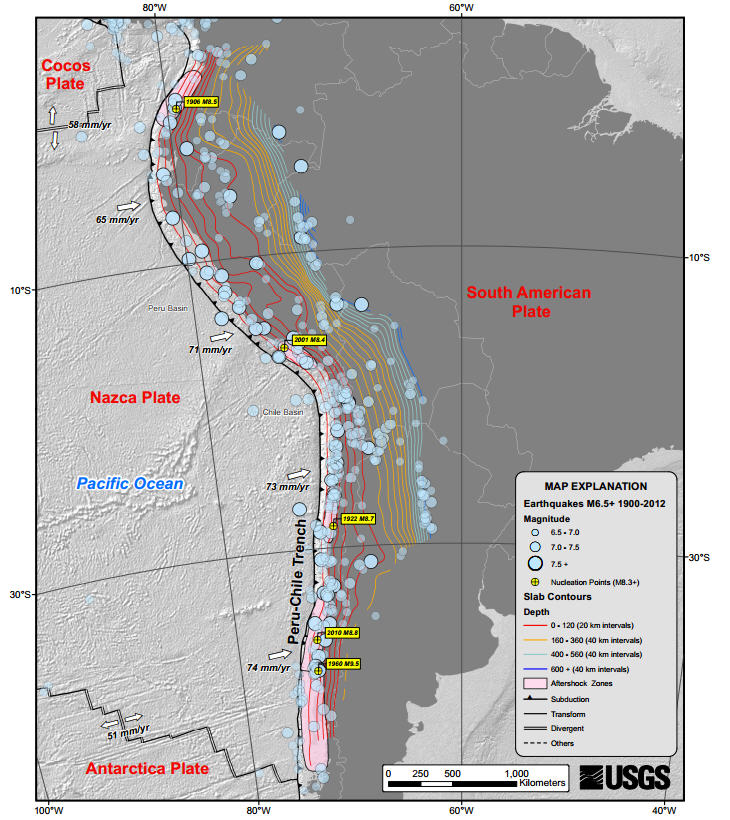
A long lasting foreshock series controlled the rupture process of this year's great earthquake near Iquique in northern Chile, according to an international research team

The earthquake was heralded by a three quarter year long foreshock series of ever increasing magnitudes culminating in a Mw 6.7 event two weeks before the mainshock.

The mainshock (magnitude 8.2) finally broke, on April 1st, a central piece out of the most important seismic gap along the South American subduction zone. The study reveals that the Iquique earthquake occurred in a region where the two colliding tectonic plates where only partly locked.

A 13th century bishop’s theory about the formation of the universe has intriguing parallels with the theory of multiple universes. This was uncovered by the the Ordered Universe project at Durham University, which has brought together researchers from humanities and the sciences in a radically collaborative way.

Attention Deficit Hyperactivity Disorder (ADHD) is so commonly diagnosed – and overdiagnosed, and misdiagnosed – that it is hard to know what is based on evidence and what is based on teachers and concerned parents reacting to children that don't like to sit around and do nothing.

Actual clinical ADHD used to be rare but now it is a common problem of "pill culture" in psychiatry and the most common behavioral disorder label given to children in America, according to the Centers for Disease Control and Prevention.

Not that you want to do this but there is an easy way to speed up a woman's reproductive timing - just get a clock.

Not one of those modern digital things, an actual ticking clock will literally do it, says a paper upcoming in Human Nature.

It turns out that the tick-tock of the metaphor has some basis in reality. Or not. The authors also claim that poor women are more likely to be affected by this ticking sound. And the authors are psychologists so beware of mainstream media making grand biological claims based on this.

This idea goes back in 1967. James Lovelock, originator of the Gaia hypothesis, found a way to use a planetary atmosphere to detect life. He suggested that we look for simultaneous presence of pairs of gases like oxygen and methane that react together. We can also search for gases such as oxygen above  levels expected from abiotic processes.

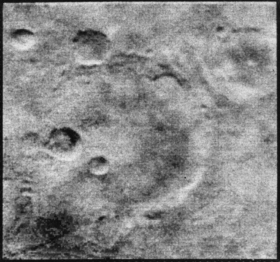
As  far as we can see, Mars atmosphere seems to be close to equilibrium in this way. So when Viking I and II landed there in 1976, and found a barren desert-like surface, it seemed natural to conclude that there is no life on Mars.

Interpreting snow depth records from past decades is as much art as science. Even into the 1990s, Soviets on Arctic drifting sea ice used meter sticks and handwritten logs to record snow depth. Today, things are a lot more accurate. Airborne measurements are validated by researchers on the ground using automated probes similar to a ski pole. 

Accuracy is important. The public has become concerned about what is happening at the poles, and so research led by NASA and the University of Washington combined data collected by ice buoys and NASA aircraft with historic data from ice floes staffed by Soviet scientists since the late 1950s through the early 1990s to track changes over decades.


