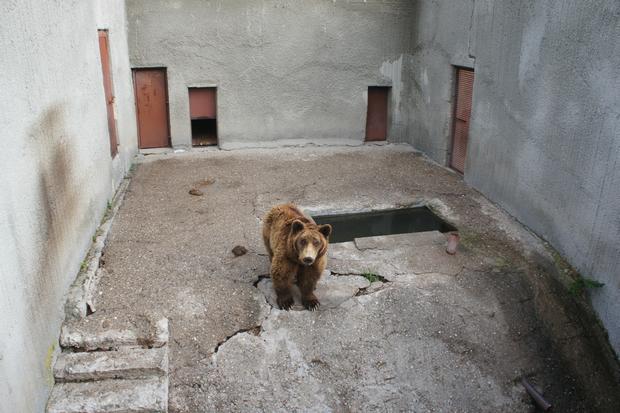



A genetic study of brown bears (Ursus arctos) in Bulgarian mountain regions showed they originated in Carpathia. So how did they get to Bulgaria? It wasn't natural dispersal. 

Bulgarian and Romanian NGOs, the Frankfurt Zoological Society, and scientists of the Senckenberg Conservation Genetics Section in Frankfurt have found that a legend was probably true - the legend being that the former leader of the Romanian Communist Party, Nicolae Ceausescu, flew the bears to Bulgaria.

PROVIDENCE, R.I. [Brown University] — The surface of Mercury crackled with volcanic explosions for extended periods of the planet's history, according to a new analysis led by researchers at Brown University. The findings are surprising considering Mercury wasn't supposed to have explosive volcanism in the first place, and they could have implications for understanding how Mercury formed.

Despite high rates of contraceptive use, unwanted pregnancies resulting in terminations remain high among young women.

In an article in the April issue of the Australian and New Zealand Journal of Public Health, Danielle Mazza from Monash University, and colleagues, examine the paradox of high rates of contraceptive use, over the counter availability of emergency contraception and unplanned pregnancy.

"The emergency contraceptive pill has been available to women for over-the-counter purchase since 2004," Professor Mazza said.

"Together with high rates of contraceptive use, this should result in lower rates of unplanned pregnancies for Australian women, but it has not.

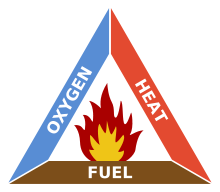
Could A Fire Have Caused The Loss Of MH370?


Ever since Malaysia Airlines MH370 disappeared there has been much speculation in the media and across the web about what may have happened.  Unfortunately, the somewhat spasmodic release of official information, together with too many reports citing anonymous sources, has blurred the true picture.

BUFFALO, N.Y. – Chemotherapeutic drugs excel at fighting cancer, but they're not so efficient at getting where they need to go.

They often interact with blood, bone marrow and other healthy bodily systems.

A team of researchers from the Center for Imaging Science at the Johns Hopkins University and the CMLA of the École Normale Supérieure Cachan have demonstrated new algorithmic technologies for the parametric representation of human shape and form. Coupled with advanced imaging technologies, this presents opportunities for tracking soft-tissue deformations associated with cardiovascular studies, radiation treatment planning in Oncology, and neurodegenerative brain illnesses.

CAMBRIDGE, Mass-- The electrochemical reactions inside the porous electrodes of batteries and fuel cells have been described by theorists, but never measured directly. Now, a team at MIT has figured out a way to measure the fundamental charge transfer rate — finding some significant surprises.

The study found that the Butler-Volmer (BV) equation, usually used to describe reaction rates in electrodes, is inaccurate, especially at higher voltage levels. Instead, a different approach, called Marcus-Hush-Chidsey charge-transfer theory, provides more realistic results — revealing that the limiting step of these reactions is not what had been thought.

Russia has control over energy supplies and distribution systems in Ukraine and that means they control energy supplies in Western Europe.

It's made a lot of Russians rich and prevents Europe from taking any meaningful stance on Russian aggression in Crimea. Solar power subsidies are not going to be much help if Russia shuts off the power.
Glenmark Pharmaceuticals has announced that GRC 27864 is entering human trials.  GRC 27864  targets Microsomal Prostaglandin E synthase-1 (mPGES-1) as a therapeutic target in pain management. Selective mPGES-1 inhibitors are expected to inhibit increased prostaglandin E2 (PGE2) production in the disease state without affecting other prostanoid metabolites and, consequently, may be devoid of the GI (gastrointestinal) and cardiovascular side effects seen with NSAIDs and COX-2 inhibitors, respectively.

Scientific uncertainly prevents definitive solutions (beyond putting a stop to the world and leaving poor people to a future with no food, water or air conditioning) but the stance that the issue is settled, even when solutions may not be effective, also leads to public mistrust and name-calling.

But that uncertainty should actually make us more rather than less concerned about climate change, according to two papers in Climatic Change which investigated the mathematics of uncertainty in the climate system and showed that increased scientific uncertainty necessitates even greater action to mitigate climate change.

