




If you ask aging environmental activists, the worst thing that can happen to nature is to have people step onto it.

This is the completely wrong approach, but one adopted by their corporate leaders in the last two generations when they found their donor base becoming increasingly urban. While it was once recognized that hunters, hikers and other sportsmen were obviously the most in love with nature, gradually they became treated like the enemy of environmentalists.

Is depression as dangerous as smoking?

A 12-person panel has published a paper in the journal Circulation saying that their review of literature indicates that depression should be listed with smoking, obesity, diabetes and high blood pressure as risk factors for heart disease.

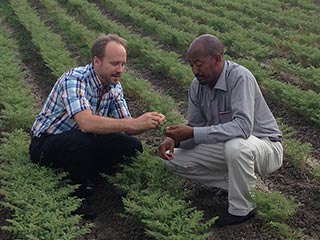
A new research effort in Ethiopia seeks to improve the productivity of chickpea varieties by harnessing the genetic diversity of wild species.

The federal Feed the Future Initiative is the latest rebranding of the U.S. government’s global hunger and food security initiative.

Chickpea is the third most widely grown legume crop in the world, following soybean and bean, and it has the ability to capture and use atmospheric nitrogen, thus contributing to soil fertility.  This five-year, $4 million research program could be important in the developing world, where the chickpea provides a crucial source of income, food security and nutrition to poor farmers.

You may not know it but on our biosphere - Earth - there is also a relatively unknown world hiding in plain sight. It is composed of microbes that live on floating pieces of plastic floating on the ocean. 

This "Plastisphere" of microbial organisms living on ocean plastic that was first discovered last year and it is now getting studied.

The Fermi National Accelerator Laboratory is still getting important particle work done, years after the closure of the Tevatron was announced.

Scientists on the CDF and DZero
experiments have announced that they have found the final predicted way of creating a top quark, completing a picture of this particle that has been nearly 20 years in the making.

Methane has 23X the impact of carbon dioxide on warming and livestock produces methane - burping cows burp.

A new study has found that several types of aquatic algae can detect orange, green and blue light.

Land plants have receptors to detect the common visual optical wavelengths in the air, light on the red and far red of the spectrum. That allows them to sense the light and move and grow as their environment changes, such as when another plant shades them from the sun.

But the ocean is a different environment. Water absorbs red wavelengths and reflects colors such as blue and green. As part of the study, and the team sequenced about 20 different marine algae and found they were capable of detecting not only red light, but also many other colors. 

Long after gluten-free, low-fat and tapeworm diets have been consigned to the dustbin of quaint health fad history, vegetarians will still insist their way of is better.

In at least one way, they may be right. It's one of the few dietary choices that has a long enough history for real data to exist, and an analysis of seven clinical trials and 32 studies published from 1900 to 2013 in which participants ate a vegetarian diet, and in which differences in blood pressure (BP) associated with eating a vegetarian diet were measured, found that eating a vegetarian diet was associated with a reduction in the average systolic (peak artery pressure) and diastolic (minimum artery pressure) BP compared with eating an omnivorous (plant and animal) diet.
If you were pregnant, did you ever take a Tylenol?

If not, you have unreal levels of tolerance for discomfort but if you did, and you think your child is hyperactive, a new study may have some answers. Not 'why' answers, just a 'perhaps' answer. But look for mainstream media to declare that Tylenol causes attention-deficit/hyperactivity disorder (ADHD) in kids.
Anyone who has had to deal with Hospice for a loved one has to been impressed with the level of compassion and concern and caring they bring.

But they are not all the same, and a paper in JAMA Internal Medicine finds a way to create a little bit of class warfare about that.


