In works on evolution written by a certain class of biologist we can often see “for the good of the species” references derided in no uncertain terms. Comments such as “fuzzy thinking”, “they got it wrong” and so on have become so habitual that they almost go unnoticed. But is the “for the good of the species” idea really all that bad? It might well be that some comments and discussions are indeed fuzzy, in that they might be poorly thought out or presented. But here’s a discussion from Robert Ardrey’s The Social Contract to consider. Ardrey described the communication between starlings as an element in their defence against peregrine falcons, the falcons being hindered in their attacks by the speed for which they are famous.
If I were a sneaky disease, working my pathological magic through mimicry, I think I'd be vocal cord dysfunction.
What's VCD? I didn't even know it existed until last week, so don't feel embarrassed. Also known as laryngeal dysfunction, paradoxical vocal cord motion, laryngeal dyskinesia, vocal cord malfunction and a number of medicalese terms, this tricky little guy masquerades most commonly as the everyman of respiratory conditions, asthma. (And from the dawn of the 20th century to today, occasionally it's diagnosed as hysteria. It's all in your head, person who can't breathe, it's all in your head.)
Today I was forwarded by several people a really bad and confused op-ed piece by New York Times columnist David Brooks. It is entitled “The End of Philosophy,” which naturally raised my baloney detector level to yellow alert.
What's the key to everlasting youth? For years now, evidence has steadily accumulated, from studies on mice, flies, worms, and even yeast, that cutting calories is the secret to a long lifespan - at least in a wide range of non-human organisms. But does this work in humans?
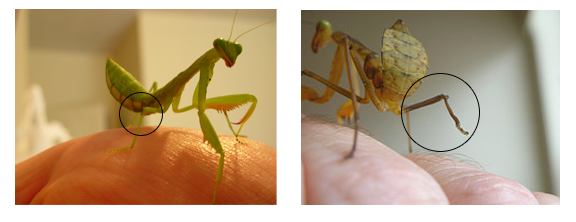
Dave Cooper’s pet mantis, Cinco Zapatos, was a good-looking Giant African Mantis with a notable distinguishing feature: her sixth leg was missing. It didn’t seem to hamper her much. Her first weeks as Dave’s insect familiar were uneventful until Dave returned from a three-day trip to find that Cinco Zapatos had molted—and had become Seis Zapatos in the process. Cinco Zapatos had regrown most of her leg.
Last week I described how a boulder-sized meteorite exploded in the skies over Murchison, Australia, forty years ago. The remarkable mix of organic compounds discovered in samples of the meteorite, which included amino acids, confirmed that some of the compounds required for the origin of life could have an extraterrestrial origin, as John Oro had proposed ten years earlier. But where did the organic compounds come from, and how were they synthesized?
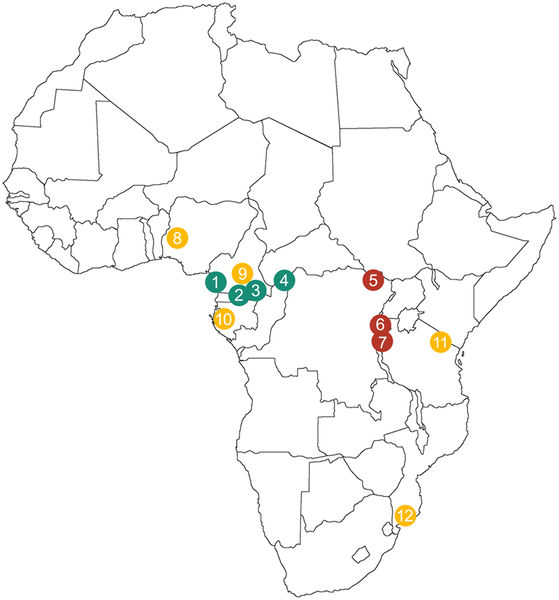
The central African belt is a fascinating look back in time for humanity because the largest group of hunter–gatherers of Africa, the Pygmies, still inhabit the region and they coexist with neighboring farmers.
All African Pygmies, inhabiting a large territory extending west-to-east along Central Africa, descend from a unique population who lived around 20,000 years ago, according to an international study led by researchers at the Institut Pasteur in Paris. The research concludes that the ancestors of present-day African Pygmies and neighboring farmers separated ~60,000 years ago.
A natural, biological pacemaker; that's what a heart is, right? Sure, but our hearts can wear out and while artificial heart pacemakers have saved and extended the lives of thousands of people, but they have their shortcomings – such as a fixed pulse rate and a limited life.
Could a permanent replacement biological solution be in our future? Richard Robinson and colleagues at New York's Columbia and Stony Brook Universities certainly think so, and their work published in the latest issue of The Journal of Physiology outlines how we can bring it a step closer to reality.
Because global warming - whoops, climate change - became a political football rather than a scientific one, there are a lot of people attacking methodology and motive. 1990 does seem like a pretty arbitrary date for CO2 emissions until you realize that's right after the merger of Germany and all they, a key advocate of proponent, had to do to meet their target was close some World War 2 era Soviet factors in East Germany to meet their target. And France just had to open up some more nuclear power plants (no CO2, but do American environmentalists think that is better?).
Where does space begin? Scientists at the University of Calgary have created a new instrument that is able to track the transition between the relatively gentle winds of Earth's atmosphere and the more violent flows of charged particles in space – flows that can reach speeds well over 1000 km/hr. And they have accomplished this in unprecedented detail.
Data received from the U of C-designed instrument sent to space on a NASA launch from Alaska about two years ago was able to help pinpoint the so-called edge of space: the boundary between the Earth's atmosphere and outer space.
With that data, U of C scientists confirmed that space begins 118 km above Earth.