New data published in the Journal of the American College of Cardiology suggest that relatively healthy women with severe depression are at increased risk of cardiac events, including sudden cardiac death (SCD) and fatal coronary heart disease (CHD). Researchers found that much of the relationship between depressive symptoms and cardiac events was mediated by cardiovascular disease risk factors, such as high blood pressure, high cholesterol and smoking.
Terminally ill patients and their family caregivers often feel abandoned by their doctors and feel a sense of "unfinished business" with them, according to a new study by an oncologist at the Seattle Cancer Care Alliance.
The study results, published today in the Archives of Internal Medicine, identified two themes: before death, abandonment worries related to loss of continuity of communication between patient and physician; and at the time death or after, the patient's family's feelings of abandonment from a lack of closure with the physician.
The theory that a higher metabolism means a shorter lifespan may have reached the end of its own life, according to a study published in the journal Physiological and Biochemical Zoology. The study, led by Lobke Vaanholt (University of Groningen, The Netherlands), found that mice with increased metabolism live just as long as those with slower metabolic rates.
Colorful poison frogs in the Amazon owe their great diversity to ancestors that leapt into the region from the Andes Mountains several times during the last 10 million years, a new study from The University of Texas at Austin suggests.
This is the first study to show that the Andes have been a major source of diversity for the Amazon basin, one of the largest reservoirs of biological diversity on Earth. The finding runs counter to the idea that Amazonian diversity is the result of evolution only within the tropical forest itself.
It has been assumed that much of the evolution of biodiversity in the Amazon basin occurred over the last one to two million years, a mere snapshot in time.
Good eating habits can result when families eat together, say researchers from the School of Public Health, University of Minnesota, who report on one of the first studies to examine the long-term benefits of regular family meals for diet quality during the transition from early to middle adolescence. In general, the study found adolescents who participated in regular family meals reported more healthful diets and meal patterns compared to adolescents without regular family meals.
Ecstasy may help suffers of post-traumatic stress learn to deal with their memories more effectively by encouraging a feeling of safety, says new research.
Studies have shown that a type of psychological treatment called exposure therapy – where the patient repeatedly recalls the traumatic experience or is repeatedly exposed to situations that are safe but still trigger their traumatic feelings – can be effective in relieving stress responses in patients with post-traumatic stress disorder (PTSD) and other anxious conditions. The therapy works by helping the patient to re-learn the appropriate response to the trigger situation, a process known as extinction learning.
Natural burial is not just a 'green' option for eco-fixated non-religious people, according to researchers at the University of Sheffield. They'll be holding an event called "Natural Burial: Do we need a Headstone?" to be held in Sheffield on March 14 as part of the Economic and Social Research Council's (ESRC) Festival of Social Science.
The largest study of its kind to evaluate the effect of red versus white wine on breast-cancer risk concludes that both are equal offenders when it comes to increasing breast-cancer risk. The results of the study were published in the March issue of Cancer Epidemiology, Biomarkers and Prevention.
The researchers found that women who consumed 14 or more drinks per week, regardless of the type (wine, liquor or beer), faced a 24 percent increase in breast cancer compared with non-drinkers.
Effective stem cell treatment for strokes has taken a significant step forward as scientists writing in
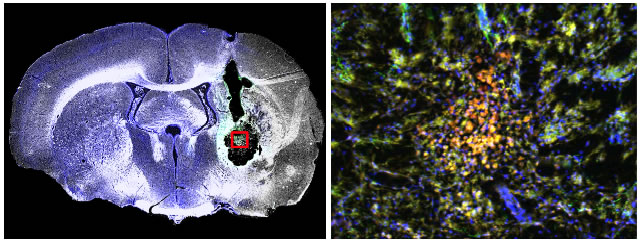
Biomaterials reveal how they have replaced stroke-damaged brain tissue in rats using neural stem cells.
The work, carried out at the King's College London Institute of Psychiatry and University of Nottingham, shows that by inserting tiny scaffolding with stem cells attached, it is possible to fill a hole left by stroke damage with brand new brain tissue within 7 days.
Neural stem cells exist in the adult nervous system of all mammals, though they can also be derived from more primitive embryonic stem cells.
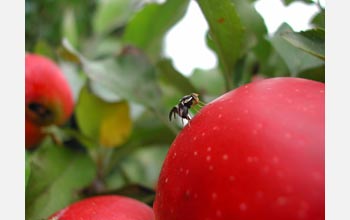
A team of researchers has reported the ongoing emergence of a new species of fruit fly and the sequential development of a new species of wasp. Jeff Feder, a University of Notre Dame biologist, and his colleagues say the introduction of apples to America almost 400 years ago ultimately may have changed the behavior of a fruit fly, leading to its modification and the subsequent modification of a parasitic wasp that feeds on it.
The result is a chain reaction of biodiversity where the modification of one species triggers the sequential modification of a second, dependent species. The National Science Foundation supports the research.