Women can take pride that they are more efficient than men in many ways, including one that is not so great; storing fat.
It's a paradox women have discussed for generations – their apparent ability to store fat more efficiently than men, despite eating proportionally fewer calories. While it has long been suspected that female sex hormones are responsible, a University of New South Wales (UNSW) research review has for the first time drawn a link between one hormone – estrogen – and its impact on fat storage for childbearing.
Did you ever get called impulsive by a teacher? You're lucky you don't live in Montreal.
Below is a detailed response to my latest post, which Ken graciously sent me for publication here. After that, you will find a few additional notes from yours truly.
Dear Massimo,
Thanks, of course, for the very kind comments about my presentation at Brown. At your invitation, I’m writing a few comments to clarify and correct what I think are some mistaken impressions and also to point out a few areas of genuine disagreement. You wrote:
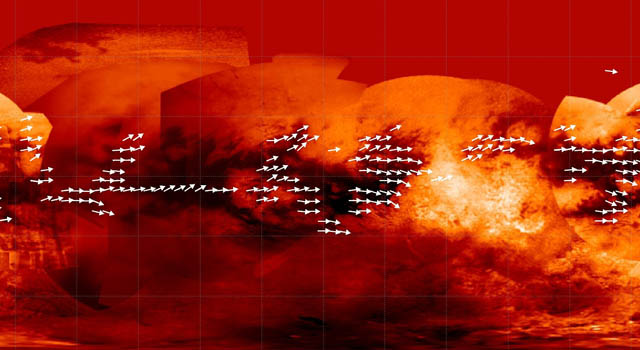
Titan's vast dune fields, which may act like weather vanes to determine general wind direction on Saturn's biggest moon, have been mapped by scientists who compiled four years of radar data collected by the Cassini spacecraft.
Titan's rippled dunes are generally oriented east-west. Surprisingly, their orientation and characteristics indicate that near the surface, Titan's winds blow toward the east instead of toward the west. This means that Titan's surface winds blow opposite the direction suggested by previous global circulation models of Titan.
A study in the March 1 issue of SLEEP suggests the presence of an intrinsic sleep problem specific to attention-deficit/hyperactivity disorder (ADHD) and supports the idea that children with ADHD may be chronically sleep deprived and have abnormal REM sleep.
Results show that children with ADHD have a total sleep time that is significantly shorter than that of controls. Children in the ADHD group had an average total sleep time of eight hours, 19 minutes; this was 33 minutes less than the average sleep time of eight hours, 52 minutes, in controls. Children with ADHD also had an average rapid eye movement (REM) sleep time that was significantly reduced by 16 minutes.
Puny Crayfish may have big claws for show but they can't really use them - their muscles are actually weaker than females with smaller claws.
So why does it work? A group of scientists writing in The Journal of Experimental Biology set out to discover the answer.
Slender crayfish are aggressive territorial creatures, explains ecologist Robbie Wilson of the University of Queensland, Australia. When two crayfish catch sight of one another, they size each other up in a ritualistic display, which can quickly escalate from careful tapping of their opponent's chelae (enlarged front claws) to a full-blown fight.
"Psychedelica" seems the perfect name for a species of fish that is a wild swirl of tan and peach zebra stripes and behaves in ways contrary to its brethren, says University of Washington’s Ted Pietsch, first to describe the new species in the scientific literature and therefore got to select the name.
Psychedelica is perhaps even more apt given the cockamamie way the fish swim, some with so little control they look intoxicated and should be cited for DUI.
What use is half a wing?
When Charles Darwin unleashed his revolutionary theory of evolution in the mid-1800s, one of the first questions doubters nailed him with went something like ; you have the four limbs of a reptile and then a beautiful flying bird. What are the intermediary steps? Darwin, what use is half a wing?
There wasn’t much the esteemed naturalist could say with the data he had available and, during the next 150 years, scientists were largely divided into two theoretical camps regarding the evolution of flight.
An immune system response that is critical to the first stages of fighting off viruses and harmful bacteria comes from an entirely different direction than most scientists had thought, according to a finding by researchers at the Duke University Medical Center.
Type 1 helper (TH1) T cell immune responses are critical for the control of viruses and certain bacteria. Immunologists have generally believed that TH1 responses are induced by rare immune cells, called dendritic cells. When activated by infection or vaccination, the dendritic cells were thought to move from peripheral tissues into lymph nodes to stimulate T cell responses.
Tomorrow is Sunday, and as I prepare to mount my plastic pulpit I will take as my text the introduction to Chapter 5 (Complex Numbers) of A Survey of Modern Algebra by Birkhoff&Mac Lane. This is a classic and accessible work, first published in 1941, which brought to the American-speaking world what was previously locked up in Van der Waerden’s Moderne Algebra (1931). The chapter opens with the definition of a complex number and the field C [1], and then continues: