


Women who stopped taking the postmenopausal hormone combination of estrogen plus progestin experienced a marked decline in breast cancer risk which was unrelated to mammography utilization change, according to a study from the Women's Health Initiative led by a Los Angeles Biomedical Research Institute (LA BioMed) investigator that was published today in The New England Journal of Medicine.

Breast cancer in the United States began to decline in 2003, after the Women's Health Initiative's initial findings that combined hormone therapy was related to higher risk of breast cancer and heart problems.
Scientists at the University of North Carolina at Chapel Hill School of Medicine say they have discovered a gene that when mutated causes obesity by dampening the body's ability to burn energy while leaving appetite unaffected. 

The new research could potentially lead to new pharmacologic approaches to treating obesity in humans that do not target the brain, according to study senior author Yi Zhang, Ph.D., Howard Hughes Medical Institute investigator and professor of biochemistry and biophysics in the UNC School of Medicine. Zhang is also a member of the UNC Lineberger Comprehensive Cancer Center. 
Show Me The Science Month Day 8

A tuatara may look like an iguana, but it's a reptile in a category all its own. Tuataras are most closely related to lizards and snakes, but in some ways they are oddballs among reptiles, with unique characteristics among reptiles, like their affinity for cool weather, their nocturnal lifestyle, a third eye on top of the skull, and vertebrae that more closely resemble those of fish and amphibians than reptiles. Male tuataras also have another odd feature - they lack a certain member, which means their reproductive behavior differs from other lizards.


Image courtesy of the Wikipedia Commons
Evolution may be viewed as a controversial subject by much of the US population, but evolutionary biologists frequently complain that this controversy is manufactured by opponents of evolution who have a very flawed understanding of what the science of evolution is. This poor grasp of the science was demonstrated once again in a talk given by Intelligent Design advocate Jonathan Wells, who claims that "DNA does not control embryo development."

Wells, who has a PhD in biology, (I don't know what the director of graduate studies at UC Berkeley was smoking), has repeatedly demonstrated his cluelessness about basic elements of biology, and he is a clear illustration of why a PhD does not necessarily indicate anything about its holder's knowledge. Over at Pharyngula, PZ Myers has a thorough takedown of Wells' absurd talk. The talk is based on the bizarre claim that "DNA does not control embryo development." If that's true, Wells argues, then the whole tottering neo-Darwinian edifice collapses, or something like that.
Recently I read on this site Massimo Pigliucci’s articles on Hard and Soft Science.  As usual, though, I at first sailed over the main theme, and picking up one or two phrases went off on one of my tangents.  The first of these phrases was:
    the long interval on the question of the nature of gravity between Newton and Einstein.
which led me to think that:

Kudos to Sally Jenkins at the Washington Post for the best article I've read so far on the Michael Phelps non-scandal. I thought I was going to read a humorous article about one of my favorite TV shows (The Big Bang Theory), not connecting the dots with Willie Nelson's favorite pasttime.

Throughout history, scientists, philosophers, mathematicians and PhD students lacking funding for actual research have turned to the thought experiment in hopes of discovering something publishable, thereby retaining tenure and/or attracting the admiration of comely undergraduates.


The best thought experiments throw light into dark corners of the universe and also provide other scientists, philosophers, mathematicians and destitute Phd students a way to kill time while waiting for the bus.


Below is a classic thought experiment, pillaged from my book The Geeks' Guide to World Domination (Be Afraid, Beautiful People). I'll post a new thought experiment each day this week.

Ship of Theseus
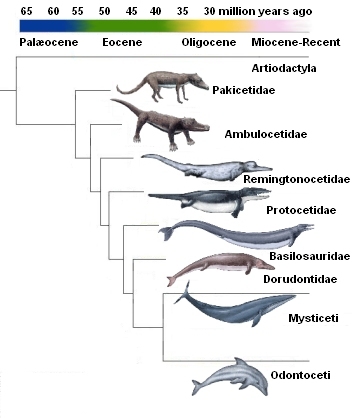
Two newly described fossil whales---a pregnant female and a male of the same species--reveal how primitive whales gave birth and provide new insights into how whales made the transition from land to sea.
An international team of researchers has discovered a new chemical compound that consists of a single element―boron. Chemical compounds are conventionally defined as substances consist of two or more elements, but the researchers found that a high pressure and temperature pure boron can assume two distinct forms that bond together to create a novel 'compound' called boron boride.
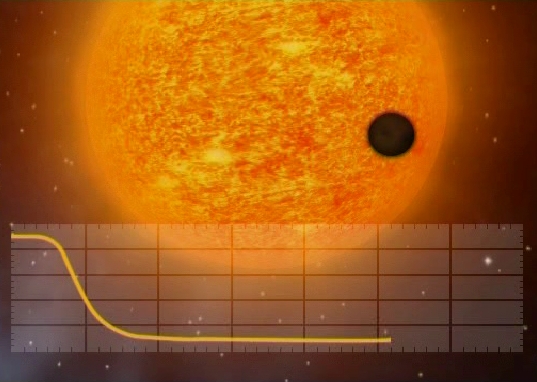
COROT has found the smallest terrestrial planet ever detected outside the Solar System. The amazing planet is less than twice the size of Earth and orbits a Sun-like star. Its temperature is so high that it is possibly covered in lava or water vapour.
 
About 330 exoplanets have been discovered so far, most of which are gas giants with characteristics similar to Jupiter and Neptune.   The new find, COROT-Exo-7b, is different: its diameter is less than twice that of Earth and it orbits its star once every 20 hours. It is located very close to its parent star, and has a high temperature, between 1000 and 1500°C. Astronomers detected the new planet as it transited its parent star, dimming the light from the star as it passed in front of it.

