







It's well known that the left and right sides of the brain differ in many animal species and this is thought to influence cognitive performance and social behavior. For instance, in humans, the left half of the brain is concerned with language processing whereas the right side is better at comprehending musical melody.

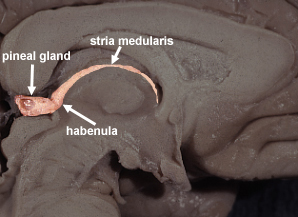
Researchers from University College London have pinpointed for the first time the left/right differences in how brains are wired at the level of individual cells. To do this, a research team led by Stephen Wilson looked at left and right-sided neurons (nerve cells) in a part of the brain called the habenula.

By causing habenular neurons to produce a bright green fluorescent protein they saw that they form remarkable "spiral-shaped" axons, the long nerve fibres that act as the nervous system's transmission lines.

Nitrous oxide, laughing gas, can't get any respect. Unlike carbon dioxide and methane, laughing gas has been largely ignored by world leaders as a worrying greenhouse gas but nitrous oxide must be taken more seriously, said Professor David Richardson from the University of East Anglia at the Society for General Microbiology’s 162nd meeting this week.

The potent gas is mainly coming from waste treatment plants and agriculture. Its release is increasing at the rate of 50 parts per billion or 0.25% every year. This means that it can be better controlled with suitable management strategies, but only if the importance of nitrous oxide (N2O) is widely recognised first.

“It only makes up 9% of total greenhouse gas emissions, but it’s got 300 times more global warming potential than carbon dioxide”, says Prof Richardson. “It can survive in the atmosphere for 150 years, and it’s recognised in the Kyoto protocol as one of the key gases we need to limit.”

"Awake", a film starring Hayden Christenson and Jessica Alba, is a psychological thriller about a horrifying phenomenon called "anesthetic awareness" where a patient's failed anesthesia leaves him fully conscious but physically paralyzed.

How common is it? Research shows that between one and three in every 1,000 patients experience some form of wakefulness during operations.

Some may not remember a period of consciousness during an operation – anesthetic drugs can interfere with recall – but they may still suffer subsequent psychological difficulties. In some cases patients aren't given enough of the sedative element of an anesthetic to keep them asleep.

Torn posters, tape and tomato skins may seem like strange research topics for physicists and applied mathematicians, but it's perfectly normal for a team of researchers from the Centre National de la Recherche Scientifique (CNRS) in Paris, the Universidad de Santiago, Chile, and MIT.

Such real-world applications are not only fun to study, but “we can really learn things that will be useful for industry and help us understand the everyday world around us. It is also a great way to motivate students to be interested in science,” says Pedro Reis, one of the authors of the paper and an applied mathematics instructor at MIT.

So they have tackled the issue of why wallpaper never comes off the way you want it. “You want to redecorate your bedroom, so you yank down the wallpaper. You wish that the flap would tear all the way down to the floor, but it comes together in a triangle and you have to start all over again,” said

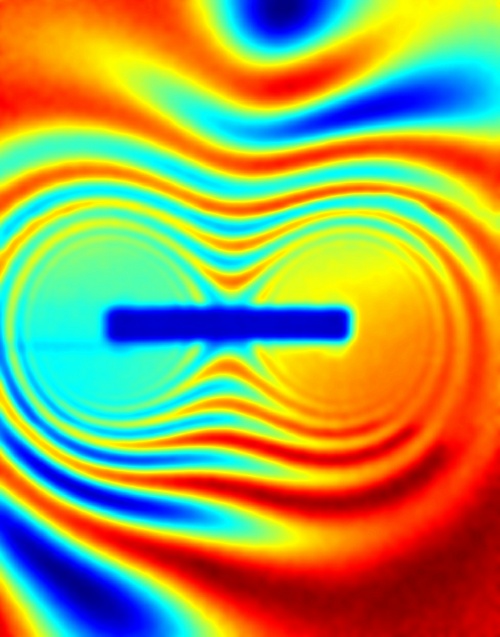
3-D images are very useful in medicine and now they're gaining ground in physics. Researchers from Hahn-Meitner-Institute (HMI) and the University of Applied Science in Berlin have succeeded in creating a direct, three-dimensional visualization of magnetic fields inside solid, non-transparent materials for the first time.

This could prove invaluable because to understand high temperature superconductivity it is vital to understand how magnetic flux lines are distributed and how these flux lines can be established in materials. With this new experimental setup, it is now possible to visualize magnetic domains in magnetic crystals three-dimensionally.

The researchers in the imaging group used neutrons, subatomic particles that have zero net charge, but do have a magnetic moment, making them ideal for investigating magnetic phenomena in magnetic materials.

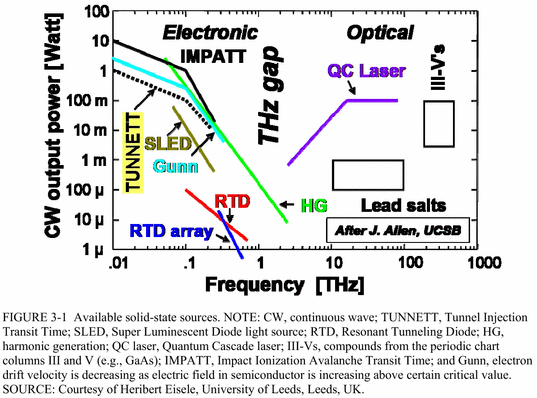
While space science has long been excited about advancements in the millimeter-wavelength/terahertz spectra, its potential in biology has been largely untapped. However, since THz radiation primarily excites vibrational modes present in water, imaging of soft tissues could also show a lot of improvement.

Terahertz systems are currently used to do things like examine hidden layers under old artwork and stop terrorists by seeing through clothes but they could be used in bio-technology to find genetic mutations without using invasive or toxic fluorescent dyes.

An important step toward that is development of handheld terahertz devices that could replace the bulky, expensive systems available now. Researchers at the the Universities of Leeds and Harvard say a quantum cascade laser is the way to go for small and portable terahertz technology.

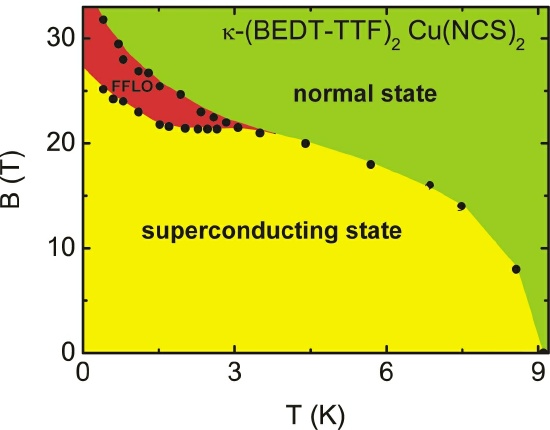
Superconductors are materials that conduct electrical currents without any loss below a certain temperature. Normally, high magnetic fields destroy superconductivity, turning the material into a normal conductor.

Novel experiments on organic superconductors revealed a new superconducting phase between the normal conducting and the superconducting state.

Prof. Peter Fulde from the Max Planck Institute for the Physics of Complex Systems in Dresden and Prof. Richard Ferrell predicted the existence of this special superconducting state in 1964, characterized by a spatial modulation of the superconductivity. At about the same time, two further researchers independently predicted the same phase. Therefore, the state is called Fulde-Ferrell-Larkin-Ovchinnikov (FFLO) state.

On March 26, 2008, surgeons at UC San Diego Medical Center removed an inflamed appendix through a patient’s vagina, a first in the United States.

Following the 50-minute procedure, the patient, Diana Schlamadinger, reported only minor discomfort. Removal of diseased organs through the body’s natural openings offers patients a rapid recovery, minimal pain, and no scarring. Key to these surgical clinical trials is collaboration with medical device companies to develop new minimally-invasive tools.

The procedure, called Natural Orifice Translumenal Endoscopic Surgery (NOTES), involves passing surgical instruments through a natural orifice, such as the mouth or vagina, to remove a diseased organ such as an appendix or gallbladder. Only one incision is made through the belly button for the purpose of inserting a two millimeter camera into the abdominal cavity so the surgeons can safely access the surgical site.

Boxing at the amateur level is less harmful to the brain than previously assumed, says a new study. Obviously the brain is a sensitive instrument so few statements on repeated blows to the head can be truly conclusive and whether or not a professional boxer like Muhammad Ali contracted Parkinson’s disease at age 40 due to injuries sustained in the ring may always remain unclear.

In the Heidelberg Boxing Study(1), high-resolution MRI data were used to search for tiny changes in the brains of amateur boxers and a comparison group of non-boxers. These changes are most likely precursors for later severe brain damage such as Parkinson’s disease or dementia.

In three of the 42 boxers, microhemorrhages were found, while in the comparison group of 37 non-boxers there were no such changes; however the difference was not statistically significant.

When most people think of lightning strikes they picture the kind that go from clouds to ground, but some lightning goes upward, forming blue jets and gigantic jets and, perhaps the most dangerous lightning, appears as "bolts from the blue" – lightning that begins upward, but then moves sideways and then downward to hit the ground as much as three miles from a thunderstorm.

However, about 90 percent of lightning occurs inside clouds and is not visible to the casual observer. A group of researchers wondered if lightning that appears within clouds and the lightning that escapes upward or downward shared the same development mechanisms.

For intracloud lightning, the most common form of lightning, the transfer of charge occurs between the most negatively and most positively charged areas, the middle and upper parts of the cloud, respectively. Lightning that strikes the ground does so because precipitation or the storm's progression creates an excess of net negative charge in the mid-levels of the cloud. This results in either a direct ground strike or a bolt from the blue.


