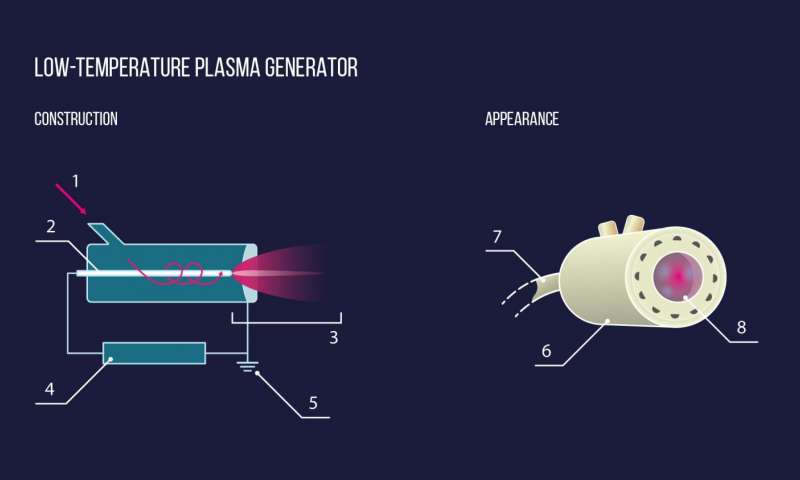




Russian scientists at the Moscow Institute of Physics and Technology (MIPT), the Joint Institute for High Temperatures of the Russian Academy of Sciences (JIHT RAS), and Gamaleya Research Centre of Epidemiology and Microbiology found that treating cells with cold plasma leads to their regeneration and rejuvenation. This result can be used to develop a plasma therapy program for patients with non-healing wounds. The paper has been published in the Journal of Physics D: Applied Physics.

Using experimental techniques, researchers have made the first ever direct observation of the elusive dewetting process, which takes place when a liquid film retracts to form a bead-shaped drop. The achievement could now spark a new line of research and lead to breakthroughs involving the use of liquids, such as better coatings and more effective self-cleaning surfaces.

Research published today in Research in Veterinary Science reveals that vitamin D supplementation reduces the incidence and severity of tuberculosis (TB) in wild boar and red deer. The pilot study of 40 animals was conducted by a multidisciplinary team of scientists from the University of Surrey (UK), Universidad de Extremadura (Spain), and SME Ingulados (Spain).

Wild boar and red deer are key hosts of bovine tuberculosis – a chronic, infectious disease mainly caused by Mycobacterium bovis - in southern Europe, with the incidence of TB in these animals particularly high in certain areas of Spain. The research could therefore have a positive impact on animal health and – since these species are valuable in the hunting and meat products industries – local economies.

It is common to equate high levels of immigration with increases in the crime rate because there are increases in the crime rate according to every statistic, but the opposite can be true, according to University of Huddersfield criminology lecturer Dr. Dainis Ignatans, who carried out statistical analysis of UK communities.

His latest article, in the International Review of Victimology, analyzes the changed distribution of crime by offenze type and is based on data extracted from a total of almost 600,000 respondents to the Crime Survey for England and Wales between 1982 and 2012.

What do police not think is worth very much? Asking people on surveys about crime, especially when actual crime is different than what people claim on surveys.

A new paper shows that recent rises in levels of methane in our atmosphere is being driven by biological sources, such as swamp gas, cow burps, or rice fields, rather than fossil fuel emissions.

Atmospheric methane is a major greenhouse gas that traps heat in our atmosphere, contributing to global warming. Its levels have been growing strongly since 2007, and in 2014 the growth rate of methane in the atmosphere was double that of previous years, largely driven by biological sources as opposed to fossil fuel emissions.

Conventional wisdom refuted

New fossils from the Late Triassic period (235 to 201 million years ago) are changing scientists' understanding of what drastically different forms can evolve in the tetrapod forelimb, including skeletal adaptations never before seen in land animals. 

51 members of the U.S. House of Representatives have signed a letter to the U.S. Drug Enforcement Agency (DEA) urging the federal agency to halt an emergency push to ban the analgesic herb kratom by as early as tomorrow. 

The gusting westerly winds that dominate the climate in central Asia, setting the pattern of dryness and location of central Asian deserts, have blown mostly unchanged for 42 million years.
A University of Washington geologist led a team that has discovered a surprising resilience to one of the world's dominant weather systems. The finding could help long-term climate forecasts, since it suggests these winds are likely to persist through radical climate shifts.

Glioblastomas exert an influence on the microglia, immune cells of the brain, which causes them to stimulate cancer growth rather than attacking it. In a study published in the journal Nature Immunology, an international research team led from Sweden's Karolinska Institutet now explains the molecular mechanisms behind this action.

Glioblastomas are one of the most malignant forms of brain tumour and are difficult to surgically remove because the tumour cells invade the surrounding healthy brain tissue. Glioblastomas also affect the microglia - immune cells of the brain - in such a way that they stimulate the tumour cells instead of attacking them.

