

AUGUSTA, Ga. - Diabetes is the leading cause of kidney failure, and scientists have found that infusing just a small dose of a cytokine, thought to help cause that failure, can instead prevent or reverse it.

The cytokine IL-17A has long been considered a classic promoter of inflammation, which plays a major role in progression of diabetes-related kidney disease, or diabetic nephropathy, said Dr. Ganesan Ramesh, kidney pathologist at the Vascular Biology Center at the Medical College of Georgia at Augusta University.

An animation of satellite imagery over the course of two days shows a massive low pressure system that generated severe weather in the southwestern and central U.S. bringing snow, heavy rainfall, flooding and tornadoes. The video, created by the NASA/NOAA GOES Project at NASA's Goddard Space Flight Center in Greenbelt, Maryland, combined visible and infrared imagery from NOAA's GOES-East satellite.

The 30-second animation shows the movement of the massive storm system from Dec. 26 to early Dec. 28, 2015.

Dublin, Ireland, Dec. 28th, 2015 - A team of geneticists from Trinity College Dublin and archaeologists from Queen's University Belfast has sequenced the first genomes from ancient Irish humans, and the information buried within is already answering pivotal questions about the origins of Ireland's people and their culture.

The team sequenced the genome of an early farmer woman, who lived near Belfast some 5,200 years ago, and those of three men from a later period, around 4,000 years ago in the Bronze Age, after the introduction of metalworking. Their landmark results are published today in international journal Proceedings of the National Academy of Sciences, USA.

The specialized human ability to perceive the sound quality known as 'pitch' can no longer be listed as unique to humans. Researchers at Johns Hopkins report new behavioral evidence that marmosets, ancient monkeys, appear to use auditory cues similar to humans to distinguish between low and high notes. The discovery infers that aspects of pitch perception may have evolved more than 40 million years ago to enable vocal communication and songlike vocalizations.

A summary of the research will be published online in the journal Proceedings of the National Academy of Sciences on Dec. 28, 2015.

Millions of trees are in peril from the drought in California but that is not the fault of climate change or even bad luck - every 20 years California has a drought as bad as what just ended. It is instead bad policy; California's water infrastructure has not been improved in a meaningful way since the 1960s and since then environmental policy has been dictated by lobbyists for activist groups, so the state can't build new reservoirs, to store water for when droughts happen, and they are forced to dump fresh water into the Pacific Ocean.

The trees aren't just in peril from politicians and environmentalists, there is also the ever-present wildfires and the destructive bark beetle. 

A recent analysis spanning 40 years of surveys including more than 100 papers on the 'question-behavior effect,' a phenomenon in which asking people about performing a certain behavior influences whether they do it in the future, offers insight to marketers, policy makers and others seeking to impact human behavior.

The authors conclude that asking about performing a future behavior changes the likelihood of that behavior happening. That means parents asking their children, 'Will you drink and drive?' should be more effective than saying, 'Don't drink and drive.' For people making New Year's resolutions, a question like, 'Will I exercise -- yes or no?' may be more effective than declaring, 'I will exercise.'

In a landmark study, researchers from the Broad Institute and Massachusetts General Hospital reveal a completely new biological mechanism that underlies cancer. By studying brain tumors that carry mutations in the isocitrate dehydrogenase (IDH) genes, the team uncovered some unusual changes in the instructions for how the genome folds up on itself. Those changes target key parts of the genome, called insulators, which physically prevent genes in one region from interacting with the control switches and genes that lie in neighboring regions. When these insulators run amok in IDH-mutant tumors, they allow a potent growth factor gene to fall under the control of an always-on gene switch, forming a powerful, cancer-promoting combination.

Boston, MA - A new study by researchers from Harvard T.H. Chan School of Public Health and colleagues describes the pre-clinical development of a therapeutic that could potentially be used to treat type 2 diabetes, fatty liver disease, and other metabolic diseases. The researchers developed an antibody that improves glucose regulation and reduces fatty liver in obese mice by targeting a hormone in adipose (fat) tissue called aP2 (also known as FABP4).

The study will be published online December 23, 2015 in Science Translational Medicine.

Janardan Pandey, Ph.D., an immunogeneticist specializing in immunoglobulin GM genes at the Medical University of South Carolina, helped monitor for immune responses that could limit the effectiveness of the broadly neutralizing antibody VRC01 in a phase 1 trial of that antibody in HIV-infected individuals led by a team at the Vaccine Research Center (VRC) of the National Institute of Allergy and Infectious Diseases, part of the National Institutes of Health. The results of the trial were reported in an article in the Dec. 23, 2015 issue of Science Translational Medicine, on which Pandey was a co-author. Pandey's expertise as an immunogeneticist specializing in immunoglobulin GM genes was needed for the trial because the VRC01 antibody is built on the immunoglobulin GM3 platform.

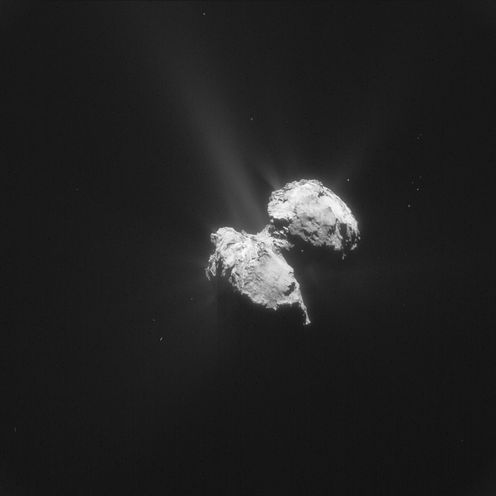
It has been a busy year for Solar System exploration – and particularly our galactic neighborhoods small icy bodies. Comets, asteroids, Kuiper Belt Objects and planetary satellites have all been in the news – from stunning images of comet 67P Churyumov-Gerasimenko at the start of the year, to the recent close-up of Saturn’s moon, Enceladus, via Ceres and Pluto.

