Many people worry about the possibility of the end of all life on our planet. However, the Earth is by far the most habitable planet in our solar system and there's no reason to expect that to change for hundreds of millions of years.

The Earth may become uninhabitable between 500 million and a billion years from now. That may seem a short time, when you compare it with the billions of years the Earth has evolved for. But compared with the length of time there have been humans on the Earth it's a very long time.

To get an idea of who may need to deal with this issue, the idea is, to look at the last billion years. And then think about where we or our evolutionary cousins might be after another billion years after that. First some background though.

Corn infected by the fungus Aspergillus which can produce aflatoxin (Iowa State IPM)
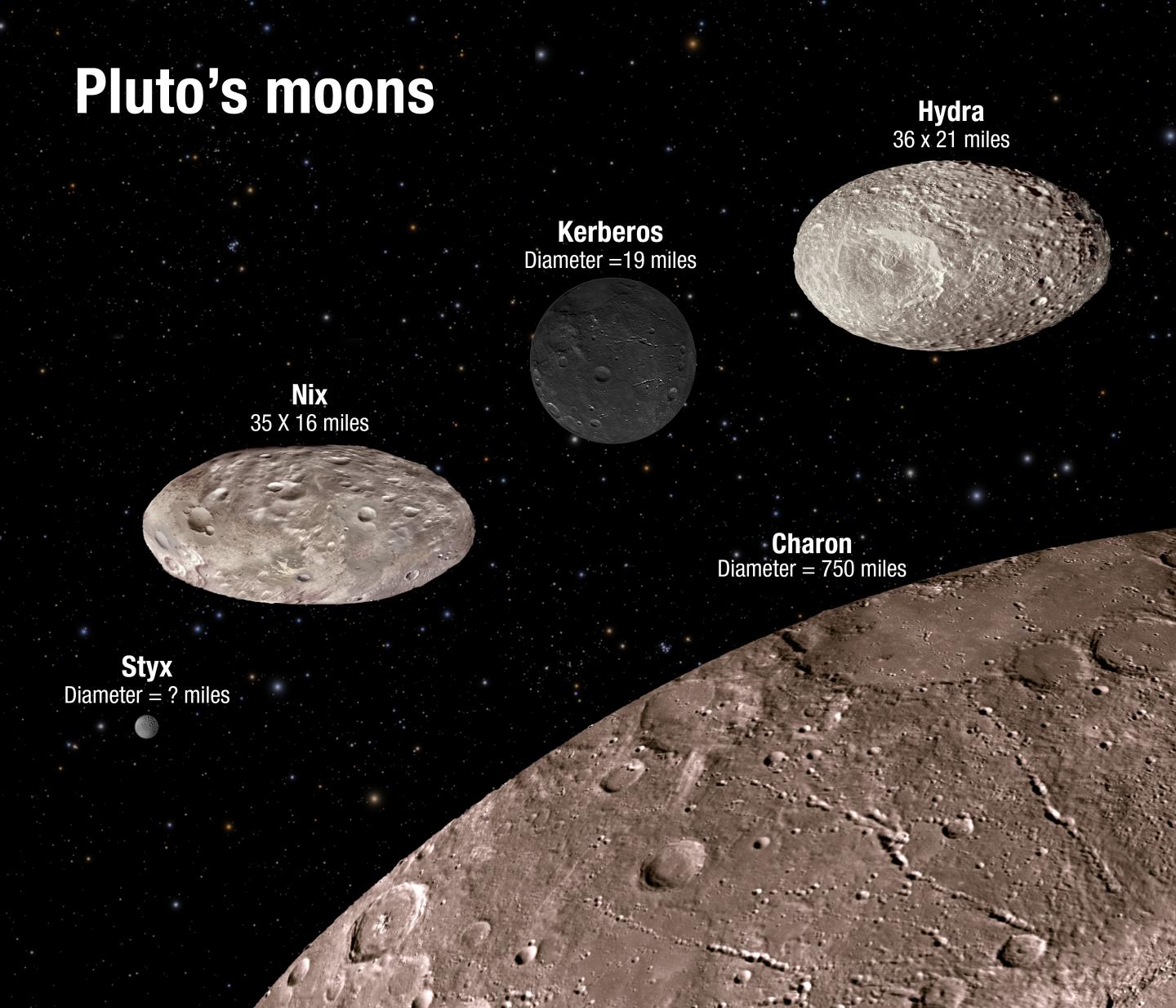
If you lived on one of Pluto's moons, you might have a hard time determining when, or from which direction, the sun will rise each day. Two of Pluto's moons, Nix and Hydra, wobble unpredictably, according to a new data analysis.

Beginning readers who focus on letter-sound relationships, or phonics, instead of trying to learn whole words, increase activity in the area of their brains best wired for reading, according to new Stanford research investigating how the brain responds to different types of reading instruction.

In other words, to develop reading skills, teaching students to sound out "C-A-T" sparks more optimal brain circuitry than instructing them to memorize the word "cat." And, the study found, these teaching-induced differences show up even on future encounters with the word.

A team of biologists and a mathematician have identified and characterized a network composed of 94 proteins that work together to regulate fat storage in yeast.

"Removal of any one of the proteins results in an increase in cellular fat content, which is analogous to obesity," says study coauthor Bader Al-Anzi, a research scientist at Caltech. The findings, detailed in the May issue of the journal PLOS Computational Biology, suggest that yeast could serve as a valuable test organism for studying human obesity.

Soil erosion that occurs in rainy seasons leads to a significant amount of carbon being released into the atmosphere, a new study shows.

Investigators who analyzed 240 runoff plots from different regions of the world found that organic carbon losses from soils corresponds to about one-sixth of annual fossil fuel-induced carbon emissions with highest rates for semi-arid soils followed by tropical soils and temperate soils.

"The organic carbon lost from soils is more likely to reach the atmosphere under semi-arid sandy soils of weak structure compared to clayey tropical or temperate soils where organic matter is more protected," said Dr. Vincent Chaplot, co-author of the study published in Earth Surface Processes and Landforms.

DOI: 10.1002/esp.3758

It was recently revealed that the University of Wollongong has spent around A$20,000 over the past five years on lunches and dinners with politicians, including several fundraising events for the Liberal Party. Usually only one person attended these functions – probably someone at the top, though we don’t know for sure – but the donations themselves were made in the name of the university, thus making the university a sponsor of the Liberal Party.

A team of engineers have created tiny acoustic vortices and used them to grip and spin microscopic particles suspended in water.

The research by academics from the University of Bristol's Department of Mechanical Engineering and Northwestern Polytechnical University in China, is published in Physical Review Letters. The researchers have shown that acoustic vortices act like tornados of sound, causing microparticles to rotate and drawing them to the vortex core. Like a tornado, what happens to the particles depends strongly on their size.

Aging is associated with significant decline in cognitive functions. But does this translate into poorer decision making? Psychologists from the University of Basel and the Max Planck Institute for Human Development report that in simple decision situations, older adults perform just as well as younger adults. However, according to their study published in the academic journal Cognition, aging may affect decision performance in more complex decision situations.

Important decisions in politics and economics are often made by older people: According to Forbes magazine, the average age of the world's most powerful people in 2013 was 61 years. As populations across the globe age, the selection of older individuals into such powerful roles may even be further intensified.

Teenage girls find female CEOs and military pilots to be better role models, but they like and feel more similar to women in careers like modeling and acting, say psychologists.

For the study, 100 girls and 76 boys ages 14 to 18 were shown photographs of model Heidi Klum, actress Jennifer Aniston, CEO Carly Fiorina and military pilot Sarah Deal Burrow. Klum and Aniston represented the appearance-focused careers (Aniston probably wasn't consulted on that, since she is clearly the best actress of the "Friends" cast) and Fiorina and Deal Burrow represented the non-appearance focused careers.



