What makes us happy? Philosophers, psychologists and scientists have long pondered that question.
Psychologists believe they may have a solution that satisfies everyone in flow theory, a model that better preserves the approach to individual distinctiveness by considering the mental experience as a process that might foster the evolution or the involution of an individual through his daily experiences.
Meat eaters who justify their eating habits feel less guilty and are more tolerant of social inequality, say a group of authors led by psychologist Dr. Jared Piazza of Lancaster University.
Omnivores also rationalize, say the team. They have labeled the most common justifications for not adapting a vegetarian lifestyle as "the 4Ns - that meat consumption is Natural, Normal Necessary and Nice.
Natural - “Humans are natural carnivores”
Necessary - “Meat provides essential nutrients”
Normal - “I was raised eating meat”
Nice - “It’s delicious”
Some flavorings used in electronic cigarette liquid may alter important cellular functions in lung tissue, according to a presentation at the 2015 American Thoracic Society International Conference.
The changes in cell viability, cell proliferation, and calcium signaling are flavor-dependent so coupling these results with chemicals identified in each flavor could prove useful in identifying flavors or chemical constituents that might produce adverse effects in users.
People with home-brewed beer rigs and backyard distilleries already know how to employ yeast to convert sugar into alcohol. - they soon might be able to turn sugar-fed yeast into a microbial factory for producing morphine and potentially other drugs, including antibiotics and anti-cancer therapeutics.
It might be the age of home-brewed pharmaceuticals, DIY Bio taken to the next level.
Do we hear sounds as they are, or do our expectations about what we are going to hear shape the way sound is processed?
Through the use of computational neuroscience models, Bournemouth University’s Dr. Emili Balaguer-Ballester and colleagues are trying to map the way that the brain processes sound.
I spent the last weekend in Berlin, attending a conference for editors organized by Elsevier. And I learnt quite a bit during two very busy days. As a newbie - I am handling editor for the journal "Reviews in Physics" since January this year - I did expect to learn a lot from the event; but I will admit that I decided to accept the invitation to attend the event more out of curiosity for a world that is at least in part new to me, rather than out of professional sense of duty.
This is a question that is frequently asked on Quora, with a different date each time. We get a fair number of quite worried people asking this question, in all seriousness, concerned that Earth is about to be hit by a giant impactor. Sometimes they have read sensational stories by online papers that should know later.
It is easy to keep up to date with potential impact dates by visiting this page, automatically updated for the Sentinel program: Current Impact Risks. Just look and see if there are any entries coloured orange or red. Then look for the predicted date of impact. So far this has never happened.
The diagnosis of the first case of Ebola in Lagos, Nigeria in July last year set off alarm bells around the world. The fear was that it would trigger an apocalyptic epidemic that would make the outbreaks in Liberia, Sierra-Leone and Guinea, where 1322 cases were reported and 728 people had died within five months, pale in comparison.
Light-emitting diodes are the future, and will quickly bypass government-mandated and subsidized compact fluorescent bulbs and the prospect of wearing a Haz-Mat suit if you break one. Why be limited to bulbs, though?
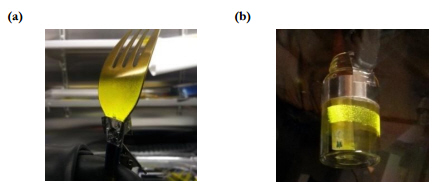
Why not a light-emitting fork?
Physicist Amir Asadpoordarvish of Umeå University in Sweden did just that, using new light-emitting electrochemical cells (LECs) sprayed onto a substrate that emit light using the current from an ordinary battery. A LEC is a solid-state thin-film device, which comprises an active material sandwiched between a cathode and an anode as its key constituent parts. To-date they have been fabricated on heavy, rigid parts.
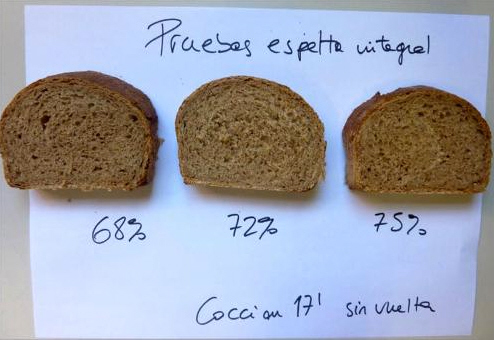
A new study suggests that bread from certain wheat varieties have differentiated sensory properties and that could mean customized breeding for more personalized food in the future.
A research group at Universidad Politécnica de Madrid (UPM) has developed the sensory profile of five different wheat varieties -three bread wheat (Triticum aestivum ssp. vulgare L.) and two spelt wheat (T. aestivum ssp. spelta) and has found significant differences among them.