


More than 1,000 dams have been removed across the United States because of safety concerns, sediment buildup, inefficiency or having otherwise outlived usefulness. A paper published today in Science finds that rivers are resilient and respond relatively quickly after a dam is removed.

"The apparent success of dam removal as a means of river restoration is reflected in the increasing number of dams coming down, more than 1,000 in the last 40 years," said lead author of the study Jim O'Connor, geologist with the U.S. Geological Survey. "Rivers quickly erode sediment accumulated in former reservoirs and redistribute it downstream, commonly returning the river to conditions similar to those prior to impoundment."

Clinics are advertising stem cell treatments using exceptions in FDA regulations, according to a new paper. 

In proof-of-concept experiments, researchers at University of California, San Diego School of Medicine demonstrate the ability to tune medically relevant cell behaviors by manipulating a key hub in cell communication networks. The manipulation of this communication node, reported in this week's issue of Proceedings of the National Academy of Sciences, makes it possible to reprogram large parts of a cell's signaling network instead of targeting only a single receptor or cell signaling pathway.

A statistical analysis of data from 20 industrial countries covering the period 1970 to 2012 suggests housing market pricing cycles -- normal, boom and bust phases -- have become longer over the last four decades.

The study also found that longer down phases can have dire consequences on national and international economies. While relatively short-lived housing booms tend to deflate, more prolonged booms are likely to spiral out of control. Similarly, compared to short housing busts, longer housing busts are more likely to turn into chronic slumps and, ultimately, lead to severe recessions.

Contrary to popular belief, more healthy kids' meals were ordered after a regional restaurant chain added more healthy options to its kids' menu and removed soda and fries, researchers from ChildObesity180 at Tufts University Friedman School reported today in the journal Obesity. Including more healthy options on the menu didn't hurt overall restaurant revenue, and may have even supported growth.

Dispersal and adaptation are two fundamental evolutionary strategies available to species given an environment. Generalists, like dandelions, send their offspring far and wide. Specialists, like alpine flowers, adapt to the conditions of a particular place.

Ecologists have typically modeled these two strategies, and the selective pressures that trigger them, by holding one strategy fixed and watching how the other evolves. New research published in the journal Evolution illustrates the dramatic interplay during the co-evolution of dispersal and adaptation strategies.

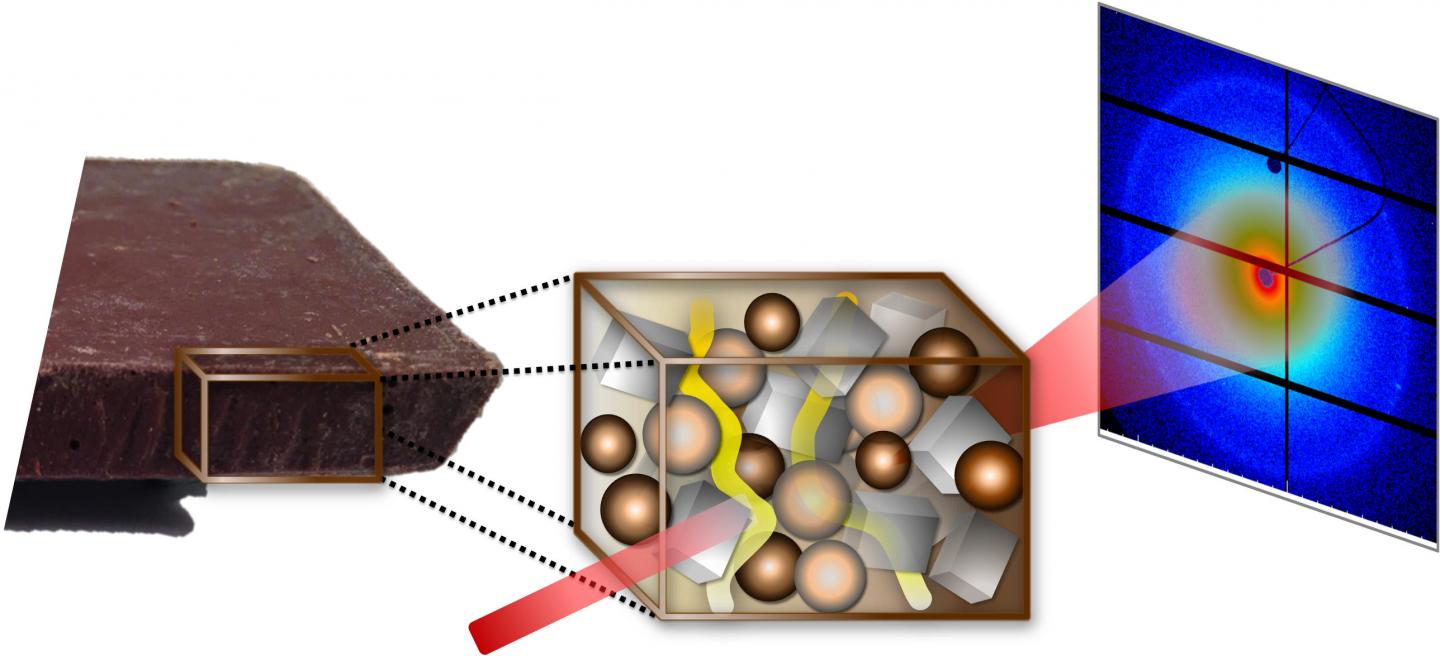
We have all seen "fat bloom", that unwelcome white layer that occasionally forms on chocolate. It is harmless but Europe once banned ugly fruit so cosmetics are clearly important to them and for that reason Nestlé and the Hamburg University of Technology got the DESY synchrotron's high brilliance X-ray source PETRA III on the case.

By Sara Rennekamp, Inside Science  -- News broke this week that the company behind the popular Kind line of snack bars received a warning letter from the Food and Drug Administration.

Their offense? Not labeling the bars according to FDA rules -- primarily due to slapping a "healthy" label on a product that did not meet the FDA standards for healthy.

“It might take a little bit of force to break this up,” says mortician Holly Williams, lifting John’s arm and gently bending it at the fingers, elbow and wrist. “Usually, the fresher a body is, the easier it is for me to work on.”

Williams speaks softly and has a happy-go-lucky demeanor that belies the nature of her work. Raised and now employed at a family-run funeral home in north Texas, she has seen and handled dead bodies on an almost daily basis since childhood. Now 28 years old, she estimates that she has worked on something like 1,000 bodies.

Her work involves collecting recently deceased bodies from the Dallas–Fort Worth area and preparing them for their funeral.

Two women recently had their research paper rejected by a science journal based on an incredibly sexist review of their work – an event that has caused outrage on social media.

While the journal, PLOS ONE, has apologized and given the authors a second chance, not everyone is as lucky.

The case provides an opportunity for journals to adopt an open peer-review system – a process in which scientists evaluate the quality of other scientists' work – so that reviewers cannot hide behind anonymity. But it also shows it is time to get tough on the widespread biases in universities.


