Transcranial direct current stimulation, using a weak electric current in an attempt to boost brainpower or treat conditions, has become popular among cognitive do-it-yourselfers and the neuroscience equivalent of people selling dietary supplements, but a new University of North Carolina School of Medicine study urges caution that should be common sense.

New work found that electric brain stimulation had a statistically significant detrimental effect on IQ scores. Using less common alternating current stimulation - so-called tACS - could be a better approach. Tesla beats Edison once again.

Astronomers have reported an exceptionally luminous galaxy from when the universe was only 5% of its present age - more than 13 billion years in the past.

The galaxy, EGS-zs8-1, was originally identified based on its particular colors in images from NASA's Hubble and Spitzer telescopes and the team determined its exact distance from Earth using the powerful MOSFIRE instrument on the W.M. Keck Observatory's 10-meter telescope in Hawaii. It is the most distant galaxy currently measured and one of the brightest and most massive objects in the early universe. 

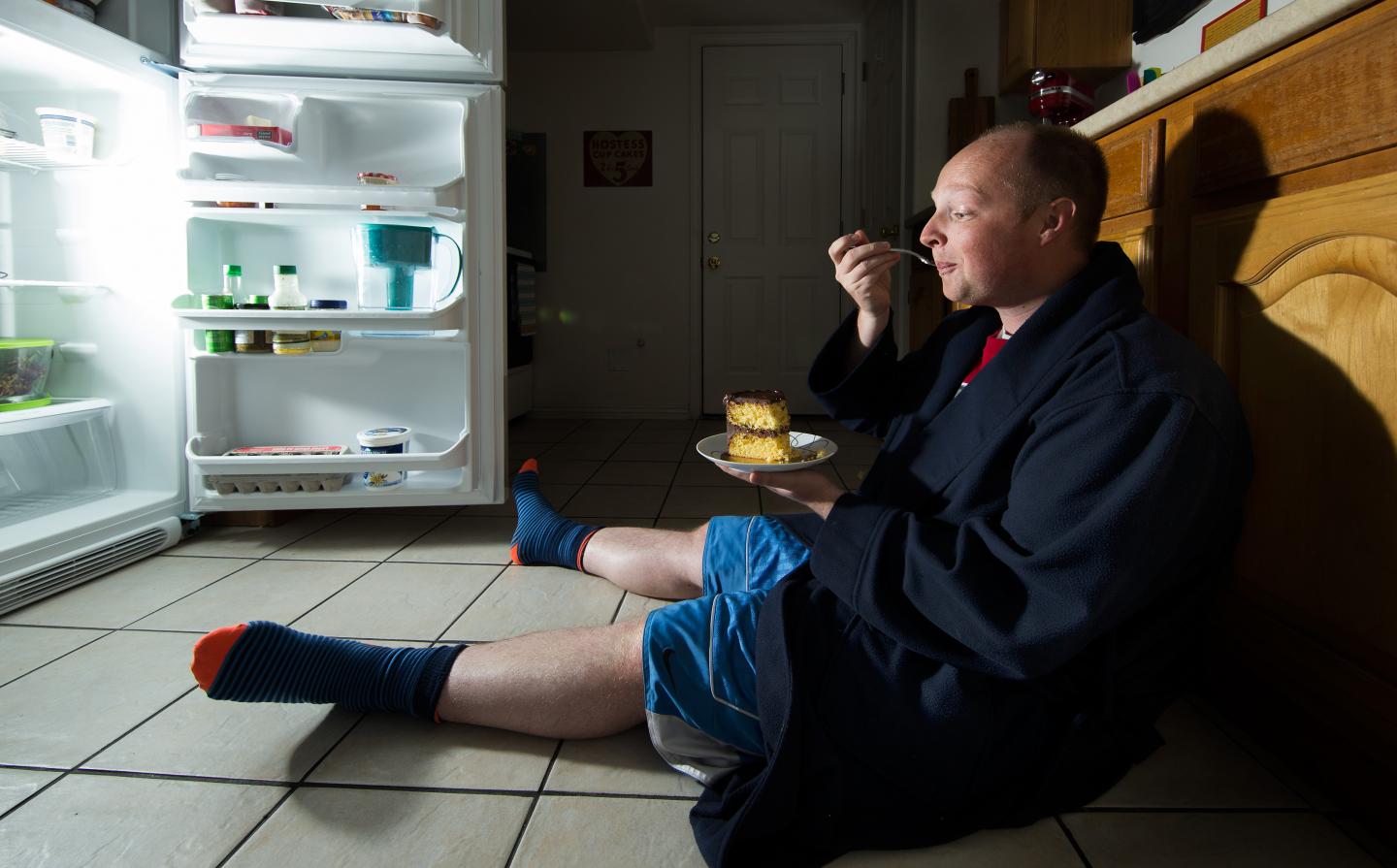
If you have ever wondered why you need to snack more at night and many people don't, there may be a neuroscience answer:  areas of the brain that get a satiety "food high" may not get it in the evening. 

In a new study, exercise professors and a neuroscientist used MRI to measure how the  brains of college students respond to high- and low-calorie food images at different times of the day. Functional MRI took pictures of the brain activity of study subjects while they viewed images of food. The participants viewed 360 images during two separate sessions held one week apart--one during morning hours and one during evening hours.

The U.S. educational system clearly produces some of the best minds in the world.

America leads in science output and in adult science literacy, yet when it comes to standardized tests, the United States has always been in the middle of the pack and that has long been a concern.

Genome editing using CRISPR/Cas system has enabled direct modification of the mouse genome in fertilized mouse eggs, leading to rapid, convenient, and efficient one-step production of knockout mice without embryonic stem cells.

In contrast to the ease of targeted gene deletion, the complementary application, called targeted gene cassette insertion or knock-in, in fertilized mouse eggs by CRISPR/Cas mediated genome editing still remains a tough challenge.

To understand how transposable elements, DNA sequences capable of moving independently,  shape genomes, where they are maintained over generations, it is vital to discover the mechanisms behind their targeted integration.

Researchers from the Laboratoire Pathologie et Virologie Moléculaire (CNRS/Inserm/Université Paris Diderot), Institut de biologie intégrative de la cellule and the University of Minnesota have identified an interaction between two proteins that is essential for the integration of a transposable element into a specific area of the yeast genome. The results emphasize the role of these mobile DNA sequences in the evolution and adaptation of organisms, and their potential value for gene therapy.
Lisa Marie Potter, Inside Science -- Skin has to be flexible enough to jump, crawl, and kick with us.
It also has to be resilient enough to withstand our falls, scrapes, and cuts. Scientists have marveled at skin's strength for years without knowing why it's so durable.

Now, scientists have identified the mechanical properties that give skin its toughness. Their findings are the first to show that collagen, the most abundant protein in skin, moves to absorb stress and prevent the skin from tearing. In the future, this knowledge could help us use nature's blueprint to make better synthetic skin and improve the strength of man-made materials.

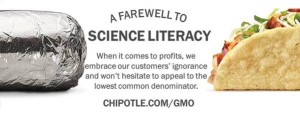
Chipotle wins the science ‘foot in mouth’ award for 2015, and we are not even to summer yet. So far there are more than 40 media condemnations and counting.

The fast food chain’s “bold” move, announcing a faux ban on GMOs in its food, has blown up big time. Why faux? Because, as Chipotle well knows, its sodas, beef, pork and chicken dishes, and any food with cheese, are made with ingredients that were derived through genetic engineering.

A group of researchers analyzed a marine sponge called Halichondrin okadai  because they were curious why it inhibited the replication of organisms around it.

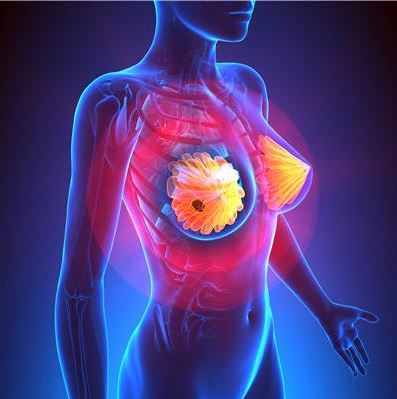
They found that a mesylate eribulin substance had been applied to patients with breast cancer patients in the stage of metastasis, when the disease spreads to other parts of the body, and that it inhibited tumor growth.

Even before Jacqueline Ho enrolled in her first environmental studies course at college, her thinking about climate change had been shaped during her years growing up in Singapore reading books by the environmental writer and activist Bill McKibben.

At college, ideas first planted by McKibben were reinforced in courses where she read classics by Aldo Leopold and Garrett Hardin, along with recent books by Van Jones and Elizabeth Kolbert.

With these authors anchoring her understanding, it was easy for Ho to believe about climate change “that fossil fuel corporations were to blame, that we had a suite of low-carbon technologies we could deploy immediately, and that grassroots solutions held promise,” she recalls.