





Researchers have adapted an antiviral enzyme from bacteria called Cas9 into an instrument for inhibiting hepatitis C virus in human cells. Cas9 is part of the CRISPR genetic defense system in bacteria, which scientists have been harnessing to edit DNA in animals, plants and even human cells. In this case, Emory researchers are using Cas9 to put a clamp on RNA, which hepatitis C virus uses for its genetic material, rather than change cells' DNA.

Although several effective drugs are now available to treat hepatitis C infection, the approach could have biotechnology applications.

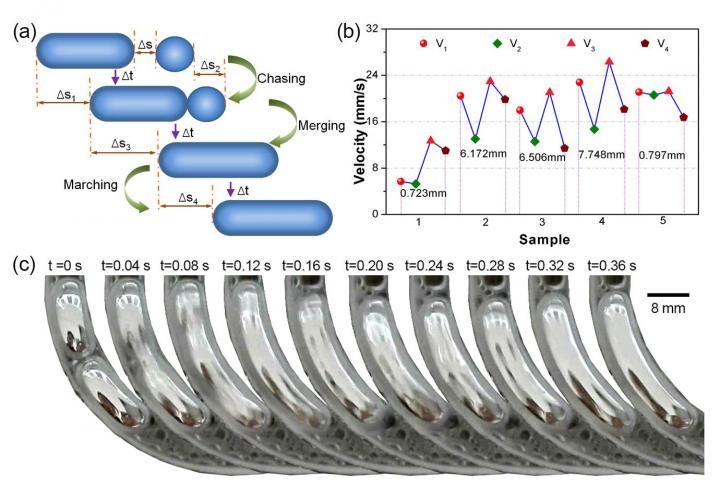
Autonomous locomotion for a macroscopic liquid metal machine has been made self-actuated when fueled with aluminum (Al) flake and now a much larger liquid metal machine has been made possible.

It can autonomously move and accelerate with an increase in temperature. When dividing a large running liquid metal vehicle into several smaller ones, each of them can still maintains its traveling state along the original track. If several dispersive vehicles moved close to each other, they can coalesce seamlessly, and then still kept moving forward.

American science-fiction cinema fans are either intrigued or horrified by this notion.

In an effort that reaches back to the 19th-century laboratories of Europe, a discovery by chemistry researchers establishes new possibilities for the semiconductor industry - chemists have been able to trap molecular species of silicon oxides. 

Turmeric, the familiar yellow spice common in Indian and Asian cooking, may play a therapeutic role in oral cancers associated with human papillomavirus, according to new research published in ecancermedicalscience. One of the herb's key active ingredients - an antioxidant called curcumin - appears to have a quelling effect on the activity of human papillomavirus (HPV).

HPV is a virus that promotes the development of cervical and oral cancer. There is no cure, but curcumin may offer a means of future control.

"Turmeric has established antiviral and anti-cancer properties," says corresponding author Dr. Alok Mishra of Emory University. "And according to our new findings, we could say that it's good for oral health too."

New ophthalmology research finds that dry eye - the little understood culprit behind red, watery, gritty feeling eyes - strikes most often in spring, just as airborne allergens are surging, the first direct correlation between seasonal allergens and dry eye, with both pollen and dry eye cases reaching a yearly peak in the month of April. 

The brains of babies 'light up' like adults when exposed to the same painful stimulus, according to a small brain imaging study, and that suggests babies experience pain much like adults.

The study looked at 10 healthy infants aged between one and six days old and 10 healthy adults aged 23-36 years. Infants were recruited from the John Radcliffe Hospital, Oxford and adult volunteers were Oxford University staff or students.

The first national investigation of Medicare coverage of biologic disease-modifying drugs (DMARDs) found that in starting a single biologic DMARD, patients face more than $2,700 in co-payments each year before receiving relief from catastrophic coverage.

During the initial phase of coverage, most people are expected to pay a striking 29.6% of total biologic drugs costs (just under one-third) out-of-pocket, creating an enormous financial burden for patients with chronic, rheumatic diseases such as rheumatoid arthritis. 

It's a dilemma many working parents: your child has a cough or a cold, do you send them to daycare?

Researchers from the University of Bristol have investigated the process of decision-making that parents go through when faced with this situation and find that parents viewed coughs and colds as less serious and not as contagious as sickness and diarrhea symptoms. This resulted in parents sending their child to daycare with a respiratory tract infection (RTI), which can result in the spread of similar illnesses in the wider community. 

Suicide remains the second leading cause of death for adolescents in the United States, this year nearly 5,000 adolescents will commit suicide and advocates claim over 500,000 will make an emergency room visit that is or could be a suicide attempt.

Better tools to evaluate, identify, and treat at-risk adolescents are crucial for the development and implementation of effective preventive strategies and a series of articles explores key factors that may contribute to suicidal risk and presents new assessment and treatment approaches.

The mosquito transmitted Chikungunya virus, which causes Chikungunya fever, is spreading continuously. No vaccine is so far available. Researchers of the Paul-Ehrlich-Institut have experimentally recombined segments of the virus surface protein E2, thus creating artificial proteins. The domain generated that way - "sAB+" - was able to confer a protective effect against Chikungunya virus to the animal. An immunization by means of this small protein fragment could thus provide a suitable approach to developing a Chikungunya vaccine.

