




We are still trying to fully understand the extent of the damage caused by the Deepwater Horizon oil spill five years ago, one of the worst environmental disasters in US history.

Neutrinos are among the more mysterious elementary particles in the universe: Billions of them pass through every cell of our bodies every second, yet these ghostly particles are incredibly difficult to detect, because they don’t appear to interact with ordinary matter.

Scientists have set theoretical limits on neutrino mass, but researchers have yet to precisely detect it.

51 Pegasi b, about 50 light-years from Earth in the constellation of Pegasus, was discovered in 1995 and was the the first confirmed exoplanet to be found orbiting an ordinary star like our Sun. It is the archetypal Hot Jupiter -- a class of planets similar in size and mass to Jupiter but orbiting much closer to their parent stars.

Since that landmark discovery, more than 1,900 exoplanets in 1,200 planetary systems have been confirmed, but 51 Pegasi b now has another "first" - it has been directly detected in visible light.

While growing new organs from a patient's own stem cells is the future much of science is working toward, there are people who need replacements right now. Lots of people are signed up for organ donations in the case of death but willing donors is not the biggest obstacle.

It's time.

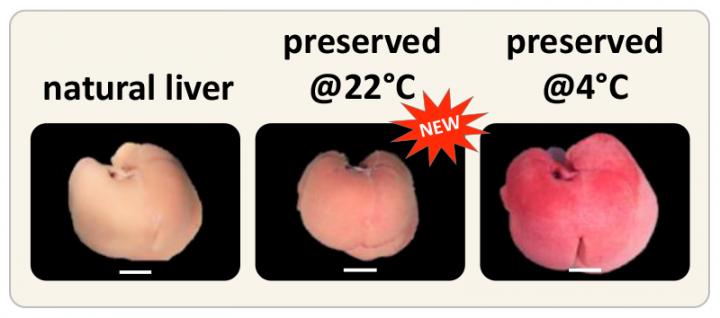
 Typically, donor organs have to kept in preservation solution at a static temperature of 4 °C and the clock begins ticking immediately. They have short preservation times; about 6 hours for hearts and lungs, 12 hours for livers, and 20 hours for kidneys.
When a sustainability advocate leaves the intellectual playground of academia and starts trying to really get things done related to climate and energy, it is easy to become disillusioned. Not because of corporations, they actually did what was expected and got sustainable because it was 'good business', as they were supposed to do. Instead, it is easy to become jaded by environmentalists.
The widely held belief that depression is due to low levels of serotonin in the brain and that raising those levels is an effective treatment is invalid, according to David Healy, Professor of Psychiatry at the Hergest psychiatric unit in North Wales. Instead it is "the marketing of a myth."

The serotonin reuptake inhibiting (SSRI) group of drugs came on stream in the late 1980s, nearly two decades after first being mooted, writes Healy.  The delay centered on finding an indication. 

Invasive pests known as spruce bark beetles have been attacking Alaskan forests for decades, killing more than 1 million acres of forest on the Kenai Peninsula in southern Alaska for more than 25 years.

Beyond environmental concerns regarding the millions of "beetle kill" dead trees, inhabitants of the peninsula and surrounding areas are faced with problems including dangerous falling trees, high wildfire risks, loss of scenic views and increased soil erosion. Intriguingly, a sociologist from the University of Missouri says that human perception of the beetle kill problem in the Kenai Peninsula has improved over time, despite little improvement in the environmental conditions.

A study of approximately 95,000 children with older siblings found that the measles-mumps-rubella (MMR) vaccine is not associated with an increased risk of autism spectrum disorders regardless of whether older siblings had been diagnosed on the autism spectrum - and epidemiological papers say those children should be at higher risk for an autism diagnosis.

During the last 15 years, no valid study has found a link between the MMR vaccine and ASD but some parents and people selling alternative medicines continue to associate the vaccine with ASD. Surveys of parents who have children with ASD suggest that many believe the MMR vaccine was a contributing cause.

Heavy snoring and sleep apnea may be linked to memory and thinking decline at an earlier age, according to a new study - but treating the disorders with a breathing machine may delay the decline. 

For the study, the medical histories for 2,470 people ages 55 to 90 were reviewed. Participants were categorized as either free of memory and thinking problems, in early stages of mild cognitive impairment (MCI), or with Alzheimer's disease. The researchers also looked at people with untreated sleep breathing problems versus those without the sleep breathing problems and also untreated versus treated people with sleep breathing problems.

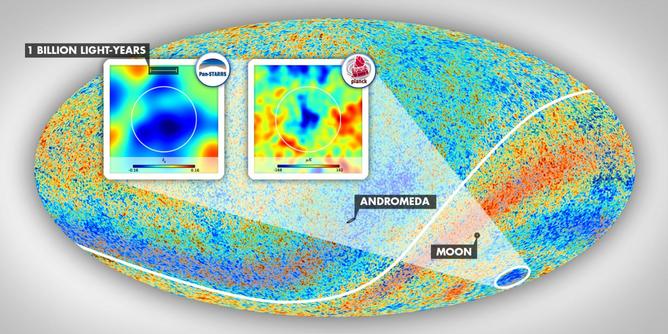
Astronomers have found evidence of a giant void that could be the largest known structure in the universe. The “supervoid” solves a controversial cosmic puzzle: it explains the origin of a large and anomalously cold region of the sky. However, future observations are needed to confirm the discovery and determine whether the void is unique.


