







For more than 50 years, people said that the "Pinocchio Lizard" (horned anole lizard), called such for its long, protruding nose, was extinct, but that was just a fib by nature. 

In 2005, it was found living at the tops of tall trees in the cloud forests of Ecuador. Like many species that are considered rare or endangered, it is instead the case that there are not many of them and never have been, and they are limited to a small area.

Why the nose? Only the males have long noses, and they appear to be used in social interactions, both among males and between males and females. Previous investigators had wondered if the nasal appendage served as a weapon of some sort in male-male interactions.

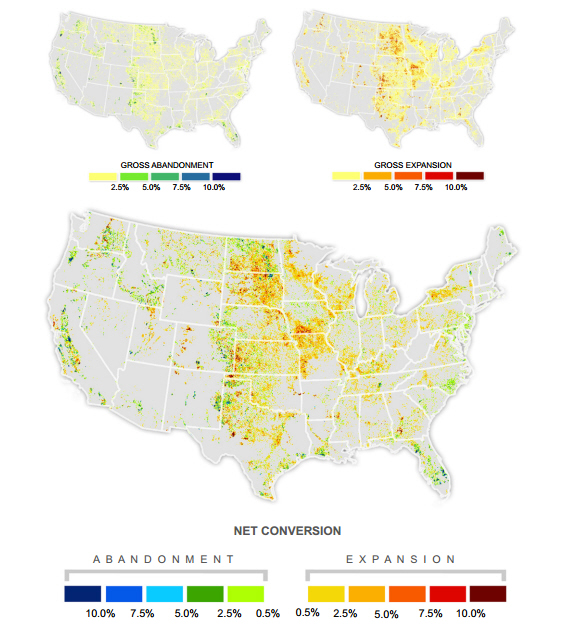
In 2005, environmentalists got what they and former Vice-President Al Gore had lobbied for since the late 1980s; federal subsidies to commercialize biofuels. Mr. Gore later admitted that he was just endorsing biofuels to get corn belt votes for his presidential run and few academic scientists had publicly disagreed because, well, they voted for him.

The result of the last corporate subsidy effort: Corn and soy growers have been happy, to be sure, but poor people got rising food costs and biofuels remain even more of a net penalty to the environment than regular gasoline.

Soil is considered e a semi-permanent storehouse for ancient carbon but it may instead be releasing carbon dioxide to the atmosphere faster than thought, which means that the carbon bomb not happening in one study could be happening in this other one published in Nature Climate Change.

In the paper, researchers showed that chemicals emitted by plant roots act on carbon that is bonded to minerals in the soil, breaking the bonds and exposing previously protected carbon to decomposition by microbes.

Sometimes guidelines cause people to be on medication who otherwise would not need to be. We have seen this concern due to runaway claims about the nebulous "pre-diabetes" diagnoses being discussed, and in commercials on television for prescription products to prevent anaphylaxis even though 0.05% of kids is ever going to be at risk and they are exploiting the allergy fad culture to make money.

A vital self-destruct switch in cells is hijacked - making some pancreatic and non small cell lung cancers more aggressive, according to new research which found that mutations in the KRAS gene interferes with protective self-destruct switches, known as TRAIL receptors, which usually help to kill potentially cancerous cells.

The research, carried out in cancer cells and mice, shows that in cancers with faulty versions of the KRAS gene these TRAIL receptors actually help the cancer cells to grow and spread to new areas in the body. These KRAS faults occur in 95 percent of pancreatic cancers - pancreatic ductal adenocarcinoma - and 30 percent of non small cell lung cancers.


Rolling Stone’s retraction of an incendiary article about an alleged gang rape on the campus of the University of Virginia certainly deserves a place in the pantheon of legendary journalism screw-ups. It is highly unusual – although not unprecedented – for a news organization to air its dirty laundry so publicly.

African-American women who live in rural areas have lower rates of major depressive disorder (MDD) and mood disorder compared with their urban counterparts, while rural non-Hispanic European-American women have higher rates for both than their urban counterparts, according to a new study.

Major depressive disorder is a debilitating mental illness and the prevalence of depression among both African- and Rural-Americans is understudied, according to background in the study. Addie Weaver, Ph.D., of the University of Michigan, Ann Arbor, and coauthors examined the interaction of Urban-American vs.Rural-American residence and race/ethnicity on lifetime and 12-month MDD and mood disorder in African-American and non-Hispanic European-American women.

Melanoma is the leading cause of skin cancer¬related deaths and surgical excision is the primary therapy for melanoma. It is recommended that melanomas should be excised within 4 to 6 weeks of the diagnostic biopsy because surgical delay may result in the potential for increased illness and death from other malignant neoplasms, along with anxiety and stress. 

In a study that included more than 32,000 cases of melanoma among Medicare patients, approximately 20 percent experienced a delay of surgery that was longer than 1.5 months, and about 8 percent of patients waited longer than 3 months for surgery.

Gene variations that could mean yield increases, drought tolerance and aflatoxin resistance will boost productivity in the years to come.

A study included the growing years of 2011, a drought year, and 2012, on dryland and irrigated corn in College Station and in Mississippi, all with similar results, said Dr. Seth Murray, an AgriLife Research corn breeder in the soil and crop science department of Texas A&M University at College Station. 

Genetic studies in humans, zebrafish and mice have revealed that two different types of genetic variations team up to cause a rare condition called Hirschsprung's disease, flaws in early nerve development that lead to poor colon function which must often be surgically corrected.

About one in every 5,000 babies is born with Hirschsprung's disease, which causes bowel obstruction and can be fatal if not treated. The disease arises early in development when nerves that should control the colon fail to grow properly. Those nerves are part of the enteric nervous system, which is separate from the central nervous system that enables our brains to sense the world.

