




Carbon capture could play a central role in keeping greenhouse gas emissions out of the atmosphere so many materials are being tested for the purpose of capturing CO2
New results show that ordinary clay can work just as effectively as more advanced materials. Clay offers many benefits compared to other materials, particularly because other potential materials can be expensive, difficult to produce, toxic and not particularly environmentally friendly. A possible practical future use of this discovery could be to include clays in CO2 filters for industrial-scale CO2 emissions reduction.

Thermochromic nano-coatings can help reduce energy usage and generate savings by absorbing heat or permitting its reflection, depending on temperature.
 
The reasn is because minute dimensions can still have major effects - nanoparticles have an especially large surface-area-to-volume ratio, making them them extremely efficient and reactive. Researchers of the Fraunhofer Institute for Chemical Technology ICT in Pfinztal near Karlsruhe are utilizing this characteristic to create novel coatings and incorporating active nano-materials into polymer systems. These coatings can be applied easily like paint or varnish.


In the developed world, we are aging rapidly. People age 85 and older make up the fastest growing age group in the United States and in other countries that trend will also increase.

Aging and aging well are not always the same thing, though, and issues like Alzheimer's are a concern. A new study of 256 people with an average age of 87 who were free of memory and thinking problems at the start of the study concluded that who participate in arts and craft activities and who socialize may delay the development in very old age of the thinking and memory problems that often lead to dementia.
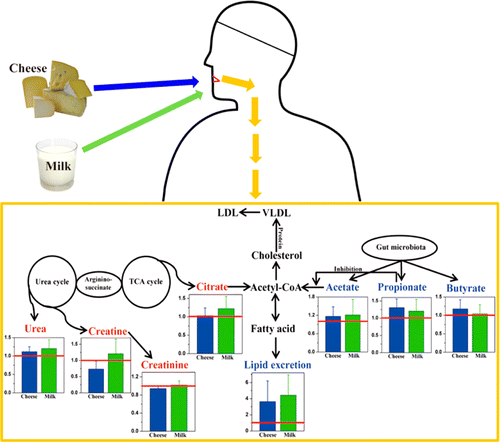
Though they are catching up nicely in obesity and heart disease rates now, historically the French have been something of a paradox; they drink a lot of booze, they eat a lot of cheese and they don't exercise, but they had lower cardiovascular disease rates than other countries despite all that. 

While nutritionists claimed dairy was making American people fat - it must be bad for our hearts because epidemiological papers put a curve of saturated fats next to a curve of heart disease - the French Paradox was quietly studied with much less mainstream media attention. Like with BPA, GMOs, vaccines, nuclear power, and human embryonic stem cells, the debate over saturated fats was more cultural than evidence-based, all the more reason for science to get involved.
Children who play a game together have a stronger connection than kids who play the same game but not in a synchronous way, according to a new paper. 

The authors assert that a physical activity performed in unison helps children feel more positively toward each other and could perhaps increase their empathy. 

"Synchrony is like a glue that brings people together -- it's a magical connector for people," said lead author Tal-Chen Rabinowitch, a postdoctoral fellow at the Institute for Learning&Brain Sciences at the University of Washington.
An analysis of 22 years of data on hawksbill turtles in the Arnavons, located in the Solomon Islands, shows signs of recovery after 150 years of excessive hunting by natives.

The data included both beach counts and turtle tagging data and show a 200% increase from record lows in the 1990s, when the turtles had been hunted to the brink of extinction. Many of the hawksbill turtles that nest at the Arnavon Community Marine Conservation Area forage in distant Australian waters, and nesting on the Arnavons occurs throughout the year, with peak nesting activity coinciding with the austral winter. 


Credit: The Nature Conservancy

A new review of existing studies suggests a gradual, prolonged release of greenhouse gases from permafrost soils in Arctic and sub-Arctic regions.

That sounds like bad news, and it is, but the good news is it actually means more time to adjust to ways to reduce emissions and prevent it from happening at all.  In the original global warming scenarios, climate scientists contended that as permafrost thawed, carbon would be released in a big “bomb” and significantly accelerate climate warming.  But a gradual case means more time to fix things. 
Are the building blocks of life universal?

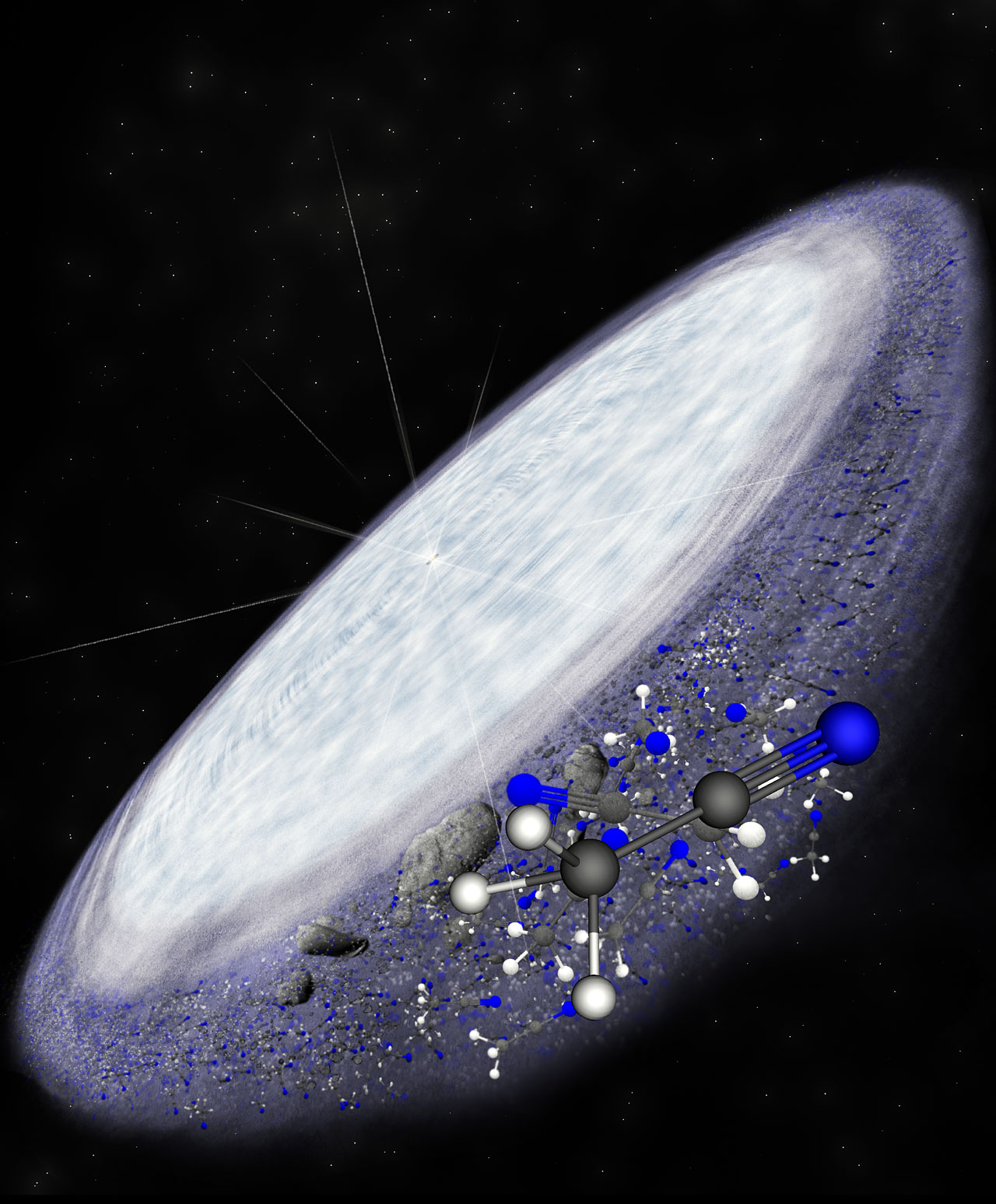
Astronomers have detected the presence of complex organic molecules, the building blocks of life, in a protoplanetary disc surrounding a young star named MWC 480. That means the conditions that spawned the Earth and Sun are not unique in the Universe. 
The appearance of another questionable "dietary supplement" story in the news is about as surprising as the sun rising in the east. But this one is different. 

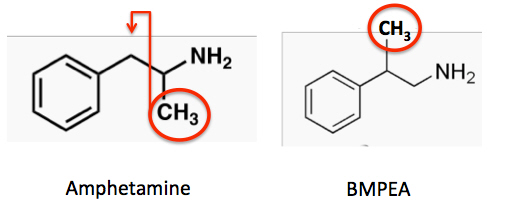
This is front page news all over the place, including a piece by Anahad O'Connor of The New York TimesO'Connor focuses on the FDA's failure to take action against companies which sold supplements containing an untested chemical stimulant called BMPEA, aka beta-methylphenethylamine, even though the agency knew about it two years ago.

The use of asbestos continues to increase in Asia despite clear health hazards. A recent Respirology review notes that with approximately 4.3 billion people and a growing population, Asia will likely see a large crop of asbestos-related lung diseases in the next few decades. Some of the cases will be benign, but it is likely that there will be many cases of mesothelioma and lung cancer.

Efforts are needed to improve the recognition and diagnosis of asbestos-related lung diseases, and government and non-government groups must cooperate to take steps to prevent them.

Citation: Su Lyn Leong, Rizka Zainudin, Laurie Kazan-Allen, Bruce W. Robinson, 'Asbestos in Asia', Respirology DOI: 10.1111/resp.12517

