








The scientific community is facing a 'pollution problem' in academic publishing, one that poses a serious threat to the "trustworthiness, utility, and value of science and medicine," according to Arthur L. Caplan, PhD, director of the Division of Medical Ethics in the Department of Population Health at NYU Langone Medical Center.

A prostate cancer test using gold nanoparticles costs less than a $1 and yields results in minutes - results show it to be more sensitive and more exact than the current standard test for early-stage prostate cancer, the less precise PSA test that's now used. 
Rice is well-equipped with an effective immune system that enables it to detect and fend off disease-causing microbes but sometimes nature needs a hand.

A new study shows that rice immunity gets boosted when the plant receives a receptor protein from a completely different plant species, a result which may help increase health and productivity of rice, the staple food for half of the world's population, at least in countries that don't ban food science.
An evolutionary puzzle has baffled palaeontologists for more than 180 years - the origins of Toxodon platensis and Macrauchenia patachonica, South American ungulates (hooved animals) described by Charles Darwin as the ‘strangest animals ever discovered’.

Previous attempts by scientists to pinpoint the origin of the animals using morphology-based and DNA analysis of fossils had failed but a new study presents evidence that the animals were related to mammals like horses, rather than elephants and other African species as some taxonomists have maintained.

When it comes to ethical dilemmas, men are typically more willing to accept harmful actions for the sake of the greater good than women. Why is that?

The classic example is traveling back in time to kill Adolf Hitler as a child - the child had not yet done anything wrong but he is going to be responsible for nearly as many deaths as Stalin and Mao, over 10 million people, so wouldn't it be better to eliminated him, or all three of them? A more topical example is the terrorist attacks in France and across the mid-east. Would it be better to torture a terrorist to find hidden explosives that could kill many people at a local café?

Low back pain is the leading cause of disability worldwide, and osteoarthritis of the hip or knee is the 11th highest contributor to global disability.  A new study found paracetamol is ineffective in reducing pain, disability or improving quality of life for patients who suffer from low back pain or osteoarthritis of the hip or knee, and its use may affect the liver.

Paracetamol is currently recommended by most international clinical guidelines as a first line treatment for low back pain and osteoarthritis but it is no better at treating low back pain than a placebo and its effect on osteoarthritis of the hip or knee is too small to be clinically worthwhile, the study concludes.

Are ancient remedies any good?  In scholarly circles the middle of the 20th Century, they didn’t seem to think so.  For example:

‘Survey the mass of folly and credulity that makes up Anglo-Saxon leechdoms, it may be asked: “Is there any rational element here? Is the material based on anything that we may reasonably describe as experience?” The answer to both questions must be “Very little”.’ [1]

But in the last few days we have been reading


You'll be a lot less frustrated if you have unconscious acceptance when regulating frustrating emotion, and have little cognitive deficit but better mood stability.

That is the psychology version of 'go with the flow' because 'stuff happens'. It's adaptive coping and the development of a healthy personality. 

Life is full of problems, be they in relationships, work or goals. It's certainly not wise to be passive and wait for things to happen to you but any time goals are pursued, there will be setback and frustration. Coping with frustration effectively is where some people have issues.


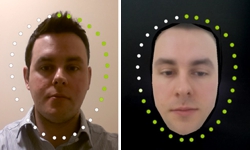
Phones like the Samsung Galaxy can use facial recognition rather than typing in a security code. The problem is you will end up taking twice as long quite often, because the facial recognition will fail and you type in a PIN anyway. The system is good at rejecting impostors - and also the owner.

What might help is 'morphing' together several photos for the software to analyze, so that users store an 'averaged' picture of themselves.

A new study suggests a possible role for caffeine treatment Alzheimer's disease (AD) treatment, by showing a link between caffeine and reductions in the beta amyloid plaque accumulation characteristic of Alzheimer's disease. The latest evidence linking beta amyloid protein to Alzheimer's disease and exploring the relationship between caffeine and beta amyloid are featured in a review article in Journal of Caffeine Research.

In the article "Caffeine as Treatment for Alzheimer's: A Review," Abhishek Mohan, MD, PhD, Old Dominion University (Norfolk, VA), and coauthors identify the potential opportunities for using caffeine to reduce beta amyloid levels as a means of preventing, treating, and slowing the progression of Alzheimer's disease.


