




Writers, athletes and athletes can tell you that sometimes being too focused in a bad thing. You need to relax a little, especially if, as the old saying goes, being focused causes you to lose sight of the forest among all those trees.
Bioplastics are used in medical applications such as wound healing dressings, sutures, catheter tubes and drug delivery and bioplastics made from protein sources such as albumin and whey have shown significant antibacterial properties.

They could even be used for food packaging, according to a recent study by the University of Georgia College of Family and Consumer Sciences. 

A new paper concludes that there is limited evidence to show that xylitol prevents dental cavities in children and adults. Xylitol is a natural sweetener that is widely promoted globally, and can be found in wide range of everyday products including sugar-free chewing gum, toothpaste, gels, lozenges and sweets.

With the season newly underway, Formula 1’s struggles are already clear to see. The exorbitant costs of competing, combined with uneven profits is especially hurting the chances of survival for smaller teams. In fact, with only ten teams on the grid – down from 20 in 1989 – 2015 risks being remembered as one of the least contented F1 championships of history.

In the production of organic vegetables, nitrogen is important, yet can be quite costly to manage. Nitrogen management is even more challenging when production practices call for the use of polyethylene mulch combined with fertigation. The authors of a new study published in HortScience have found that hydrolyzed fish fertilizer holds promise as an "economically feasible" nitrogen source for growing organic vegetables.

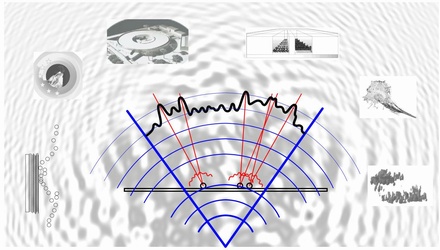
Sometimes I think I am really lucky to have grown convinced that the Standard Model will not be broken by LHC results. It gives me peace of mind, detachment, and the opportunity to look at every new result found in disagreement with predictions with the right spirit - the "what's wrong with it ?" attitude that every physicist should have in his or her genes.
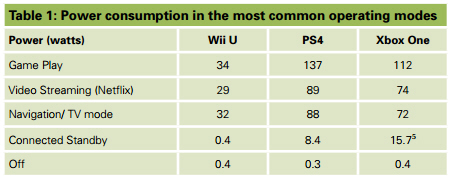
A day after Playstation announced that their players are finally getting an update which will allow them to quickly switch from Rest Mode to powered-up, a feature already available on Xbox, the Natural Resources Defense Council announced that Xbox players are killing Gaia.
What do butterflies, spiders and lobsters share in common?

Yawunik kootenayi, a marine creature with two pairs of eyes and prominent grasping appendages that lived 250 million years before the first dinosaur.

The fossil recently identified is the first new species to be described from the Marble Canyon site, part of the Canadian Burgess Shale fossil deposit.

Yawunik had evolved long frontal appendages that resemble the antennae of modern beetles or shrimps, though these appendages were composed of three long claws, two of which bore opposing rows of teeth that helped the animal catch its prey.

Before a male damselfly hot-headedly enters into a duel of aerial sparring, it first works out its strategy. It gives its opponent's wings a once-over to assess its strength, knowing that more transparent wings and larger red spots generally show a stronger rival. Those who then decide to engage in long fights either try to wear their opponent down, or dazzle them with brilliant aerial moves that are too hard to follow. These damselfly war game strategies are set out in a study published in Springer's journal The Science of Nature - Naturwissenschaften. Two research groups united forces to arrive at these findings, one based in Brazil, led by Rhainer Guillermo-Ferreira, and the other in Germany, led by Stanislav Gorb.

The American Gastroenterological Association (AGA) has released new guidelines on the management of asymptomatic neoplastic pancreatic cysts found incidentally during computed tomography (CT) or magnetic resonance imaging (MRI).

The author of a commentary being published in Annals of Internal Medicine explains how the AGA's bold new recommendations will affect the way physicians consider diagnostic testing. The new guidelines back away from previous recommendations that were more aggressive.

Rather than promote invasive work-up, surveillance, or surgery for typical patients, the AGA guidelines restrict aggressive follow up to patients with more high-risk features.


