

Citizen science botanists in the Western Cape Province of South Africa have discovered two new species of beautiful blue-flowered legumes.

Few people take the chance to tramp the empty rolling ranges of mountains and the fragmented and jagged coastline of the Southern Cape in South Africa. Most avoid it because of how wild and tough-going it can be. This region is part of a unique and species rich global flora called the Cape Floral Kingdom. Yet there are a band of intrepid walkers and climbers who traverse these areas every week searching for rare and endangered plants.

Cancer cells crowded tightly together suddenly surrender their desire to spread, and this change of heart is related to a cellular pathway that controls organ size. These two stunning observations are reported today by researchers at Georgetown Lombardi Comprehensive Cancer Center in the journal Oncogene.

Winter storms dumped records amounts of snow on the East Coast and other regions of the country this February, leaving treacherous, icy sidewalks and roads in their wake. Now researchers from Canada are developing new methods to mass-produce a material that may help pedestrians get a better grip on slippery surfaces after such storms.

The material, which is made up of glass fibers embedded in a compliant rubber, could one day be used in the soles of slip-resistant winter boots. The researchers describe the manufacturing process in a paper in the journal Applied Physics Letters, from AIP Publishing.

Using discarded electronic boards, the UPV/EHU researcher Andoni Salbidegoitia has, in collaboration with international researchers, developed a system for obtaining clean hydrogen that can be used as fuel. The researchers have already registered the patent of the process in Japan.

The Chemical Technologies for Environmental Sustainability (TQSA) Group of the Department of Chemical Engineering of the UPV/EHU's Faculty of Science and Technology is aiming to make use of discarded plastic as effectively as possible from the environmental as well as energy and economic point of view.

Bicarbonate (baking soda) makes sparkling water sparkle, causes bread to rise, absorbs odors and can be used for cleaning all sorts of stuff, including your teeth. In the body, it plays essential roles in buffering pH, aiding in digestion and neutralizing lactic acid produced during physical exertion. Much of the bicarbonate in our bodies comes from carbon dioxide, which is produced as a waste product in all cells, although some is ingested with carbonated beverages and certain types of foods.

Hair and teeth are ectodermal appendages that share common developmental mechanisms. However, the major structural components making up hair and teeth are very distinct. The hair shaft is essentially made of keratin filaments that are highly cross-linked. Tooth enamel matrix is primarily composed of enamel proteins (amelogenin, ameloblastin) that are degraded and replaced by minerals during enamel maturation. Fully mineralized enamel contains a small fraction of cross-linked organic material that has not been fully characterized. In this study, researchers assessed the presence and functionality of a specific set of hair keratins in this organic fraction of enamel.

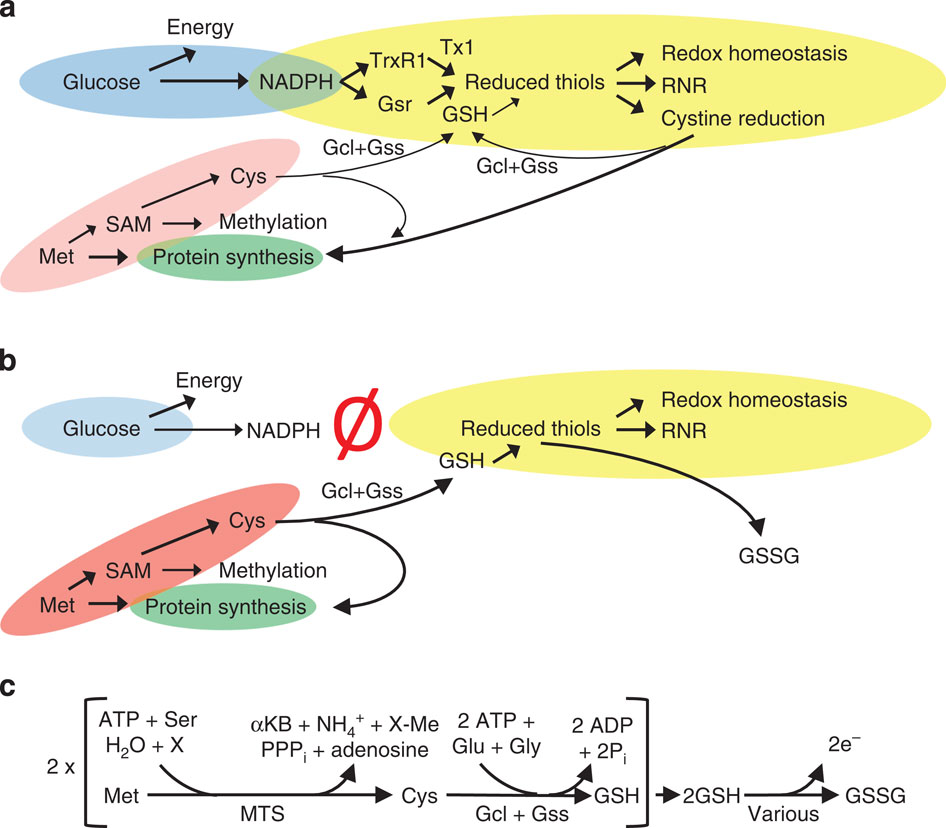
Scientists writing in Nature Communications have discovered an antioxidant system that, like a generator kicking in when the power fails, helps sustain the liver when other systems are missing or compromised.

This understudy 'takes the stage' when the lead actor is sick and is fueled by methionine, an amino acid that can't be manufactured in the body and doesn't come from herbal teas or supplements.

People get it only by eating protein.

Researchers at the San Diego Supercomputer Center (SDSC) and the Moores Cancer Center at the University of California, San Diego, have described for the first time the molecular mechanism of cancer development caused by well-known "resistance" mutations in the gene called epidermal growth factor receptor (EGFR). While these mutations were known for quite a long time, the question as to why they cause cancer or make some drugs ineffective was still not answered.

The study demonstrates how computer modeling of EGFR mutations found in lung cancer can elucidate their molecular mechanism of action and consequently optimize the selection of therapeutic agents to treat patients.

Without antibodies we would be at the mercy of pathogens or cancer cells. Therapeutic antibodies are used as passive vaccines, for cancer therapy or for controlling autoimmune diseases such as multiple sclerosis. According to "bccresearch.com" the global market for antibody drugs was worth nearly 70 billion USD in 2014 and should rise to 122 billion USD until 2019.

Two thirds of those molecules are produced biotechnologically using Chinese hamster ovary cells (CHO). Actually the major cost factor for industry is purification using "protein A" affinity chromatography where tens of thousands of liters of culture volume have to be processed annually. About 80 % of the production costs fall upon purification.


It is often claimed that the Ancient Greeks were the first to identify objects that have no size, yet are able to build up the world around us through their interactions.

And as we are able to observe the world in tinier and tinier detail through microscopes of increasing power, it is natural to wonder what these objects are made of.

We believe we have found some of these objects: subatomic particles, or fundamental particles, which having no size can have no substructure. We are now seeking to explain the properties of these particles and working to show how these can be used to explain the contents of the universe.


