


A recent study shows differences in brain structure according to how trusting people are of others.

The psychologists used two measures to determine the trust levels of 82 study participants. Participants filled out a self-reported questionnaire about their tendency to trust others. They also were shown pictures of faces with neutral facial expressions and asked to evaluate how trustworthy they found each person in the picture. This gave researchers a metric, on a spectrum, of how trusting each participant was of others.

Researchers then took MRI scans of the participants' brains to determine how brain structure is associated with the tendency to be more trusting of others. What they found were differences in two areas of the brain.

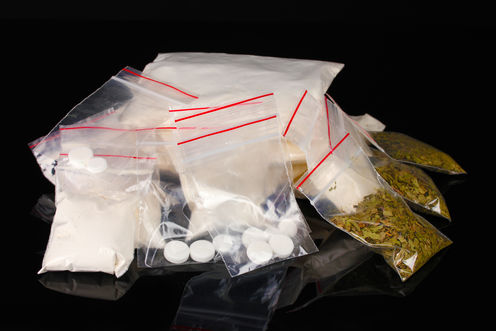
In recent years, hundreds of new synthetic recreational drugs have emerged – drugs that neither the general public nor the scientific community know very much about.

Many of these new synthetic drugs – often referred to as “legal highs” – are dangerous and continue to lead to poisonings throughout the US and the rest of the world.

These drugs provide similar highs to other, more well-known drugs, like marijuana and cocaine. Many are still legal and others have only recently become illegal.

So why would people use these potentially harmful new drugs?

Synthetic cannabinoids ("synthetic marijuana"), with names like Spice, K2, Scooby Doo and hundreds of others, are often sold as a "legal" alternative to marijuana. Often perceived as a safe legal alternative to illicit drug use, synthetic marijuana use was associated with 11,561 reports of poisonings in the United States between January 2009 and April 2012.

Popular among teens, in 2011, synthetic marijuana was used by more than one out of ten (11.4%) high school seniors in the US, making it the most commonly used drug after real marijuana.

Sad movies are bad news for diets. A newly reported study from the Cornell Food and Brand Lab showed movie-goers watching tearjerkers ate between 28% and 55% more popcorn both in the lab and in a mall theater during the Thanksgiving holiday.

According to findings published in a JAMA Internal Medicine research letter, movie goers ate 28% more popcorn (125 versus 98 grams) when watching the tragedy Love Story than when watching the comedy Sweet Home Alabama.

Two studies scheduled for presentation at the American College of Cardiology's 64th Annual Scientific Session in San Diego failed to find a connection between testosterone therapy in men and heart problems, contradicting research that prompted the U.S. Food and Drug Administration to investigate its safety. The new studies include a meta-analysis of data from 29 studies involving more than 120,000 men and an observational study from a Wisconsin health system.

A low-cost antiseptic used to cleanse the cord after birth could help reduce infant death rates in developing countries by 12%, a systematic review published in The Cochrane Library suggests. Authors of the review found that when chlorhexidine was used on babies born outside of a hospital, it reduces the number of newborn babies who died or suffer from infections.

Gout appears to have a protective effect for the brain, possibly thanks to uric acid, the chemical in a person's blood that can crystallize, leading to gout, said a team of researchers from north America.

Gout, the most common inflammatory arthritis, is linked to a higher risk of heart and kidney problems and their resulting health issues, but previous studies have theorised that the antioxidant properties of uric acid may protect against the development or progression of neurodegenerative conditions such as Parkinson's disease (PD).

Obesity, hypertension and diabetes are known risk factors for heart failure, a chronic condition in which the heart cannot pump enough blood to meet the body's needs. For the first time, scientists have quantified the average number of heart failure-free years a person gains by not developing those risk factors by age 45, according to a study scheduled for presentation at the American College of Cardiology's 64th Annual Scientific Session in San Diego.

Most of the times we have looked at Uranus, it has seemed to be a relatively calm place. Well, yes its atmosphere is the coldest place in the solar system.

But, when we picture the seventh planet in our solar system invariably the image of a calming blue hazy disc that the spacecraft Voyager 2 took in 1986 comes to mind.

However, all we have previously known about the atmosphere of Uranus has been ’thrown to the wind’ with observations made last year.

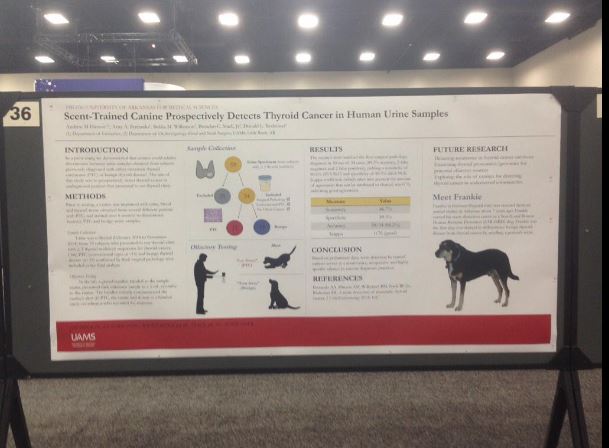
A trained scent dog has been found to accurately distinguish between benign and cancerous urine samples of thyroid cancer patients a terrific 88.2 percent of the time, according to a new study.

That canine diagnostic accuracy is only slightly less than that of fine-needle aspiration biopsy, the method generally used first to test thyroid nodules for cancer - but it is noninvasive and inexpensive.

