







Management students entering my thesis prep course without having been involved in research before, or taken a probability course, reliably make these mistakes. Many students go on to do empirical quantitative theses, meaning that their misconceptions about sampling and analysis will come back to bite them.

Let's take a look back through the past 12 months of quantum physics research. sharyn morrow/Flickr, CC BY-NC-ND

By Felix Pollock and Kavan Modi of Monash University.

The past year has provided some of the most interesting developments in quantum mechanics to date. The field is more than 100 years old and has been tested to unimaginable precision, yet some of its most striking statements are still being debated.

Effective treatments for lung cancer has been challenging because so many genetic mutations play a role in the disease. Mutations, by their very definition, are difficult to predict, they occur due to random cosmic rays over time and in other natural ways, and can be aggravated by some aspects of the environment.

But by analyzing the DNA and RNA of lung cancers, researchers at the University of Michigan Comprehensive Cancer Center found that patients whose tumors contained a large number of gene fusions had worse outcomes than patients with fewer gene fusions. Gene fusions are a type of genetic anomaly found in cancers that occurs when genes get rearranged and fuse together. 

It is common in some fields to infer that differences in one area will ultimately reflect differences in the end product. Though the real abuse and misuse is with neuroscience and tools like fMRI imaging, they are not alone. 

Geneticists have also commonly suggested that RNA differences will mean differences in proteins but  the majority of RNA expression differences between individuals have no connection to the abundance of a corresponding protein, finds a new study.

Instead, there is likely a yet-unidentified cellular mechanism that regulates gene expression and RNA measurements to characterize gene function won't stand alone.

If you can't balance on one leg for 20 seconds you are more likely to have small blood vessel damage in the brain and reduced cognitive function, even if you otherwise seem healthy, according to new research in Stroke.

The study consisted of 841 women and 546 men, average age of 67. To measure one-leg standing time, participants stood with their eyes open and raised one leg. The maximum time for keeping the leg raised was 60 seconds. Participants performed this examination twice and the better of the two times was used in the study analysis. Cerebral small vessel disease was evaluated using brain magnetic resonance imaging.

Though the U.S. government is touting claims that it has created an economic engine better than at any time in the 20th century, the reality is much different and a large part of the reason why Congress has lurched to the opposition party of U.S. President Barack Obama.

If people have been unemployed for so long they can no longer get unemployment benefits, the government frames it as that they went back to work. And we have been engaged in a culture war on business, everything from nuclear energy and natural gas to manufacturing of every kind.


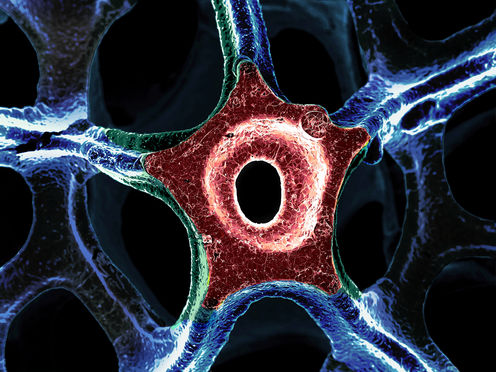
Asteroidea Electrica, first prize winner by Adrianus Indrat Aria. Cambridge University, CC BY

By Allan McRobie, University of Cambridge

You should not be surprised by the irregularity of a newborn infant's sleep patterns but by the age of six months, if the baby is not sleeping through the night, many parents wonder if something is wrong with their baby or their sleeping arrangements.

It helps parents to understand that "normal" sleep patterns for a child are somewhat broad, according to a new paper.

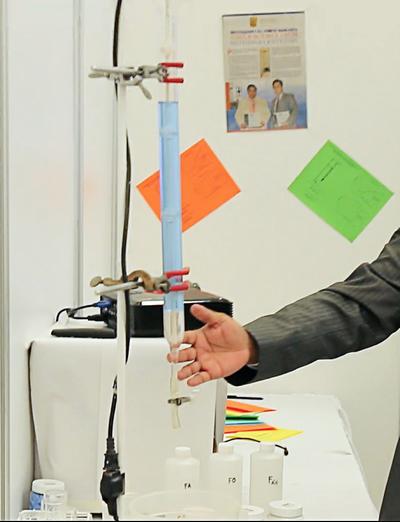
Researchers at the University of Guanajuato (UGTO), in middle Mexico, developed an extraction column which recovers metals companies use in their production processes; and thus avoid environmental pollution and lessen economic losses.

Using the principles of liquid-liquid technology, researchers have developed an extraction column which recovers metals companies use in their production processes and avoids both environmental pollution and lessen economic losses.

The technology is already at laboratory prototype stage and the creators are in the process of obtaining a patent. 


Credit: University of Guanajuato/Investigación y Desarrollo

