Researchers from North Carolina State University have identified a gene, FoxJ1, that tells embryonic stem cells in the brain when to stop producing neurons. The research is a significant advance in understanding the development of the nervous system, which is essential to addressing conditions such as Parkinson's disease, Alzheimer's disease and other neurological disorders.
The bulk of neuron production in the central nervous system takes place before birth, and comes to a halt by birth. But scientists have identified specific regions in the core of the brain that retain stem cells into adulthood and continue to produce new neurons.
A study published today in Nature Geoscience says that increasing atmospheric CO2 emissions continue to outstrip the world's natural ability to absorb carbon and claim that drastic cuts in fossil fuel emissions are the only way to mitigate climate change.
The authors report that over the last 50 years the average fraction of global CO2 emissions that remained in the atmosphere each year was around 43 per cent - the rest was absorbed by the Earth's carbon sinks on land and in the oceans. During that time the fraction has likely increased from 40 per cent to 45 per cent, suggesting a decrease in the efficiency of the natural sinks. The team also offers evidence that the sinks are responding to climate change and variability.
The Associated Press, that bastion of scientific knowledge,
shares with us a list of "pests that are benefiting or could benefit from global warming", starting with:
_Ticks that transmit Lyme disease are spreading northward into Sweden and Canada, once too cold for them.
_Giant Humboldt squid have reached waters as far north as British Columbia,
threatening fisheries along much of the western North American coast.
No one draws pictures of heads with little gears or hydraulics inside any more. The modern conceptualization of the brain is firmly computational. The brain may be wet, squooshy, and easy to serve with an ice cream scooper, but it is nevertheless a computer.
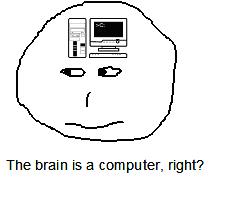
However, there is a rather blaring difficulty with this view, and it is encapsulated in the following question:
If our brains are computers, why doesn’t size matter? In the real world of computers, bigger tends to mean smarter. But this is not the case for animals: bigger brains are
not generally smarter. Most of the brain size differences across mammals seem to make no behavioral difference at all to the animal.
The metric system rocks, right? And that's because it's an organic system of measure, derived directly from the circumference of the earth, right? And hasn't been subject to any malingering, gerrymandering, finagling or other debased punking by dirty human hands, right? Um, not exactly.
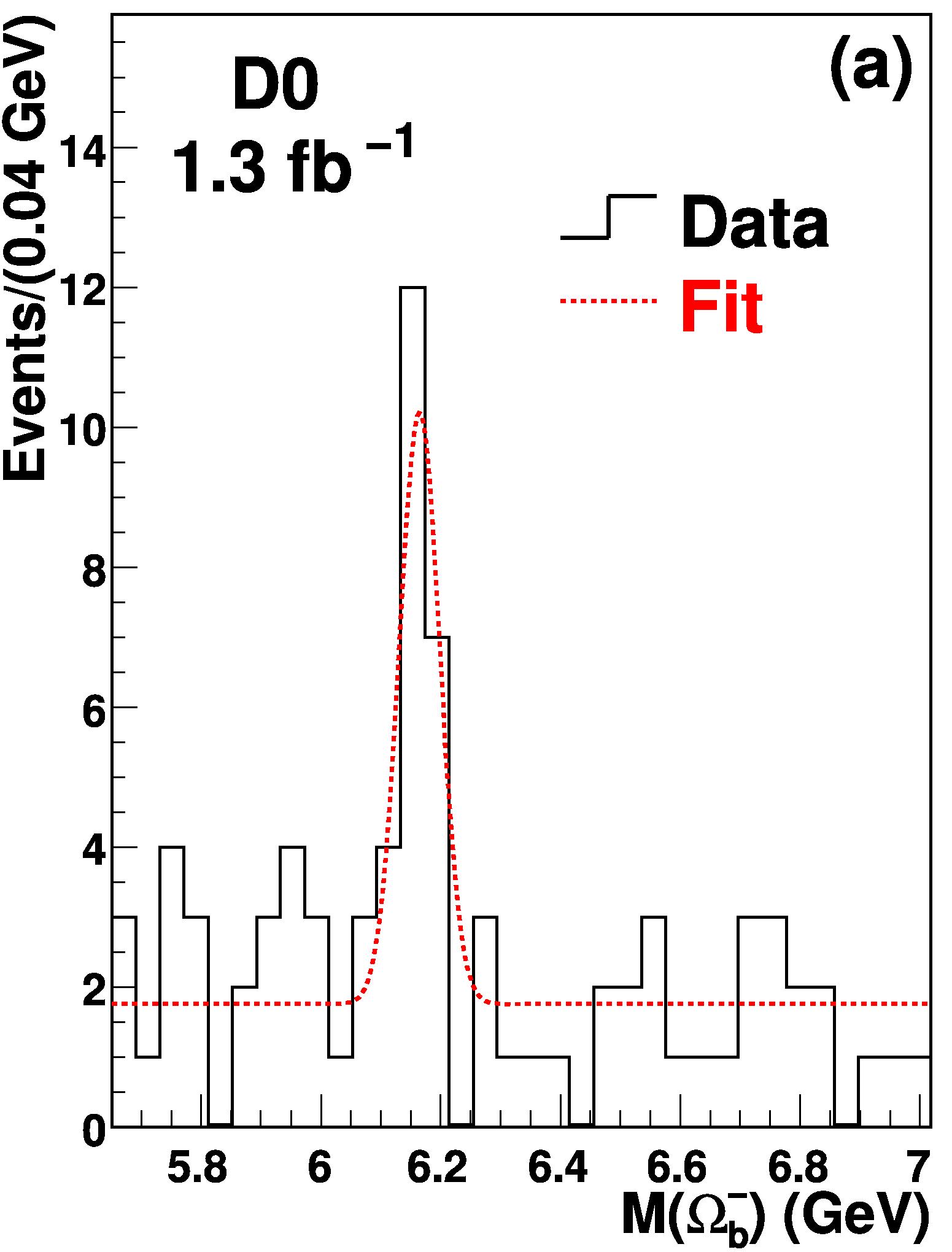
Last May the CDF collaboration
published their
observation of the  baryon
, a particle made by a very exotic "bss" quark triplet. The CDF result came almost one year after a similar measurement was
published by the competitor experiment, D0.
Despite widespread educational efforts aimed at helping the public make healthy choices, it's understood among experts that people often fail to comply with the advice offered by their doctors and others in the health community.
To correct this deficiency in compliance, some researchers are now proposing that text messaging be used to send out health tips to consumers. Given it's popularity and low expense, they say, regular text messaging may be just the thing to prompt people to make behavioral changes for the sake of health
A potentially dangerous level of carbon dioxide and methane gas haunts Lake Kivu, the freshwater lake system bordering Rwanda and the Republic of Congo.
Scientists can't say for sure if the volatile mixture at the bottom of the lake will remain still for another 1,000 years or someday explode without warning. In a region prone to volcanic and seismic activity, the fragility of Lake Kivu is a serious matter. Compounding the precarious situation is the presence of approximately 2 million people, many of them refugees, living along the north end of the lake.
Psychologists earlier this month confirmed what most parents likely already know about their teenage children. The more they're involved in their kids' lives (Specifically, by knowing where their children are, who they're with and what they're doing), the less likely it is they will engage in illicit behavior--like smoking marijuana.