




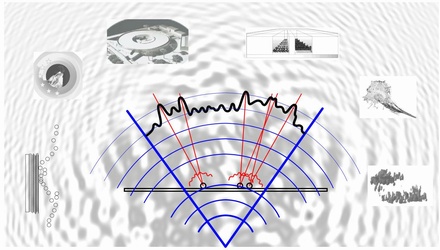


A 3-dimensional model of human respiratory tissue has been shown to be effective for measuring the impact of chemicals, like those found in cigarette smoke or other aerosols, on the lung. 

More effective lab-based tests are required to reduce the need for animal testing in assessing the toxicological effects of inhaled chemicals and safety of medicines. Traditional lab-based tests use cell lines that do not reflect normal lung structure and physiology, and in some cases have reduced, or loss of, key metabolic processes. 

 NASA

NASA has sent an astronaut to the International Space Station to stay there for a year.

Nasal drops of harmless bacteria can inhibit a related bug that sometimes causes meningococcal disease, according to new findings published online in Clinical Infectious Diseases. The study--conducted among college students, a group at higher risk for this often serious illness--suggests a new approach that could help suppress outbreaks of the disease, if supported by future research.

Meningococcal disease is caused by Neisseria meningitidis, which can infect the lining of the brain and the spinal cord, causing meningitis. Strains of the bacteria can also cause serious bloodstream infections. But N. meningitidis can also live silently in a person's nose and throat, without illness. These "colonized" carriers can spread the pathogen to others through close contact.

A team of researchers has identified a new genetic cause of the disease by focusing on a rare genetic variant which offers important insights into the root causes of autism, they believe. And, they suggest, their unconventional method can be used to identify other genetic causes of autism and other complex genetic conditions.

A study published today describes a newly-discovered, heritable genetic cause of acute lymphoblastic leukemia (ALL), namely mutation of the gene ETV6. Much like mutation of the gene BRCA marks people at risk to develop breast and ovarian cancers, identification of mutations in the gene ETV6 may allow doctors to predict the development of ALL, allowing increased monitoring and in the future, perhaps strategies to prevent the disease. There are just over 30,000 cases of ALL diagnosed in the United States each year, with the majority of those cases being in children ages 2-5.

If you watch the season finale of The Walking Dead this Sunday, the story will likely evoke events from previous episodes, while making references to an array of minor and major characters. Such storytelling devices belie the show’s simplistic scenario of zombie survival, but are consistent with a major trend in television narrative.

Writers, athletes and athletes can tell you that sometimes being too focused in a bad thing. You need to relax a little, especially if, as the old saying goes, being focused causes you to lose sight of the forest among all those trees.
Bioplastics are used in medical applications such as wound healing dressings, sutures, catheter tubes and drug delivery and bioplastics made from protein sources such as albumin and whey have shown significant antibacterial properties.

They could even be used for food packaging, according to a recent study by the University of Georgia College of Family and Consumer Sciences. 

A new paper concludes that there is limited evidence to show that xylitol prevents dental cavities in children and adults. Xylitol is a natural sweetener that is widely promoted globally, and can be found in wide range of everyday products including sugar-free chewing gum, toothpaste, gels, lozenges and sweets.

With the season newly underway, Formula 1’s struggles are already clear to see. The exorbitant costs of competing, combined with uneven profits is especially hurting the chances of survival for smaller teams. In fact, with only ten teams on the grid – down from 20 in 1989 – 2015 risks being remembered as one of the least contented F1 championships of history.

