

There is a link between our brain structure and our tolerance of risk, find economists who say they have found the first stable 'biomarker' for financial risk-attitudes.

Does that mean there is a causal link between brain structure and behavior? Neuroscientists and psychologists tend to fall into that trap but the scholars in the Journal of Neuroscience avoid that trap.

Dr Agnieszka Tymula, an economist at the University of Sydney, and colleagues found that the gray matter volume of a region in the right posterior parietal cortex was significantly predictive of individual risk attitudes. Men and women with higher gray matter volume in this region exhibited less risk aversion.

"Nobody understands the cloud," shouts a character in a recent comedy about a couple trying to remove a private video from the Internet. 

In reality, the cloud is completely understandable, and it's one of few areas in climate where the emissions costs are also. And because it is quantifiable it can benefit from combinatorial optimization. the famous rucksack problem where a traveler has to try and fit everything in without leaving anything behind.

Imagine being able to go from the hottest of hots to the coldest of colds, and endure both extreme droughts, where 97% of your body water is gone, and airless vacuums such as space.

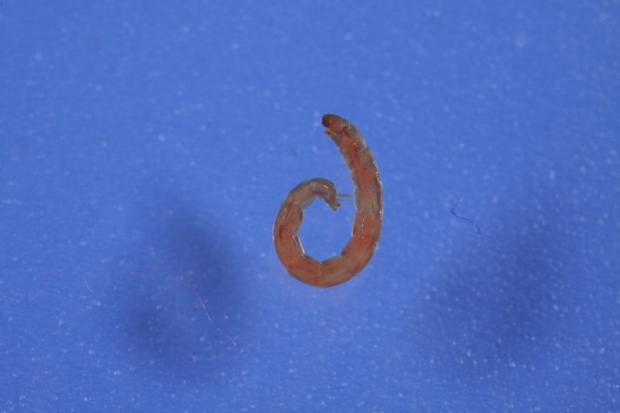
The African midge,  Polypedilum vanderplanki, can do all that and an international team deciphered the genetic mechanism that makes it invulnerable to these harsh conditions.

The midge is capable of anhydrobiosis, a unique state that allows an organism to survive after losing almost all of its body water, along with other severe conditions, such as extreme temperatures ranging from 90°C to -270°C, vacuums and high doses of radiation; all of which would be lethal to most other life forms.

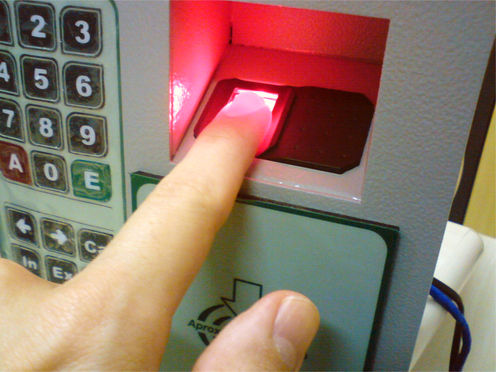
Keys at your fingertips, but the technology isn't there yet. Credit: Rachmaninoff, CC BY-SA

By Andrew Smith, The Open University

How can we ensure that someone is who they say they are? How can be sure that the person in our system, both digitally speaking or physically in front of us, is who whom they claim to be?

When you read something in a book, do you believe it?

You might say, “Of course not if it’s fiction,” but well-researched historical or science fiction can offer plenty of accurate information, entertainingly packaged. Nonfiction, on the other hand, might seem true by definitionbut what about memoirs? Polemics? Even textbooks tend to be outdated at best, if not outright biased.

Recently a study was published in the Milbank Quarterly analyzing the voting patterns of FDA Advisory Committee members with apparent conflicts of interest.
Artificial hearts were invented at a time when progress in science couldn't come fast enough. In 1969, when they first went into human use, DDT hadn't been banned, vaccines were considered the medical highlight of the century, and the Green Revolution promoted genetic modification as the way to feed the world's poor in the future.
I just read with interest the new paper on the arxiv by my INFN-Padova colleague Massimo Passera and collaborators, titled "Limiting Two-Higgs Doublet Models", and I thought I would explain to you here why I consider it very interesting and what are its conclusions.
Data from an initial representative 938-subject sample of  a 4,800-subject colorectal cancer trial at Hvidovre Hospital, Copenhagen demonstrated that the NuQ® blood-based diagnostic platform  is able to correctly diagnose 84% of colorectal cancers, including early-stage cancers.

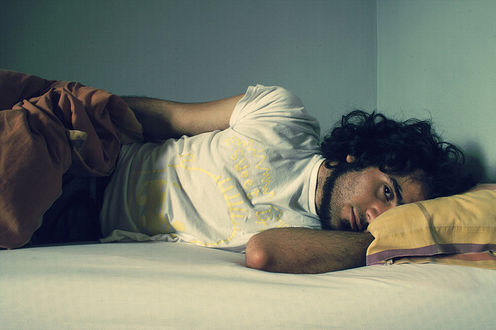
Most adults need seven to nine hours sleep to function at their best. Credit: Jiuck/Flickr, CC BY-NC-SA

By Gemma Paech, University of South Australia