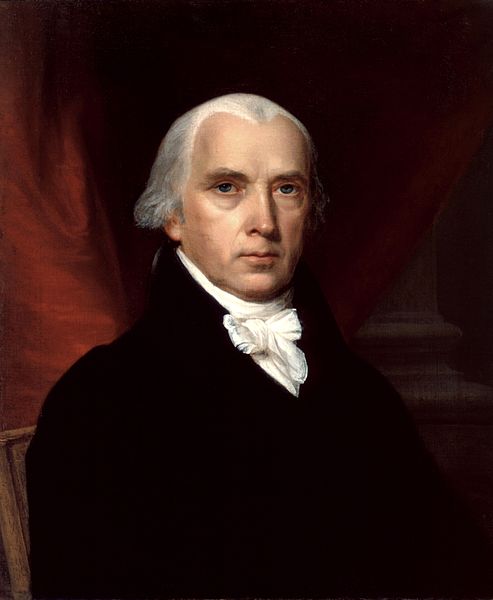
James Madison - A Prescient President.
We are changing our planet's atmosphere.
It is widely known that G.S. Callendar warned of this in 1938.
It is virtually unknown that James Madison warned of it in 1818, in the form of a rhetorical question:
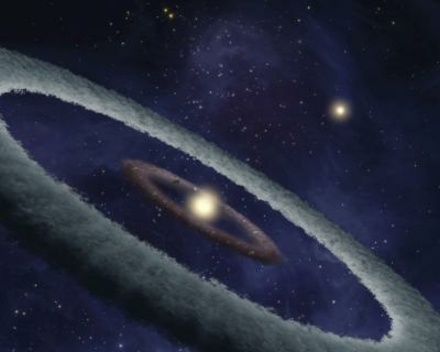
Gravitational lensing has found MACS1149-JD1, which was created less than 500 million years after the Big Bang, making it the most remote galaxy ever to be observed.
Our universe came into being approx. 13.7 billion years ago with a
Big Bang. 400 to 500 million years later, conditions in the cosmos allowed for the formation of the first stars but it was believed there was almost no hope of ever receiving a signal from any object of this time period; if there already were galaxies back then, their brightness would be far weaker than the light of a candle on the moon.
You have heard of biofeedback, controlling bodily responses using audio or visual cues to map performance. It may be possible to do that with learning, a kind of neurofeedback, according to research at Sandia National Laboratories. They show that it's possible to predict how well people will remember information by monitoring their brain activity while they study.
Early in the morning of September 12th the Dark Energy Camera (DECam), the most powerful sky survey instrument yet built, mounted on the Victor Blanco Telescope at the Cerro Tololo Inter-American Observatory in Chile recorded its first images of a southern sky spangled with galaxies.
An international team of scientists say they may have discovered why female killer whales have the longest menopause of any non-human species - it could be they worry about their adult sons. New research says that males over 30 have an almost 14-fold chance of dying during the year following the death of their mother.
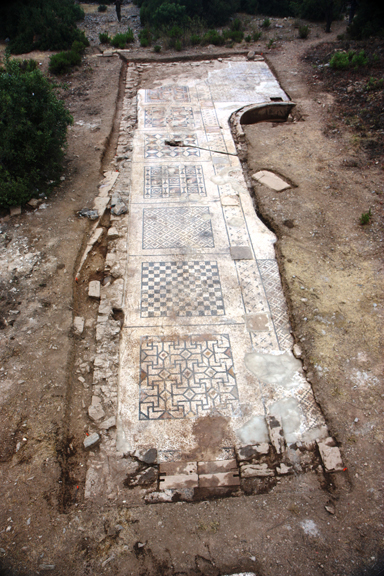
A massive Roman mosaic, from the apex of Imperial reach and power, has been unearthed in southern Turkey.
A natural product secreted by a soil bacterium may lead to a new drug to treat tuberculosis, report scientists in a new study.
Pyridomycin, a natural antibiotic produced by the bacterium Dactylosporangium fulvum, has been shown to be active against many of the drug-resistant types of the tuberculosis bacterium that no longer respond to treatment with the front-line drug isoniazid.
Anti-science people with a 'natural' fetish don't understand that the random and unpredictable nature of...nature...is a bad thing. All of the funding campaigns and Internet rants of environmentalists are only possible because scientists and engineers harnessed the power of dangerous, unpredictable nature at one point in time - we don't try to power our homes and business with all-natural lightning bolts, we instead generate electricity synthetically and we do so as safely as possible. It can still hurt you but no one is waging a campaign against electricity today.
Elsevier and SEPM (Society for Sedimentary Geology) have announced the integration of more than 18,000 geological maps from SEPM into Elsevier's web-based research tool, Geofacets. The integration grants geoscientists access to scientific information that can provide key insight into the potential of regions for oil and gas exploration, allowing geoscientists to make predictions and guide exploration with greater confidence. As a result of adding maps from SEPM, Geofacets now houses over 225,000 maps providing essential information to geoscientists.
The latest test drive marks the final chapter in a three year long project which has seen the development of the next step in autonomous driving technology, 'vehicle platooning'. Since 2009, Volvo Car Corporation has been the driving force behind the EU funded SARTRE project (Safe Road-Trains for the Environment), bringing vehicle platooning technology one step closer to becoming a reality on Europe's roads.